Fishing Calendar App
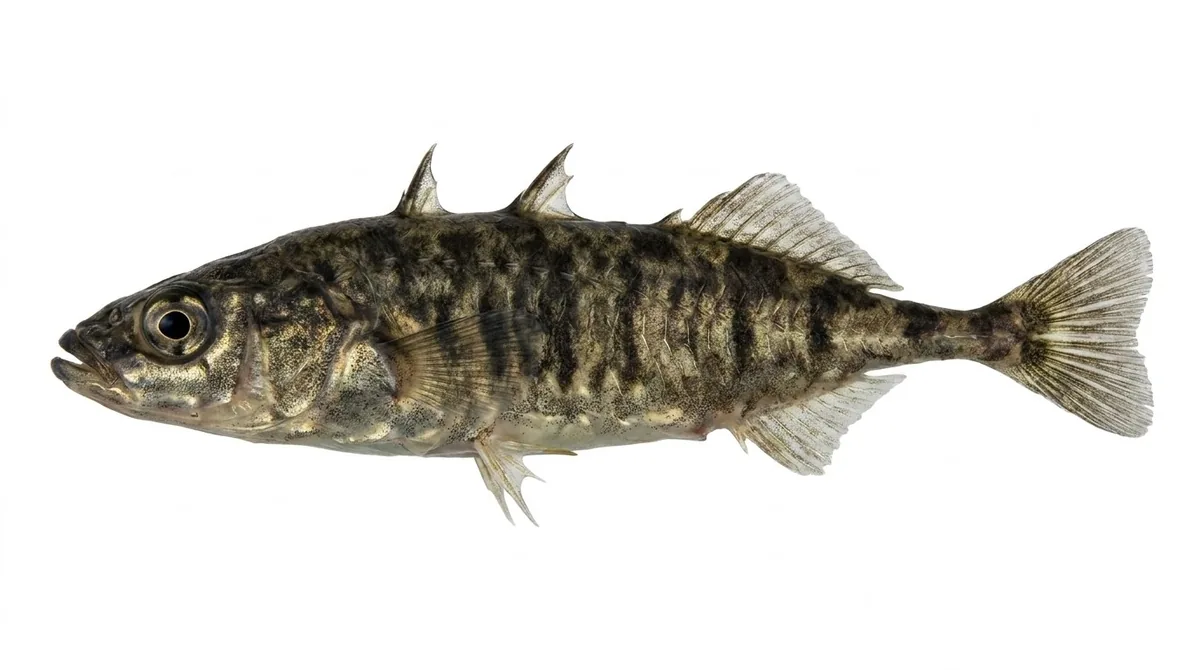
Three-spined stickleback
Gasterosteus aculeatus
- Freshwater & Saltwater
- Least Concern
- Max length
- 10 cm
- Class
- Teleostei
- Order
- Perciformes
- Family
- Gasterosteidae
- Genus
- Gasterosteus
- Atlantic, Northeast
- Atlantic, Northwest
- Europe - Inland waters
- North America - Inland waters
- Pacific, Eastern Central
- Pacific, Northeast
- Pacific, Northwest
About the three-spined stickleback
The three-spined stickleback (Gasterosteus aculeatus) is a fish native to most inland and coastal waters north of 30°N. It has long been a subject of scientific study for many reasons. It shows great morphological variation throughout its range, ideal for questions about evolution and population genetics. Many populations are anadromous (they live in seawater but breed in fresh or brackish water) and very tolerant of changes in salinity, a subject of interest to physiologists. It displays elaborate breeding behavior (defending a territory, building a nest, taking care of the eggs and fry) and it can be social (living in shoals outside the breeding season) making it a popular subject of inquiry in fish ethology and behavioral ecology. Its antipredator adaptations, host-parasite interactions, sensory physiology, reproductive physiology, and endocrinology have also been much studied. Facilitating these studies is the fact that the three-spined stickleback is easy to find in nature and easy to keep in aquaria.
Distribution
The three-spined stickleback is found only in the Northern Hemisphere, where it usually inhabits coastal waters or freshwater bodies. It can live in either fresh, brackish, or salt water. It prefers slow-flowing water with areas of emerging vegetation. It can be found in ditches, ponds, lakes, backwaters, quiet rivers, sheltered bays, marshes, and harbours.
In North America, it ranges along the East Coast from Chesapeake Bay to the southern half of Baffin Island and the western shore of Hudson Bay, and along the West Coast from southern California to the western shore of Alaska and the Aleutian Islands. It can be found throughout Europe between 35 and 70°N. In Asia, the distribution stretches from Japan and the Korean peninsula to the Bering Straits.
Its distribution could be said to be circumpolar were it not for the fact that it is absent from the north coast of Siberia, the north coast of Alaska, and the Arctic islands of Canada.
Behaviour
Some evidence indicates the existence of cooperative behavior among three-spined sticklebacks, mainly cooperative predator inspection. Predator inspection appears to allow acquisition of information about the risk a potential predator presents, and may deter attack, with the cost being an increased chance of being attacked if the predator proves to be hungry.
Description from Wikipedia, available under CC BY-SA.
Where the three-spined stickleback lives
Distribution data from GBIF (DOI: 10.15468/dl.8rzs8d).
Also known as
- Burnstickle
- Pinfish
- Thornback
- Thornfish
- Threespine stickleback
- Tiddler
- Zet
- Espinocho
- Épinoche à trois épines
- Epinoche à trois pointes
- Dreistachliger Stichling
- Ciernik
- Storspigg
- Trepigget stingsild
- Üçtikanlı tikanbalığı
- Stiekīs
- Gregorac
- Punxoset
- Koljuška tříostná
- Òstrzëca
- Crothell Dri Phigyn
- Trepigget hundestejle
- Ogalik
- Arrain hiruarantza
- Kolmipiikki
- Kombikk
- Garmachán
- Espiñento
- Tüskés pikó
- Hornsíli
- Trispyglė dyglė
- Trīsadatu stagars
- Driedoornige stekelbaars
- Trepigga stingsild
- Gulmmet
- Ryevdikuálmihâš
- Stiekelboars
- Dikence balığı
- Cá ba gai
- Spinoke
- Трёхиглая колюшка
- Колюшка трехиглая обыкновенная
- 큰가시고기
- イトヨ
- أبو شوكة ثلاثي الشوكات
- ابو شوكه ثلاثى الشوكات
- Триигла бодливка
- Αγκαθερό
- آبنوس سهخاره
- עוקצן תלת-קוצי
- Грегорац
- Колючка триголкова
- 三刺鱼
- Колюшка трохіголкавая
Where to catch three-spined stickleback
- Achensee Austria Lake · Tyrol
- Attersee Austria Lake · live river data
- Danube River at Vienna Austria River · Vienna
- Inn River at Innsbruck Austria River · live river data
- Neusiedler See Austria Lake · live river data
- Traunsee Austria Lake · live river data