Fishing Calendar App
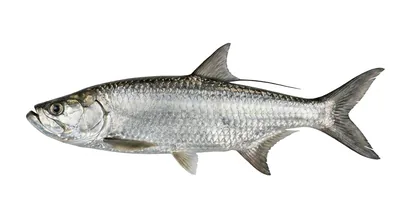
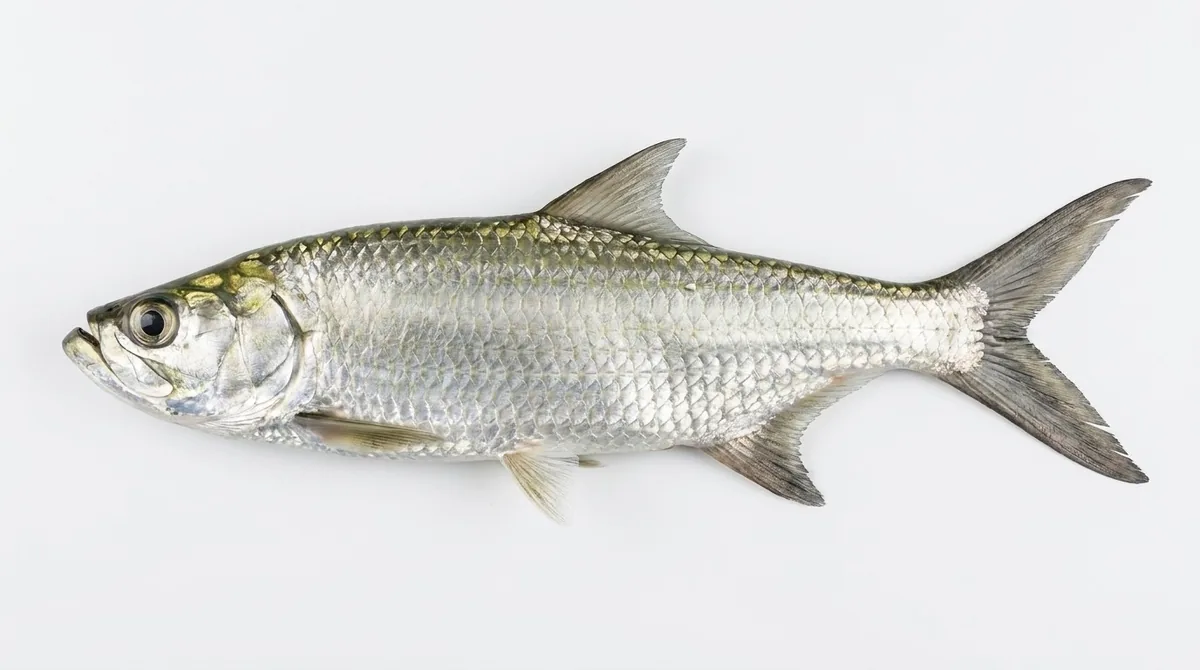
Indo-Pacific tarpon
Megalops cyprinoides
- Freshwater & Saltwater
- Data Deficient
- Max length
- 150 cm
- Class
- Teleostei
- Order
- Elopiformes
- Family
- Megalopidae
- Genus
- Megalops
- Africa - Inland waters
- Asia - Inland waters
- Indian Ocean, Eastern
- Indian Ocean, Western
- Oceania - Inland waters
- Pacific, Northwest
- Pacific, Western Central
About the indo-pacific tarpon
The Indo-Pacific tarpon (Megalops cyprinoides), also known as the oxeye herring or simply herring due to its superficial resemblance to the true herrings, of which it is not a member, is the smaller of the two species of tarpon and lives in Indo-Pacific waters.
Distribution
The Indo-Pacific tarpon is found from the coasts of East Africa and the Arabian Peninsula to the coastal waters of South Asia, Southeast Asia, southern Japan, French Polynesia, and southern Australia. Their usual habitat is in coastal waters, estuaries and many miles upstream (from the estuaries) in freshwater rivers and lakes. They are amphidromus, i.e. they migrate from the river to the sea, and from the sea to the river. The tarpon lives in many tropical areas of Australia in the tropical, coastal, and brackish waters of the Indo-Pacific Ocean in both fresh and salt water. They are widely distributed from Australia, Japan, South and Southeast Asia and North Africa. Data are deficient on their population, as their commercial landings and human disturbances are unknown, but they are known to be extremely common throughout their range. Over 300 specimens are found in museums.
Behaviour
They are opportunistic, feeding on smaller fish, crustaceans, and even plants rarely. In salt water, they mainly feed on prawns and herring, but also many other small fish. In fresh water, no significant difference in their food habits is seen; they eat freshwater prawns and bony bream, mainly. The Indo-Pacific tarpon migrates between the open sea and inland rivers. As with all Elopiformes, it spawns mainly offshore. Juveniles of the species stay inshore and migrate to coastal areas while maturing to spawn. Typically, they spawn twice a year. At sea, the larvae migrate inland and are leptocephalic (flattened, transparent and eel-like). Unlike the barramundi, they are able to breed in fresh and salt water.
They are found at depths to 50 m (160 ft), but are commonly found by the surface in shallow, inshore waters. They inhabit coral reefs, mangroves, swamps, rivers, lakes, reservoirs, floodplains, and canals. In Papua New Guinea, they are reportedly found under large mats of Salvinia molesta.
Description from Wikipedia, available under CC BY-SA.
Where the indo-pacific tarpon lives
Distribution data from GBIF (DOI: 10.15468/dl.8rzs8d).
Also known as
- Oxeye herring
- Oxeye
- Indopazifischer Tarpun
- Tarpon indyjski
- Stillahavstarpon
- Osoog-tarpon
- Salongsong
- Bulan-bulan
- Ikan Bulan
- Indopacifische tarpoen
- Mulan-bulan
- Индо-тихоокеанский тарпон
- イセゴイ
- خنجولة الهادي الهندي
- خنجولة الهادى الهندى
- Индотихоокеански тарпон
- নানচিল কোরাল
- גדול-עין אינדו-פסיפי
- പാലാൻ
- ปลาตาเหลือก
- Cá cháo lớn
- 大海鰱