Fishing Calendar App
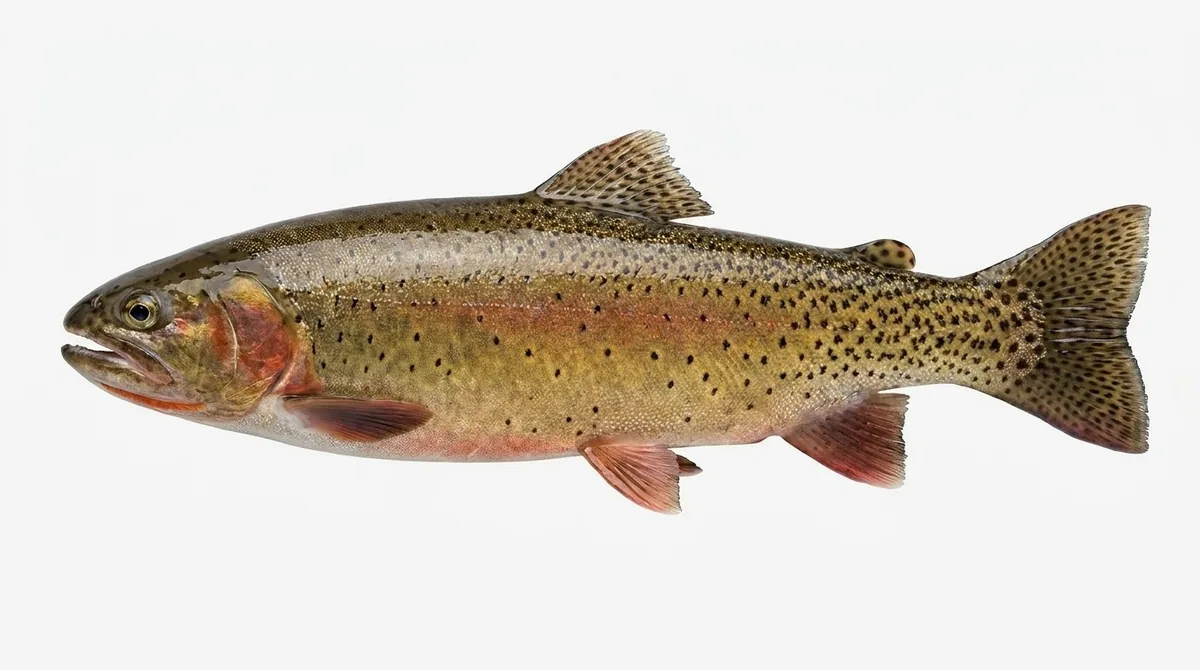
Cutthroat trout
Oncorhynchus clarkii
- Freshwater & Saltwater
- Least Concern
- Max length
- 102 cm
- Class
- Teleostei
- Order
- Salmoniformes
- Family
- Salmonidae
- Genus
- Oncorhynchus
- North America - Inland waters
- Pacific, Northeast
About the cutthroat trout
The cutthroat trout (Oncorhynchus clarkii clade) is a clade of four fish species of the family Salmonidae native to cold-water tributaries of the Pacific Ocean, Rocky Mountains, and Great Basin in North America. These four species are the Coastal (O. clarkii), Westslope (O. lewisi), Lahontan (O. henshawi), and the Rocky Mountain (O. virginalis). As a member of the genus Oncorhynchus, it is in the Pacific trout group, which includes the widely distributed rainbow trout. Cutthroat trout are popular gamefish, especially among anglers who enjoy fly fishing. The common name "cutthroat" refers to the distinctive red coloration on the underside of the lower jaw. The specific name clarkii was given to honor explorer William Clark, coleader of the Lewis and Clark Expedition.
Cutthroat trout usually inhabit and spawn in small to moderately large, clear, well-oxygenated, shallow rivers with gravel bottoms. They reproduce in clear, cold, moderately deep lakes. They are native to the alluvial or freestone streams that are typical tributaries of the rivers of the Pacific Basin, Great Basin and Rocky Mountains. Cutthroat trout spawn in the spring and may inadvertently but naturally hybridize with rainbow trout, producing fertile cutbows. Some populations of the coastal cutthroat trout (O. c. clarkii) are semi-anadromous.
Several subspecies of cutthroat trout are currently listed as threatened in their native ranges due to habitat loss and the introduction of non-native species. Two subspecies, O. henshawi alvordensis and O. virginalis macdonaldi, are considered extinct. Cutthroat trout are raised in hatcheries to restore populations in their native range, as well as stock non-native lake environments to support angling. The cutthroat trout type species and several subspecies are the official state fish of seven western U.S. states.
Habitat
Cutthroat trout require cold, clear, well-oxygenated, shallow rivers with gravel bottoms or cold, moderately deep lakes. Healthy stream-side vegetation that reduces siltation is typical of healthy cutthroat trout habitat and beaver ponds may provide refuge during periods of drought and over winter. Most populations stay in fresh water throughout their lives and are known as nonmigratory, stream-resident or riverine populations. The coastal cutthroat trout (O. clarkii) is the only cutthroat trout subspecies to coevolve through its entire range with the coastal rainbow trout (O. m. irideus). Portions of the Westslope cutthroat trout's (O. lewisi) range overlap with the Columbia River redband trout (O. m. gairdneri), but the majority of its native range is in headwater tributary streams above major waterfalls and other barriers to upstream migration. At least three subspecies are confined to isolated basins in the Great Basin and can tolerate saline or alkaline water.
Cutthroat trout are opportunistic feeders. Stream-resident cutthroat trout primarily feed on larval, pupal and adult forms of aquatic insects (typically caddisflies, stoneflies, mayflies and aquatic dipterans), and adult forms of terrestrial insects (typically ants, beetles, grasshoppers and crickets) that fall into the water, fish eggs, small fish, along with crayfish, shrimp and other crustaceans. As they grow the proportion of fish consumed increases in most populations. In saltwater estuaries and along beaches, Coastal cutthroat trout feed on small fish such as sculpins, sand lance, salmon fry and herring. They also consume shrimp, small squid and krill. In fresh water, they consume the same diet as stream resident trout—aquatic insects and crustaceans, amphibians, earthworms, small fish and fish eggs. Within the range of the bull trout (Salvelinus confluentus) the cutthroat trout is a forage fish for the piscivorous bull trout.
Distribution
Cutthroat trout are native to western North America and have evolved through geographic isolation into at least 25 genetically-recognizable lineages, each native to a different major drainage basin. Native cutthroat trout species are found along the Pacific Northwest coast from Alaska through British Columbia into northern California, in the Cascade Range, the Great Basin and throughout the Rocky Mountains including southern Alberta. Some coastal populations of the coastal cutthroat trout (O. c. clarkii) are semi-anadromous, spending a few months in marine environments to feed as adults and returning to fresh water from fall through early spring to feed on insects and spawn. Cutthroat trout have the second-largest historic native range of North American trout; the lake trout (Salvelinus namaycush) having the largest. Ranges of some subspecies, particularly the westslope cutthroat trout (O. l. lewisi), have been reduced to less than 10 percent of their historic range due to habitat loss and introduction of non-native species.
Although members of Oncorhynchus, the Pacific trout/salmon species, multiple lineages evolved populations east of the Continental Divide in the upper Missouri River basin, upper Arkansas and Platte River basins and upper Yellowstone River basin, each which drain into the Atlantic basin via the Mississippi River (in 2005, researchers published a report stating that a natural distribution of (O. mykiss), the Conchos trout, is also located in an Atlantic basin drainage). Scientists believe that the climatic and geologic conditions 3–5 million years ago allowed cutthroat trout from the Snake River to migrate over the divide into the Yellowstone plateau via Two Ocean Pass. There is also evidence that Yellowstone Lake once drained south into the Snake River drainage. Evidence suggests that the westslope cutthroat trout was able to establish populations east of the divide via Summit Lake at Marias Pass which at one time connected the Flathead River drainage with the upper Missouri River drainage. Scientists speculate that there are several mountain passes associated with the headwaters of the Colorado River drainage and Arkansas/Platte River drainages that would have allowed migration of cutthroat trout east of the divide.
Cutthroat trout have been introduced into non-native waters outside their historic native range, but not to the extent of the rainbow trout (O. mykiss). Within the native range of the Yellowstone cutthroat trout, U.S. Fisheries Bureau and National Park Service authorities introduced Yellowstone cutthroat trout into many fishless lakes in Yellowstone National Park. Cutthroat trout were introduced into Lake Michigan tributaries in the 1890s and sporadically in the early 20th century, but never established wild populations. A population of Yellowstone cutthroat trout purportedly has been established in Lake Huron. Cutthroat are routinely introduced by the Arizona Game and Fish Department into high mountain lakes in the White Mountains in the northeastern region of that state.
Description from Wikipedia, available under CC BY-SA.
Where the cutthroat trout lives
Distribution data from GBIF (DOI: 10.15468/dl.8rzs8d).
Also known as
- Trucha degollada
- Truite fardée
- Cutthroat-Forelle
- Łosoś clarka
- Strupsnittsöring
- Kratkovrata postrv
- Truita de Clark
- Klarka truto
- Punakurkkulohi
- Forel dagu-merah
- Roodkeelforel
- Oncorhynchus clarki
- Лосось Кларка
- 컷스로트송어
- ノドキリマス
- سلمون مرقط سفاح
- سمك السلمون المرقط السفاح
- Червеногърла сьомга
- قزلآلای بیرحم
- پھٹڑ گلا ٹراؤٹ
- Црвеногрла пастрмка
- 克拉克大麻哈魚
Where to catch cutthroat trout
- Arkansas River at Salida United States River · live river data
- Bristol Bay United States Bay · Alaska
- Cape Fear River United States River · North Carolina
- Columbia River at Astoria United States River · Oregon-Washington
- Green River (Flaming Gorge) United States River · live river data
- Kenai River United States River · Alaska