Fishing Calendar App
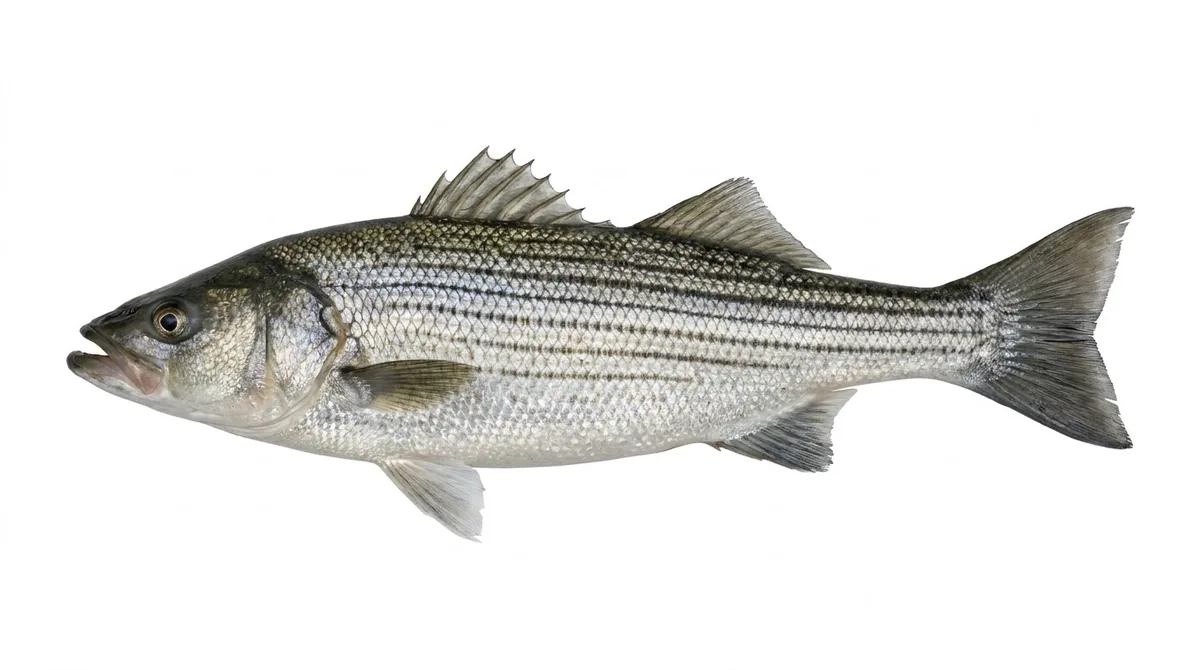
Striped bass
Morone saxatilis
- Freshwater & Saltwater
- Least Concern
- Max length
- 200 cm
- Class
- Teleostei
- Order
- Eupercaria incertae sedis
- Family
- Moronidae
- Genus
- Morone
- Atlantic, Northwest
- North America - Inland waters
- Pacific, Eastern Central
About the striped bass
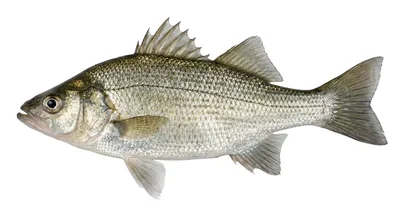
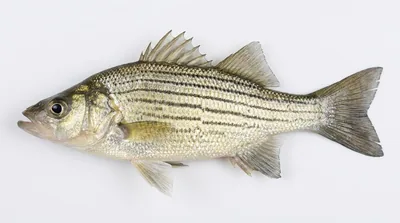
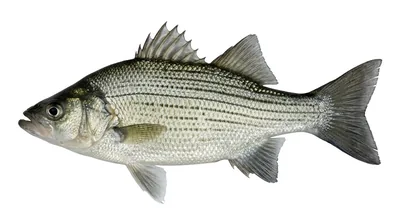
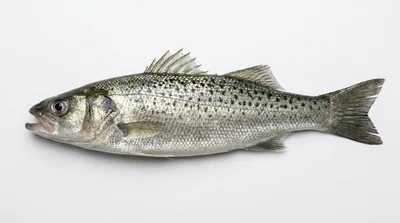
The striped bass (Morone saxatilis), also called the Atlantic striped bass, striper, linesider, rock, or rockfish, is an anadromous perciform fish of the family Moronidae found primarily along the Atlantic coast of North America. It has also been widely introduced into inland recreational fisheries across the United States. Striped bass found in the Gulf of Mexico are a separate strain referred to as Gulf Coast striped bass.
The striped bass is the state fish of Maryland, Rhode Island, and South Carolina, and the state saltwater (marine) fish of New York, New Jersey, Virginia, and New Hampshire. It is generally called the striped bass north of New Jersey, rockfish south of New Jersey, and both in New Jersey.
The history of the striped bass fishery in North America dates back to the Colonial period. Many written accounts by some of the first European settlers describe the immense abundance of striped bass, along with alewives, traveling and spawning up most rivers in the coastal Northeast.
Habitat
The spawning success of striped bass has been studied in the San Francisco Bay-Delta water system, with a finding that high total dissolved solids (TDS) reduce spawning. At levels as low as 200 mg/L TDS, an observable diminution of spawning productivity occurs. They can be found in lakes, ponds, streams, and wetlands.
Though the population of striped bass was growing and repopulating in the late 1980s and throughout the 1990s, a study executed by the Wildlife and Fisheries Program at West Virginia University found that the rapid growth of the striped bass population was exerting a tremendous pressure on its prey (river herring, shad, and blueback herring). This pressure on their food source was putting their own population at risk due to the population of prey naturally not coming back to the same spawning areas.
In the United States, the striped bass was designated as a protected game fish in 2007, and executive agencies were directed to use existing legal authorities to prohibit the sale of striped bass caught in federal waters in the Atlantic Ocean and Gulf of Mexico. In addition, Connecticut, Maine, New Jersey, New Hampshire, Pennsylvania, and South Carolina have designated striped bass as a game fish in state waters.
In Canada, the province of Quebec designated the striped bass population of the Saint Lawrence as extirpated in 1996. Analysis of available data implicated overfishing and dredging in the disappearance. In 2002, a reintroduction program was successful.
Distribution
Striped bass are native to the Atlantic coastline of North America from the St. Lawrence River into the Gulf of Mexico to Louisiana. They are anadromous fish that migrate between fresh and salt water. Spawning takes place in fresh water.
Description from Wikipedia, available under CC BY-SA.
Where the striped bass lives
Distribution data from GBIF (DOI: 10.15468/dl.8rzs8d).
Also known as
- Green heads
- Rock
- Squid-hounds
- Atlantic striped bass
- Linesider
- Rockfish
- Striper
- Lobina estriada
- Bar rayé
- Skalnik prążkowany
- Strimmig havsabborre
- Stripet havabbor
- Črtasti brancin
- Felsenbarsch
- Zolaqlı lavrak
- Llobarro atlàntic ratllat
- Mořčák pruhovaný
- Juovabassi
- Csíkos sügér
- Gestreepte zeebaars
- Morona pruhovaná
- Полосатый лаврак
- Окунь полосатый
- 줄농어
- ストライプドバス
- باس مخطط
- Раиран костур
- خارماهی نواری
- בס מנומר
- Таргыл лаврак
- Окунь смугастий
- Cá vược sọc
- 銀花鱸魚
Where to catch striped bass
- Arkansas River at Salida United States River · live river data
- Cape Cod Bay United States Bay · Massachusetts
- Cape Fear River United States River · North Carolina
- Chesapeake Bay United States Estuary · Maryland and Virginia
- Delaware Bay United States Bay · Delaware-New Jersey
- Green River (Flaming Gorge) United States River · live river data