Fishing Calendar App
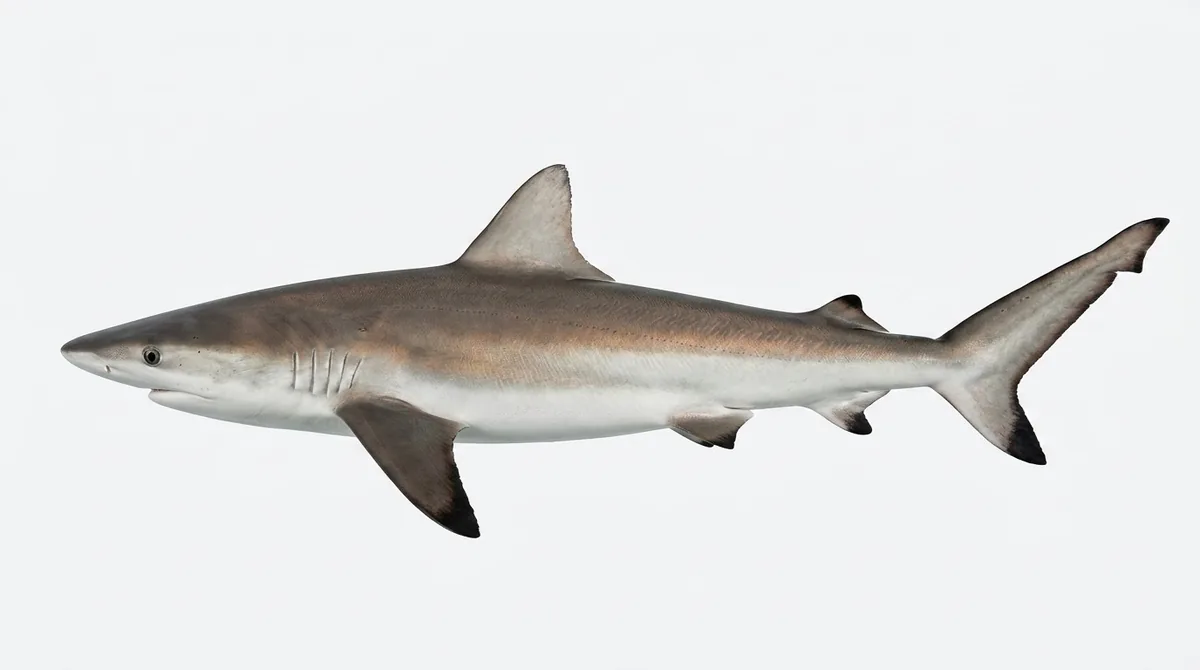
Spinner shark
Carcharhinus brevipinna
- Saltwater
- Vulnerable
- Max length
- 300 cm
- Class
- Elasmobranchii
- Order
- Carcharhiniformes
- Family
- Carcharhinidae
- Genus
- Carcharhinus
- Atlantic, Northeast
- Atlantic, Northwest
- Atlantic, Southwest
- Atlantic, Western Central
- Indian Ocean, Eastern
- Indian Ocean, Western
- Pacific, Southwest
- Pacific, Western Central
About the spinner shark
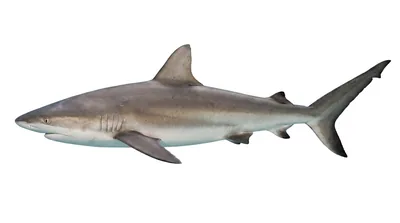
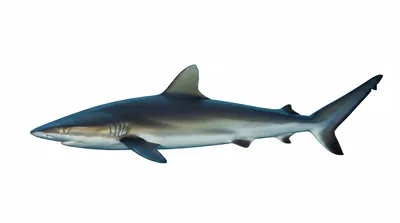
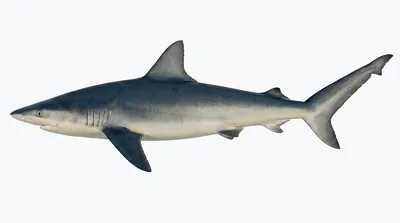
The spinner shark (Carcharhinus brevipinna) is a type of requiem shark, in the family Carcharhinidae, named for the spinning leaps it makes as a part of its feeding strategy. This species occurs in tropical and warm temperate waters worldwide, except for in the eastern Pacific Ocean. It is found from coastal to offshore habitats to a depth of 100 m (330 ft), though it prefers shallow water. The spinner shark resembles a larger version of the blacktip shark (C. limbatus), with a slender body, long snout, and black-marked fins. This species can be distinguished from the blacktip shark by the first dorsal fin, which has a different shape and is placed further back, and by the black tip on the anal fin (in adults only). It attains a maximum length of 3 m (9.8 ft).
Spinner sharks are swift and gregarious predators that feed on a wide variety of small bony fishes and cephalopods. When feeding on schools of forage fish, they speed vertically through the school while spinning on their axis, erupting from the water at the end. Like other members of its family, the spinner shark is viviparous, with females bearing litters of three to 20 young every other year. The young are born in shallow nursery areas near the coast, and are relatively fast-growing. This species is not usually dangerous to humans, but may become belligerent when excited by food. Spinner sharks are valued by commercial fisheries across their range for their meat, fins, liver oil, and skin. They are also esteemed as strong fighters by recreational fishers. The International Union for Conservation of Nature has assessed this species as Vulnerable worldwide.
Distribution
Some uncertainty exists in the distribution data for the spinner shark due to confusion with the blacktip shark. In the Western Atlantic Ocean, it occurs from North Carolina to the northern Gulf of Mexico, including the Bahamas and Cuba, and from southern Brazil to Argentina. In the Eastern Atlantic, it occurs from off North Africa to Namibia. In the Indian Ocean, it is found from South Africa and Madagascar, to the Red Sea and the Gulf of Aden, to India and nearby islands, to Java and Sumatra. In the Pacific Ocean, it occurs off Japan, Vietnam, Australia, and possibly the Philippines. Parasitological evidence suggests that Indian Ocean spinner sharks have passed through the Suez Canal into the Mediterranean Sea, becoming Lessepsian migrants.
The spinner shark has been reported from the ocean surface to a depth of 100 m (330 ft), though it prefers water less than 30 m (98 ft) deep, and occupies all levels of the water column. This species may be found from coastal waters to well offshore, over continental and insular shelves. Juveniles have been known to enter bays, but avoid brackish conditions. The northwest Atlantic subpopulation is known to be migratory; in spring and summer, they are found in warm inshore waters, and in winter, they move south into deeper water.
Behaviour
Spinner sharks feed primarily on small bony fish, including tenpounders, sardines, herring, anchovies, sea catfish, lizardfish, mullets, bluefish, tunas, bonito, croakers, jacks, mojarras, grunts, and tongue-soles. They have also been known to eat stingrays, cuttlefish, squid, and octopus. Groups of spinner sharks are often found pursuing schools of prey at high speed. Individual prey are seized and swallowed whole, as this shark lacks cutting dentition. This species employs an unusual tactic when feeding on schools of small fish; the shark charges vertically through the school, spinning on its axis with its mouth open and snapping all around it. The shark's momentum at the end of these spiraling runs often carries it into the air, giving it its common name. The blacktip shark also performs this behavior, though not as often. Off Madagascar, spinner sharks follow migrating schools of mackerel, tunas, and jacks. Like blacktip sharks, they congregate around shrimp trawlers to feed on the discarded bycatch, and may be incited into feeding frenzies.
Description from Wikipedia, available under CC BY-SA.
Where the spinner shark lives
Distribution data from GBIF (DOI: 10.15468/dl.8rzs8d).
Also known as
- Jaquetón picudo
- Tiburón aleta negra
- Tiburón curro
- Requin tisserand
- Großer Schwarzspitzenhai
- Langnasenhai
- Spinnerhai
- Spinnarhaj
- Spinnerhaai
- Fonócápa
- Tolhaai
- Короткопёрая серая акула
- ハナザメ
- স্পিনার হাঙর
- کوسه چرخنده
- כריש קצר-גף
- സ്പിന്നെർ സ്രാവ്
- چکری شارک
- Сіра акула короткоплавцева
- 蔷薇真鲨
- قرش دوار
Where to catch spinner shark
- Limfjord Denmark Fjord · North Jutland
- Skagen Coast Denmark Coast · North Jutland
- Helsinki Archipelago Finland Archipelago · Uusimaa
- Rügen (Baltic Coast) Germany Coast · Mecklenburg-Vorpommern
- Sylt (Wadden Sea) Germany Coast · Schleswig-Holstein
- Dingle Bay Ireland Bay · Munster