Fishing Calendar App
Finetooth shark
Carcharhinus isodon
- Saltwater
- Near Threatened
- Max length
- 190 cm
- Class
- Elasmobranchii
- Order
- Carcharhiniformes
- Family
- Carcharhinidae
- Genus
- Carcharhinus
- Atlantic, Western Central
About the finetooth shark
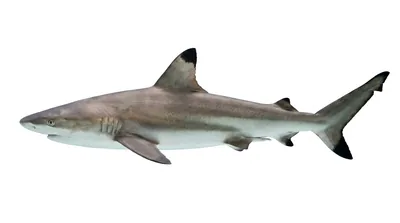
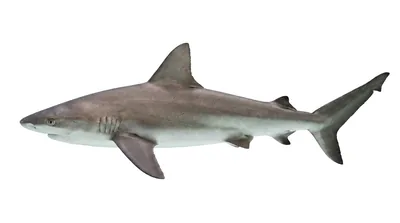
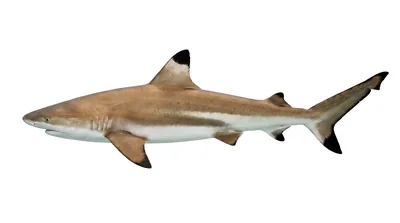
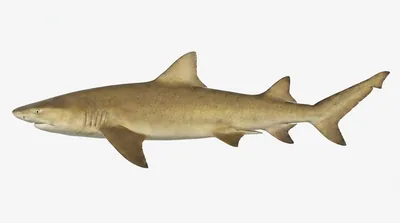
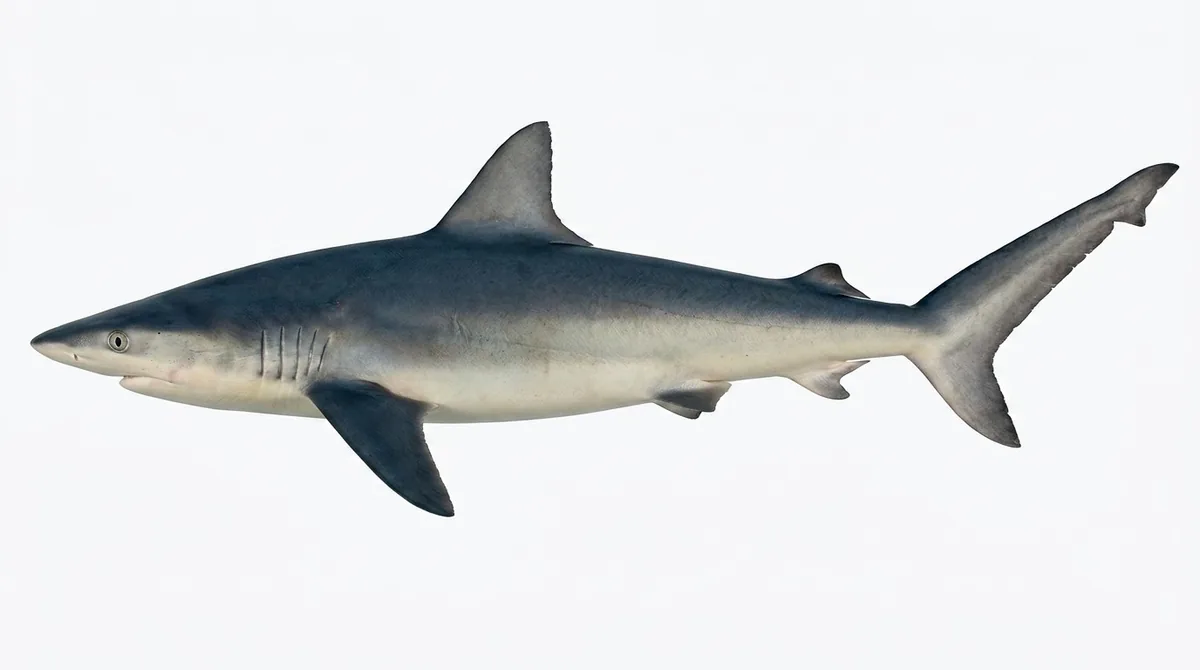
The finetooth shark (Carcharhinus isodon) is a species of requiem shark, in the family Carcharhinidae, found in the western Atlantic Ocean, from North Carolina to Brazil. It forms large schools in shallow, coastal waters, and migrates seasonally following warm water. A relatively small, slender-bodied shark, the finetooth shark can be identified by its needle-like teeth, dark blue-gray dorsal coloration, and long gill slits. It attains a maximum length of 1.9 m (6.2 ft). The diet of this species consists primarily of small bony fishes, in particular menhaden. Like other members of its family, it is viviparous with females giving birth to two to six pups in estuarine nursery areas every other year.
Valued for its meat, the finetooth shark forms an important component of the commercial gillnet shark fishery operating off the southeastern United States. Population assessments suggest that this fishery does not currently pose a threat to U.S. populations of the species. This shark is not known to pose a danger to humans, though it snaps vigorously when captured and should be handled with caution.
Distribution
In North American waters, the finetooth shark is common and found from North Carolina to the northern Gulf of Mexico, and very occasionally straying as far north as New York. In Central and South American waters, it is rare, but may occur more widely than presently known, having been reported off Trinidad and Guyana, infrequently from the Caribbean Sea, and off southern Brazil from São Paulo to Santa Catarina. The northwestern Atlantic, Gulf of Mexico, and South America populations are distinct, with little interchange between them. Old records exist of this species in the eastern Atlantic off Senegal and Guinea-Bissau, but these likely represent misidentifications of spinner sharks (C. brevipinna).
The finetooth shark is often found near beaches and in bays and estuaries. It inhabits extremely shallow waters, no deeper than 10 m (33 ft) in the summer and 20 m (66 ft) deep in the winter. Historically, it was known to venture into rivers in the Gulf Coastal Plain of Texas, though most of paths into this area are now blocked by dams. The northwestern Atlantic population of this species is strongly migratory: juveniles, followed by adults, arrive off South Carolina from late March to early May, when the water temperature rises above 20 °C (68 °F). They remain until September to mid-October, until the water temperature drops and they move south to Florida. The movements of other populations are unknown.
Description from Wikipedia, available under CC BY-SA.
Where the finetooth shark lives
Distribution data from GBIF (DOI: 10.15468/dl.8rzs8d).
Also known as
- Tiburón dentiliso
- Requin à petites dents
- Feinzahnhai
- Fintandad haj
- Cação-dente-liso
- Fijntandhaai
- Равнозубая серая акула
- 강한이빨상어
- قرش دقيق الأسنان
- قرش دقيق الاسنان
- ودیا دند شارک
- Сіра акула рівнозуба
- 長孔真鯊
Where to catch finetooth shark
- Cape Fear River United States River · North Carolina
- Florida Bay (Everglades) United States Bay · Florida
- Florida Keys United States Coast · Florida
- Galveston Bay United States Bay · Texas
- Lake Pontchartrain United States Lake · Louisiana
- Port Aransas United States Coast · Texas