Fishing Calendar App
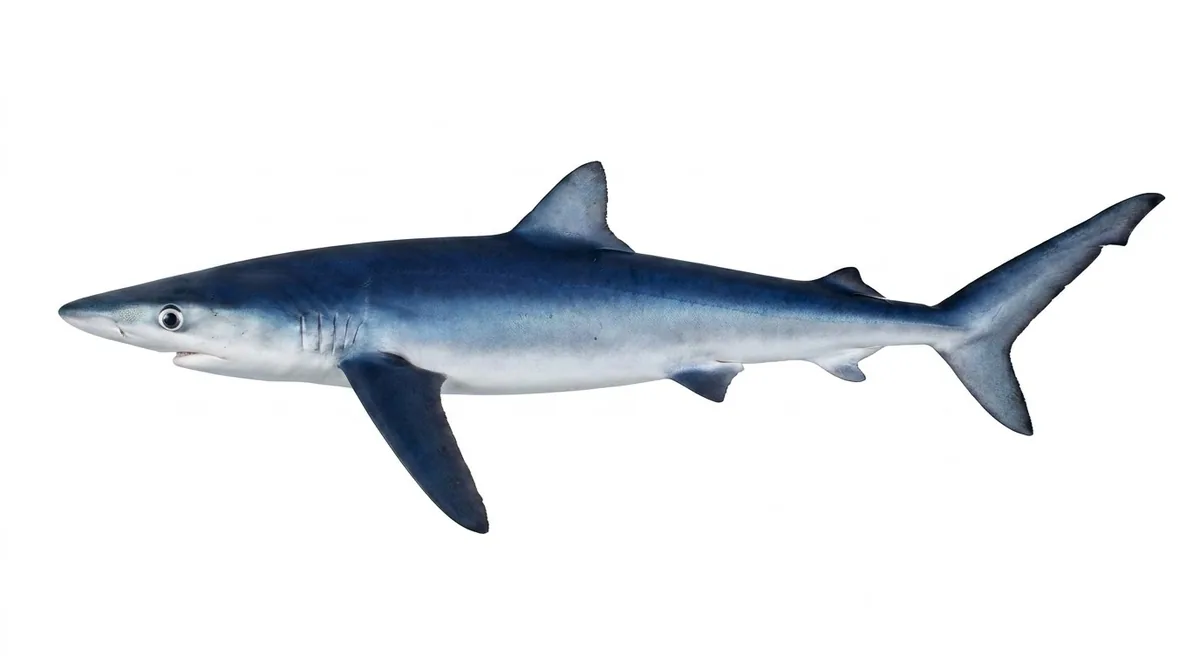
Blue shark
Prionace glauca
- Saltwater
- Near Threatened
- Max length
- 384 cm
- Class
- Elasmobranchii
- Order
- Carcharhiniformes
- Family
- Carcharhinidae
- Genus
- Prionace
- Atlantic, Eastern Central
- Atlantic, Northeast
- Atlantic, Northwest
- Atlantic, Western Central
- Indian Ocean, Eastern
- Mediterranean and Black Sea
- Pacific, Eastern Central
- Pacific, Northeast
- Pacific, Southwest
About the blue shark
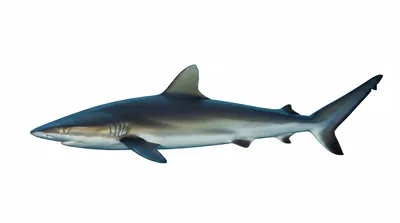
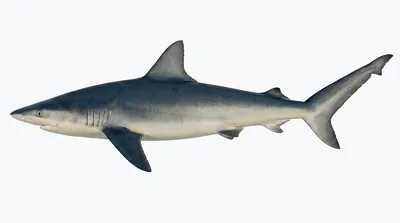
The blue shark (Prionace glauca), also known as the great blue shark, is a species of requiem shark in the family Carcharhinidae which inhabits deep waters in the world's temperate and tropical oceans. It is the only species of genus Prionace. Averaging around 3.1 m (10 ft) and preferring cooler waters, the blue shark migrates long distances, such as from New England to South America. It is listed as Near Threatened by the IUCN.
Although generally lethargic, they can move very quickly. Blue sharks are viviparous and are noted for large litters of 25 to over 100 pups. They feed primarily on small fish and squid, although they can take larger prey. Some of the blue shark's predators include the killer whale and larger sharks like tiger sharks and the great white shark. Their maximum lifespan is still unknown, but it is believed that they can live up to 20 years. They are one of the most abundant pelagic sharks, with large numbers being caught by fisheries as bycatch on longlines and nets.
The earliest fossil teeth of this species are known from the Miocene of Sri Lanka. Other fossil teeth of this species are known from the Miocene and Pliocene of Chile, Italy, and possibly Belgium.
Distribution
The blue shark is an oceanic and epipelagic shark found worldwide in deep temperate and tropical waters from the surface to about 350 m (1,150 ft). In temperate seas it may approach shore, where it can be observed by divers; while in tropical waters, it inhabits greater depths. It lives as far north as Norway and as far south as Chile. Blue sharks are found off the coasts of every continent, except Antarctica. Its greatest Pacific concentrations occur between 20° and 50° North, but with strong seasonal fluctuations. In the tropics, it spreads evenly between 20° N and 20° S. It prefers water temperatures between 12 and 20 °C (54–68 °F), but can be seen in water ranging from 3.9 to 31 °C (39.0–87.8 °F). Records from the Atlantic show a regular clockwise migration within the prevailing currents.
Behaviour
Male blue sharks primarily court non-pregnant mature females since mating marks on females are common, appearing as several tiny incisions arranged in a semicircle on their Dorsal fins. These marks are the result of non-feeding bites during courtship and mating. Female Blue sharks have evolved skin three times thicker than that of males to withstand the rigors of mating.
Female blue sharks are classified as immature, subadult, or mature based on the size and development of their ovary, oviducal gland, and uterus.
Mature females have enlarged uterine walls, a fully differentiated oviducal gland, visible and enlarged Ovarian follicles and a right ovary separated and developed from the epigonal organ.
Immature females have an undifferentiated oviducal gland and uterus, a small right ovary lodged within the epigonal organ, and no visible follicles.
Description from Wikipedia, available under CC BY-SA.
Where the blue shark lives
Distribution data from GBIF (DOI: 10.15468/dl.8rzs8d).
Also known as
- Great blue
- Great blue shark
- Requin bleu
- Peau bleue
- Blauhai
- Blauer Hai
- Blåhaj
- Squalo azzuro
- Verdesca
- Sinji morski pes
- Tiburón azul
- Tintorera
- Żarłacz błękitny
- Rekin błękitny
- Tubarão-azul
- Tintureira
- Blåhai
- Blouhaai
- Kakia biru
- Cucut biru
- Morc'hast c'hlas
- Tauró blau
- Pesciucane
- Žralok modrý
- Blua ŝarko
- Tintoleta
- Sinihai
- Siorc gorm
- Quenlla
- Modrulj
- Kékcápa
- Hiu biru
- Bláháfur
- Melsvasis ryklys
- Yu biru
- Blauwe haai
- Rechin albastru
- Canisca
- Blue shairk
- Pas modrulj
- Žralok belasý
- Pamuk balığı
- Morgi Glas
- 청새리상어
- Синяя акула
- ヨシキリザメ
- قرش أزرق
- قرش ازرق
- Синя акула
- ব্লু শার্ক
- އަނދުން މިޔަރު
- Γλαυκοκαρχαρίας
- کوسه آبی
- כריש כחול
- Կապույտ շնաձուկ
- Կապոյտ կէտը
- Сина ајкула
- നീലസ്രാവ്
- Łóóʼ hashkéhé dootłʼizhígíí
- نیلی شارک
- شين شارک
- Модруљ
- Акула блакитна
- Cá mập xanh
- Блакітная акула
- 大青鲨
Where to catch blue shark
- Dubrovnik Coast Croatia Coast · Dubrovnik-Neretva
- Istria Coast Croatia Coast · Istria
- Kornati Archipelago Croatia Archipelago · Šibenik-Knin
- Kvarner Gulf Croatia Gulf · Kvarner
- Neretva Delta Croatia Delta · live river data
- Pag Channel Croatia Channel · Zadar