Fishing Calendar App
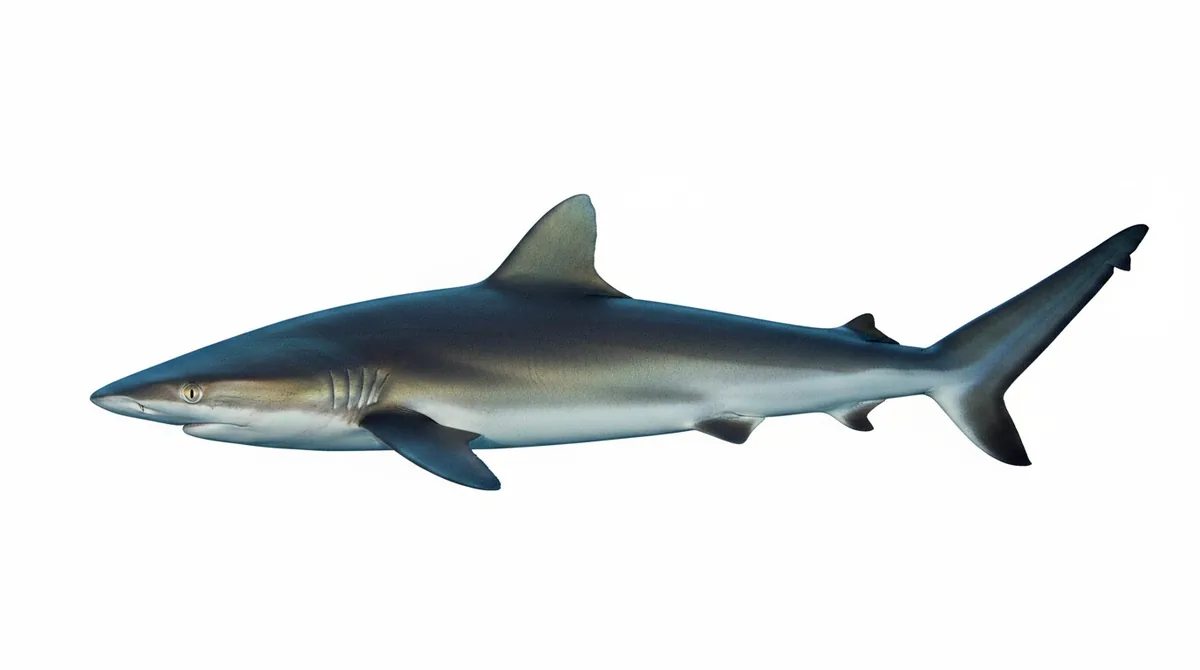
Silky shark
Carcharhinus falciformis
- Saltwater
- Vulnerable
- Max length
- 350 cm
- Class
- Elasmobranchii
- Order
- Carcharhiniformes
- Family
- Carcharhinidae
- Genus
- Carcharhinus
- Atlantic, Eastern Central
- Atlantic, Northeast
- Atlantic, Western Central
- Indian Ocean, Western
- Pacific, Eastern Central
- Pacific, Southeast
- Pacific, Southwest
- Pacific, Western Central
About the silky shark
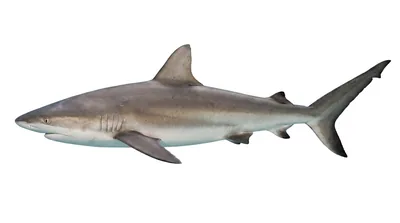
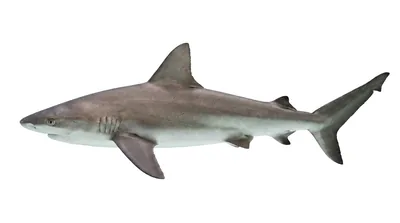
The silky shark (Carcharhinus falciformis), also known by numerous names such as blackspot shark, gray whaler shark, olive shark, ridgeback shark, sickle shark, sickle-shaped shark and sickle silk shark, is a species of requiem shark, in the family Carcharhinidae, named for the smooth texture of its skin. It is one of the most abundant sharks in the pelagic zone, and can be found around the world in tropical waters. Highly mobile and migratory, this shark is most often found over the edge of the continental shelf down to 50 m (164 ft). The silky shark has a slender, streamlined body and typically grows to a length of 2.5 m (8 ft 2 in). It can be distinguished from other large requiem sharks by its relatively small first dorsal fin with a curving rear margin, its tiny second dorsal fin with a long free rear tip, and its long, sickle-shaped pectoral fins. It is a deep, metallic bronze-gray above and white below.
With prey often scarce in its oceanic environment, the silky shark is a swift, inquisitive, and persistent hunter. It feeds mainly on bony fishes and cephalopods, and has been known to drive them into compacted schools before launching open-mouthed, slashing attacks. This species often trails schools of tuna, a favored prey. Its sense of hearing is extremely acute, allowing it to localize the low-frequency noises generated by other feeding animals, and, by extension, sources of food. The silky shark is viviparous, meaning that the developing embryos are sustained by a placental connection to their mother. Significant geographical variation is seen in its life history details. Reproduction occurs year-round except in the Gulf of Mexico, where it follows a seasonal cycle. Females give birth to litters of up to 16 pups annually or biennially. The newborn sharks spend their first months in relatively sheltered reef nurseries on the outer continental shelf, growing substantially before moving into the open ocean.
The large size and cutting teeth of the silky shark make it potentially dangerous, and it has behaved aggressively towards divers. However, attacks are rare, as few humans enter its oceanic habitat. Silky sharks are valued for their fins, and to a lesser extent their meat, hide, liver oil, and jaws. Because of their abundance, they form a major component of commercial and artisanal shark fisheries in many countries. Furthermore, their association with tuna results in many sharks being taken as bycatch in tuna fisheries. Although slow-reproducing like most other sharks, the wide distribution and large population of the silky shark was once thought to buffer the species against fishing pressures. However, data suggest that silky shark numbers are declining around the world, which prompted the IUCN to reassess its conservation status to Vulnerable in 2017.
Distribution
The silky shark has a cosmopolitan distribution in marine waters warmer than 23 °C (73 °F). In the Atlantic Ocean, it is found from Massachusetts (USA) to Spain in the north, and from southern Brazil to northern Angola in the south, including the Gulf of Mexico and the Caribbean Sea. In the Mediterranean Sea, it has been recorded first in the Alboran Sea, subsequently in Algerian waters, the Gulf of Gabes (Tunisia) and more recently in the Ligurian Sea. It occurs throughout the Indian Ocean, as far south as Mozambique in the west and Western Australia in the east, including the Red Sea and the Persian Gulf. In the Pacific Ocean, the northern extent of its range runs from southern China and Japan to southern Baja California and the Gulf of California, while the southern extent runs from Sydney, Australia, to northern New Zealand to northern Chile. Based on life history differences, four distinct populations of silky sharks have been identified in ocean basins worldwide: in the northwestern Atlantic, in the western and central Pacific, in the eastern Pacific, and in the Indian Ocean.
Primarily an inhabitant of the open ocean, the silky shark is most common from the surface to a depth of 200 m (660 ft), but may dive to 500 m (1,600 ft) or more. Tracking studies in the tropical eastern Pacific and northern Gulf of Mexico have found that cruising silky sharks spend 99% of their time within 50 m (160 ft) of the surface, and 80–85% of their time in water with a temperature of 26–30 °C (79–86 °F); the pattern was constant regardless of day or night. This species favors the edges of continental and insular shelves, often over deepwater reefs and around islands. Its range extends farther north and south along continental margins than in oceanic waters. On occasion, it may venture into coastal waters as shallow as 18 m (59 ft). Silky sharks are highly mobile and migratory, though the details of their movements are little-known. Tagging data have recorded individual sharks moving up to 60 km (37 mi) per day, and covering distances up to 1,339 km (832 mi). Larger sharks generally move longer distances than smaller ones. In the Pacific Ocean and possibly elsewhere, it spends the summer at slightly higher latitudes, particularly during warmer El Niño years. In the northern Atlantic, most sharks follow the Gulf Stream northward along the U.S. East Coast. In the Gulf of Aden, it is most common in late spring and summer.
Behaviour
The silky shark is an opportunistic predator, feeding mainly on bony fishes from all levels of the water column, including tuna, mackerel, sardines, mullets, groupers, snappers, mackerel scads, sea chubs, sea catfish, eels, lanternfishes, filefishes, triggerfishes, and porcupinefishes. It may also take squid, paper nautilus, and swimming crabs, and fossil evidence indicates it scavenged on whale carcasses. Good feeding opportunities can draw silky sharks in large numbers; one such feeding aggregation in the Pacific has been documented "herding" a school of small fishes into a compact mass (a bait ball) and trapping it against the surface, whereupon the sharks consumed the entire school. When attacking tightly packed fish, silky sharks charge through the ball and slash open-mouthed, catching the prey fish at the corners of their jaws. Although multiple individuals may feed at once, each launches its attack independently.
Studies conducted off the Florida coast and the Bahamas have shown that silky sharks are highly sensitive to sound, in particular low-frequency (10–20 Hz), irregular pulses. Experiments in which these sounds were played underwater attracted sharks from hundreds of meters away. Silky sharks likely orient to these sounds because they are similar to the noise generated by feeding animals such as birds or dolphins, thus indicating promising sources of food. These studies have also demonstrated that a silky shark attracted by one sound will quickly withdraw if that sound abruptly changes in amplitude or character; this change need not be a sound produced by a predator to evoke the reaction. Over repeated exposures, silky sharks habituate to the sound change and stop withdrawing, though it takes them much longer to do so compared to the bolder oceanic whitetip shark.
The bite force of a 2-m-long silky shark has been measured at 890 newtons (200 lbf). A well-established association exists between this species and tuna: off Ghana, almost every tuna school has silky sharks trailing behind, and in the eastern Pacific, these sharks inflict such damage to tuna fishing gear and catches that fishery workers have given them the moniker "net-eating sharks". Silky sharks and bottlenose dolphins compete when both species target the same school of fish; the amount eaten by the dolphins decreases relative to the number of sharks present. If a large number of sharks is present, they tend to remain inside the prey school, while the dolphins consign themselves to the periphery, possibly to avoid incidental injury from the sharks' slashing attacks. Conversely, if a large enough group of dolphins gathers, they become able to chase the sharks away from the prey school. Regardless of which one dominates, the two predators do not engage in any overtly aggressive behavior against each other.
Description from Wikipedia, available under CC BY-SA.
Where the silky shark lives
Distribution data from GBIF (DOI: 10.15468/dl.8rzs8d).
Also known as
- Jaquetón sedoso
- Tiburón lustroso
- Tiburón piloto
- Requin soyeux
- Seidenhai
- Żarłacz jedwabisty
- Silkeshaj
- Svilnati morski pes
- Tauró sedós
- Žralok hedvábný
- Selyemcápa
- Hiu sutra
- Silkiháfur
- Zijdehaai
- Žralok hodvábny
- Шёлковая акула
- 미흑점상어
- クロトガリザメ
- سمك القرش الحريري
- سمك القرش الحريرى
- Копринена акула
- রেশমি হাঙ্গর
- އޮއިވާލި މިޔަރު
- Λείος καρχαρίας
- کوسه ابریشمی
- כריש משי
- Жібек акула
- സിൽക്കി സ്രാവ്
- ریشمی شارک
- සිල්කි මෝරා
- Акула шовкова
- 鐮狀真鯊
Where to catch silky shark
- Limfjord Denmark Fjord · North Jutland
- Skagen Coast Denmark Coast · North Jutland
- Helsinki Archipelago Finland Archipelago · Uusimaa
- Rügen (Baltic Coast) Germany Coast · Mecklenburg-Vorpommern
- Sylt (Wadden Sea) Germany Coast · Schleswig-Holstein
- Dingle Bay Ireland Bay · Munster