Fishing Calendar App
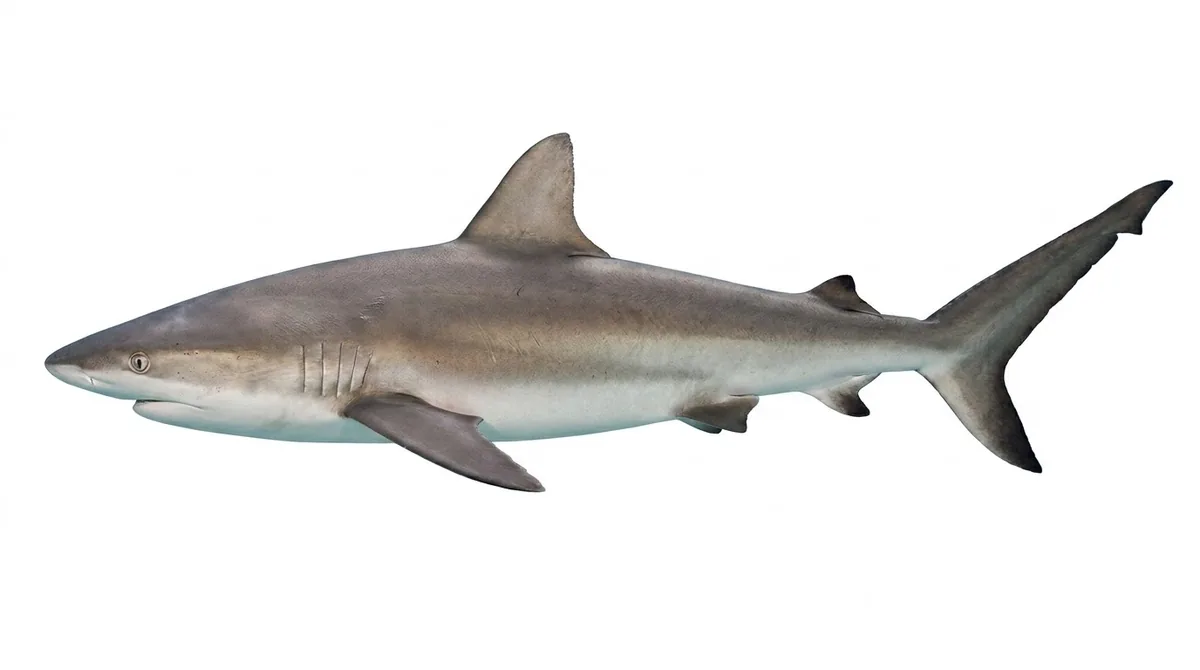
Caribbean reef shark
Carcharhinus perezii
- Saltwater
- Endangered
- Max length
- 300 cm
- Class
- Elasmobranchii
- Order
- Carcharhiniformes
- Family
- Carcharhinidae
- Genus
- Carcharhinus
- Atlantic, Southwest
- Atlantic, Western Central
About the caribbean reef shark
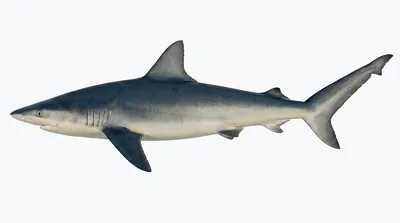
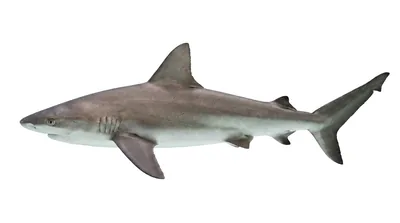
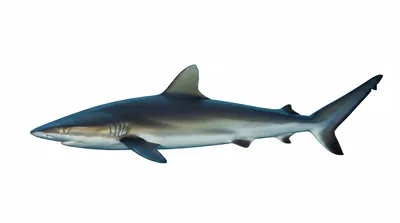
The Caribbean reef shark (Carcharhinus perezi) is a species of requiem shark, belonging to the family Carcharhinidae. It is found in the tropical waters of the western Atlantic Ocean from Florida to Brazil, and is the most commonly encountered reef shark in the Caribbean Sea. With a robust, streamlined body typical of the requiem sharks, this species is difficult to tell apart from other large members of its family such as the dusky shark (C. obscurus) and the silky shark (C. falciformis). Distinguishing characteristics include dusky-colored fins without prominent markings, a short free rear tip on the second dorsal fin, and tooth shape and number.
Measuring up to 3 m (9.8 ft) long, the Caribbean reef shark is one of the largest apex predators in the reef ecosystem, feeding on a variety of fishes and cephalopods. They have been documented resting motionless on the sea bottom or inside caves, unusual behavior for an active-swimming shark. If threatened, it may perform a threat display in which it frequently changes direction and dips its pectoral fins. Like other requiem sharks, it is viviparous with females giving birth to 4–6 young every other year. Caribbean reef sharks are of some importance to fisheries as a source of meat, leather, liver oil, and fishmeal, but recently they have become more valuable as an ecotourist attraction. In the Bahamas and elsewhere, bait is used to attract them to groups of divers in controversial "shark feedings". This species is responsible for a small number of attacks on humans. The shark attacks usually happen in spring and summer.
Distribution
The Caribbean reef shark occurs throughout the tropical western Atlantic Ocean, from North Carolina in the north to Brazil in the south, including Bermuda, the northern Gulf of Mexico, and the Caribbean Sea. However, it is extremely rare north of the Florida Keys. It prefers shallow waters on or around coral reefs, and is commonly found near the drop-offs at the reefs' outer edges. This shark is most common in water shallower than 30 m (98 ft), but has been known to dive to 378 m (1,240 ft).
Behaviour
The Caribbean reef shark feeds on a wide variety of reef-dwelling bony fishes and cephalopods, as well as some elasmobranchs such as eagle rays (Aetobatus narinari) and yellow stingrays (Urobatis jamaicensis). It is attracted to low-frequency sounds, which are indicative of struggling fish. In one observation of a 2 m (6.6 ft) long male Caribbean reef shark hunting a yellowtail snapper (Lutjanus crysurus), the shark languidly circled and made several seemingly "half-hearted" turns towards its prey, before suddenly accelerating and swinging its head sideways to capture the snapper at the corner of its jaws. Young sharks feed on small fishes, shrimps, and crabs. Caribbean reef sharks are capable of everting their stomachs, which likely serves to cleanse indigestible particles, parasites, and mucus from the stomach lining.
Description from Wikipedia, available under CC BY-SA.
Where the caribbean reef shark lives
Distribution data from GBIF (DOI: 10.15468/dl.8rzs8d).
Also known as
- Reef shark
- Carcharhinus perezi
- Tiburón coralino
- Karibischer Riffhai
- Żarłacz karaibski
- Karibisk revhaj
- Tauró dels esculls del Carib
- Žralok Perezův
- Riuttahai
- Karibi szirticápa
- Hiu karang karibia
- Caribische rifhaai
- Tribon 'i pieda
- Karayip resif köpekbalığı
- 카리브암초상어
- ペレスメジロザメ
- قرش الشعاب الكاريبي
- قرش الشعاب الكاريبى
- ক্যারিবীয় প্রবাল হাঙর
- Υφαλοκαρχαρίας της Καραϊβικής
- کوسه آبسنگ کارائیبی
- כריש שונית קריבי
- کریبین ریف شارک
- කැරිබියානු ගල්පර මෝරා
- Карибська рифова акула
- Cá mập san hô Caribe
- 佩氏真鯊
Where to catch caribbean reef shark
- Cape Fear River United States River · North Carolina
- Florida Bay (Everglades) United States Bay · Florida
- Florida Keys United States Coast · Florida
- Galveston Bay United States Bay · Texas
- Lake Pontchartrain United States Lake · Louisiana
- Port Aransas United States Coast · Texas