Fishing Calendar App
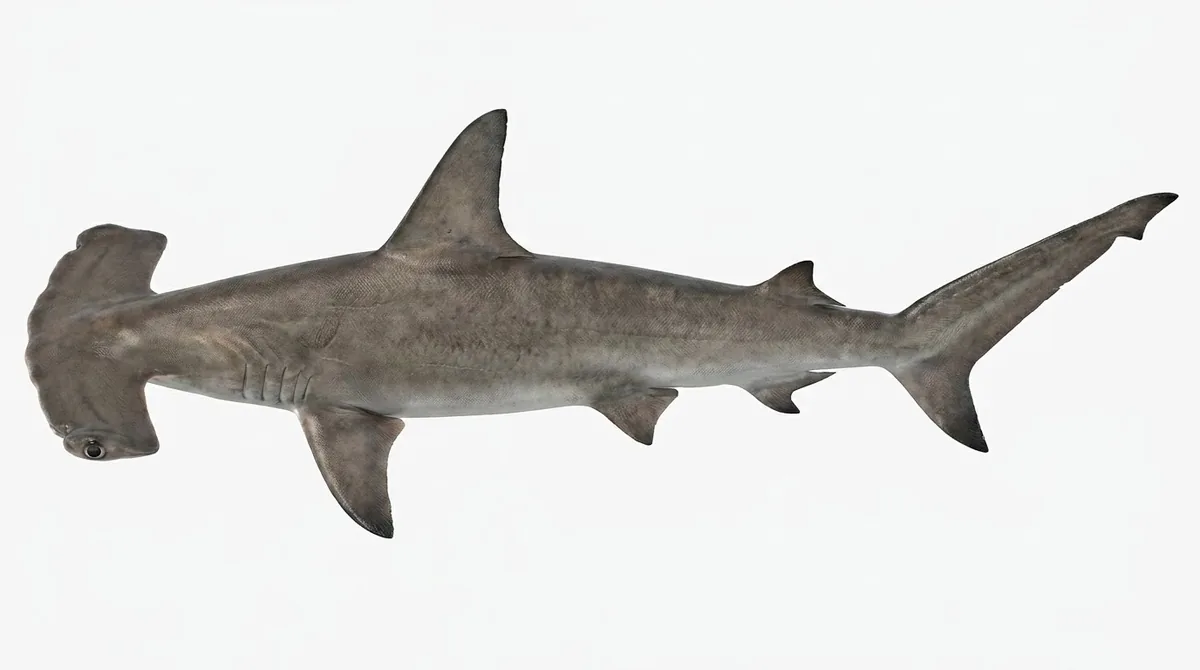
Smooth hammerhead
Sphyrna zygaena
- Saltwater
- Vulnerable
- Max length
- 500 cm
- Class
- Elasmobranchii
- Order
- Carcharhiniformes
- Family
- Sphyrnidae
- Genus
- Sphyrna
- Atlantic, Eastern Central
- Atlantic, Northeast
- Atlantic, Northwest
- Atlantic, Southeast
- Atlantic, Western Central
- Indian Ocean, Eastern
- Indian Ocean, Western
- Pacific, Eastern Central
- Pacific, Northwest
- Pacific, Southwest
About the smooth hammerhead
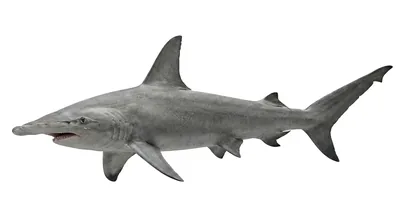
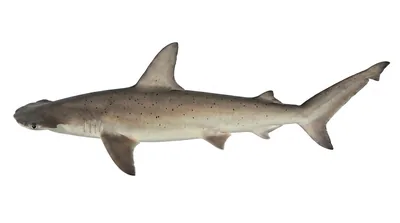
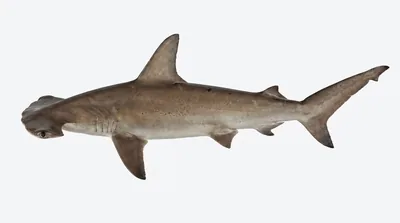
The smooth hammerhead (Sphyrna zygaena) is a species of hammerhead shark, and part of the family Sphyrnidae. This species is named "smooth hammerhead" because of the distinctive shape of the head, which is flattened and laterally extended into a hammer shape (called the "cephalofoil"), without an indentation in the middle of the front margin (hence "smooth"). Unlike other hammerheads, this species prefers temperate waters and occurs worldwide at medium latitudes. In the summer, these sharks migrate towards the poles following cool water masses, sometimes forming schools numbering in the hundreds to thousands.
The second-largest hammerhead shark after the great hammerhead shark, the smooth hammerhead can measure up to 5 m (16 ft) long. It is an active predator that takes a wide variety of bony fishes and invertebrates, with larger individuals also feeding on sharks and rays. As in the rest of its family, this shark is viviparous and gives birth to litters of 20–40 pups. A relatively common shark, it is captured, intentionally or otherwise, by many commercial fisheries throughout its range; its fins are extremely valuable for use in shark fin soup. This shark is potentially dangerous and has likely been responsible for a few attacks on humans, though it is less likely to encounter swimmers than other large hammerhead species due to its temperate habitat.
Distribution
Of the hammerhead sharks, the smooth hammerhead is the species most tolerant of temperate water, and occurs worldwide to higher latitudes than any other species. In the Atlantic, it occurs from Nova Scotia to the Virgin Islands and from Brazil to southern Argentina in the west, and from Ireland to Côte d'Ivoire, including the Mediterranean Sea, in the east. Only 8 have been recorded in British waters, all but one (at Banffshire) in the southern part of the island and all but two (in 2004 and 2019) from more than 100 years ago. The oft-repeated claim of a 1937 capture from the Kattegat (Denmark) is incorrect, as a photo from the incident has revealed that it was a basking shark, although there was a confirmed observation of a hammerhead in the North Sea off Jutland in 2003, which most likely was a smooth hammerhead. In the Indian Ocean, it is found off South Africa, India, and Sri Lanka. In the western Pacific, it occurs from the Gulf of Tonkin to southern Japan and the Russian Far East, as well as off Australia and New Zealand. In the central and eastern Pacific, it occurs off the Hawaiian Islands, California, Panama, the Galapagos Islands, Ecuador, and Chile, with a report in 1954 of two unidentified hammerheads off British Columbia which probably were smooth hammerheads. This species is usually considered to be amphitemperate (absent from the tropics) in distribution, though there are rare reports from tropical waters such as in the Gulf of Mannar off India, and off southern Mozambique. Its presence in the tropics is difficult to determine due to confusion with other hammerhead species. Although generally preferring subtropical and warm temperate regions, a study of captures in the West Atlantic and Gulf of Mexico off the United States recorded smooth hammerheads in water temperatures ranging from 7.5 to 27.5 °C (45.5–81.5 °F).
Compared to the scalloped and great hammerheads, the smooth hammerhead stays closer to the surface, in water less than 20 m (66 ft) deep. However, it has been recorded diving to a depth of 200 m (660 ft). It prefers inshore waters such as bays and estuaries, but is sometimes found in the open ocean over the continental shelf, and around oceanic islands. This shark has also been reported entering freshwater habitats, such as the Indian River in Florida. In the summer, smooth hammerheads migrate poleward to stay in cooler water, heading back towards the equator in winter.
Description from Wikipedia, available under CC BY-SA.
Where the smooth hammerhead lives
Distribution data from GBIF (DOI: 10.15468/dl.8rzs8d).
Also known as
- Hammerhead
- Hammerhead shark
- Shovelhead shark
- Requin-marteau commun
- Requin marteau
- Glatter Hammerhai
- Hamerhai
- Hammarhaj
- Pesce martello
- Kladvenica
- Cornuda cruz
- Cornuda prieta
- Pez martillo
- Tiburón martillo cruz
- Głowomłot pospolity
- Rekin młot
- Ryba młot
- Tubarão-martelo-liso
- Cornuda
- Gladde hamerkophaai
- Rinkin penn-mailh
- Llunada d'ulls petits
- Kladivoun obecný
- Morgi Pen Morthwyl
- Anantave
- Mailu-arrain hirugingil
- Vasarahai
- Peixe martelo
- Morski pas mlat
- Közönséges pörölycápa
- Gladde hamerhaai
- Buntuk martilyu
- Rechin-ciocan
- Mlat
- Žralok kladivohlavý
- 귀상어
- Обыкновенная акула-молот
- シロシュモクザメ
- قرش رأس المطرقة السلس
- قرش راس المطرقة السلس
- Гладка риба чук
- মসৃণ হাতুড়ি হাঙ্গর
- Ζύγαινα
- کوسه سرچکشی نرم
- פטישן תמים-חרטום
- Մուրճագլուխ շնաձուկ
- ചട്ടി ചുറ്റികത്തലയൻ സ്രാവ്
- پدری تھؤڑاسر شارک
- Акула-молот звичайна
- Bolgʻabaliq
- 锤头双髻鲨
Where to catch smooth hammerhead
- Limfjord Denmark Fjord · North Jutland
- Skagen Coast Denmark Coast · North Jutland
- Helsinki Archipelago Finland Archipelago · Uusimaa
- Rügen (Baltic Coast) Germany Coast · Mecklenburg-Vorpommern
- Sylt (Wadden Sea) Germany Coast · Schleswig-Holstein
- Dingle Bay Ireland Bay · Munster