Fishing Calendar App
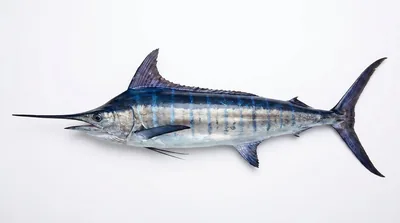
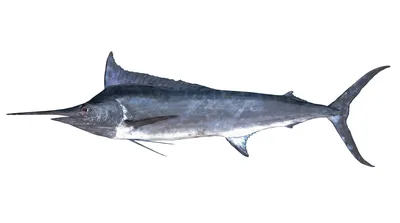
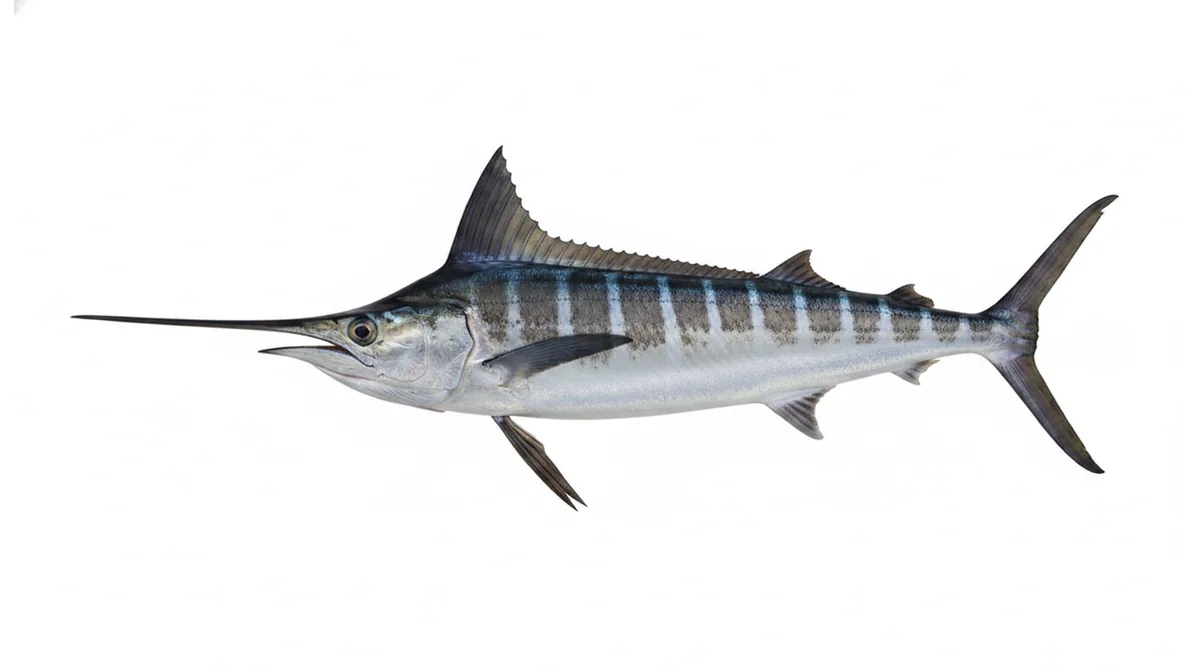
Striped marlin
Kajikia audax
- Saltwater
- Least Concern
- Max length
- 420 cm
- Class
- Teleostei
- Order
- Carangiformes
- Family
- Istiophoridae
- Genus
- Kajikia
- Atlantic, Northeast
- Indian Ocean, Eastern
- Indian Ocean, Western
- Pacific, Eastern Central
- Pacific, Southwest
- Pacific, Western Central
About the striped marlin
The striped marlin (Kajikia audax; see synonyms list for other scientific names) is a species of marlin found globally in tropical to temperate oceans not far from the surface. It is a desirable commercial and game fish, although conservation measures are in place to restrict its commercial landings. An epipelagic predator, it hunts during the day in the top 100 metres (330 ft) or so of the water column, often near the surface. One of its chief prey are sardines and other pelagic forage fish.
Distribution
The striped marlin is epipelagic, residing away from shore but near the surface of the water. It is widely distributed around the world, and typically found in tropical and/or temperate water bodies. A study on its habitat preferences utilized opportunistic occurrence data to determine that the eastern Pacific Ocean is among the most ideal bodies of water for the species to inhabit. Additionally, it was discovered that its largest populations reside in water bodies with dissolved oxygen levels from 4.5 to 5.5 mL/L and a sea surface temperature between 20 and 28 °C (68 and 82 °F).
It was also determined that chlorophyll a levels are of the greatest importance when it comes to striped marlin distribution. High levels of chlorophyll a in a water body are indicative of high productivity, or nutrient level, within that aquatic ecosystem. An abundance of nutrients supports the growth of aquatic plants and algae, which contributes to the congregation of species that feed upon them, the striped marlin's principle prey.
The striped marlin has also demonstrated diel vertical migration patterns. A study observed that it tends to occupy deep regions of the water during the day, and typically gather near the surface at night. These patterns were prominent in all of the regions tested in the study, including waters off of Australia, New Zealand, Mexico, California, and Ecuador.
Behaviour
The striped marlin is a top predator, feeding mainly on a wide range of fish such as sardines, mackerel, small tuna, and cephalopods. One study off the coast of Mexico found that it preferred schooling fish such as the chub mackerel, Etrumeus sadina, and Sardinops caeruleus. It also feeds on some species of squid, most commonly the jumbo.
Description from Wikipedia, available under CC BY-SA.
Where the striped marlin lives
Distribution data from GBIF (DOI: 10.15468/dl.8rzs8d).
Also known as
- Marlin rayé
- Gestreifter Marlin
- Strimmig spjutfisk
- Gestreepte marlyn
- Marlin marradun
- Raitamarliini
- Csíkos marlin
- Setuhuk loreng
- Mersuji tahil
- Полосатый копьеносец
- 청새치
- マカジキ
- مرلين كاجيكي مخطط
- مرلين كاجيكى مخطط
- نیزهماهی راهراه
- מפרשן מפוספס
- دھاریاں والی نیزہ مچھی
- ปลากระโทงลาย
- Cá marlin sọc
- 条纹四鳍旗鱼
Where to catch striped marlin
- Limfjord Denmark Fjord · North Jutland
- Skagen Coast Denmark Coast · North Jutland
- Helsinki Archipelago Finland Archipelago · Uusimaa
- Rügen (Baltic Coast) Germany Coast · Mecklenburg-Vorpommern
- Sylt (Wadden Sea) Germany Coast · Schleswig-Holstein
- Dingle Bay Ireland Bay · Munster