Fishing Calendar App
Indo-Pacific sailfish
Istiophorus platypterus
- Saltwater
- Vulnerable
- Max length
- 289 cm
- Class
- Teleostei
- Order
- Carangiformes
- Family
- Istiophoridae
- Genus
- Istiophorus
- Atlantic, Northeast
- Atlantic, Western Central
- Indian Ocean, Eastern
- Indian Ocean, Western
- Pacific, Eastern Central
- Pacific, Northwest
- Pacific, Western Central
About the indo-pacific sailfish
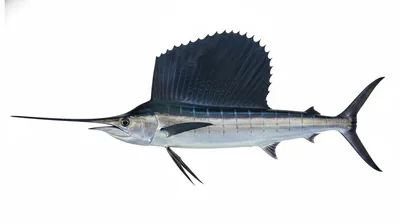
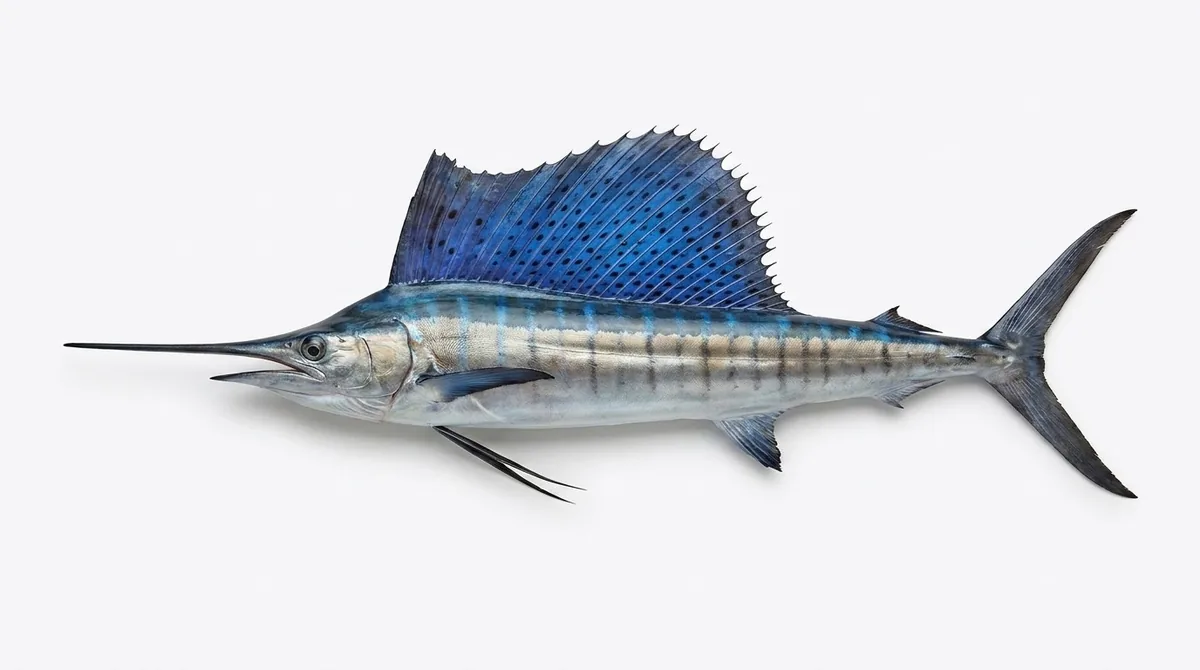
The Indo-Pacific sailfish (Istiophorus platypterus) is a sailfish native to the Indian and Pacific Oceans and is naturalized in the Atlantic where it has entered the Mediterranean Sea via the Suez Canal as a Lessepsian migrant. It is dark blue on top, brown-blue laterally, silvery white underbelly; upper jaw elongated in the form of a spear; first dorsal fin greatly enlarged in the form of a sail, with many black cones, its front squared off, highest at its midpoint; pelvic fins very narrow, reaching almost to the anus; body covered with embedded scales, blunt at end; lateral line curved above pectoral fin, then straight to base of tail. They have a large and sharp bill, which they use for hunting. They feed on tuna and mackerel, some of the fastest fish in the ocean. Most authorities only recognise a single species of sailfish, I. platypterus.
It is theorized by marine biologists that the 'sail' (dorsal fin array) of the sailfish may serve the purpose of a cooling and heating system for this fish; this due to a network of a large number of blood vessels found in the sail and because of "sail-raising" behaviour exhibited by the sailfish at or near the surface waters after or before high-speed bursts.
The IUCN recognizes this species as the cosmopolitan sailfish, where FishBase recognizes two species.
Description from Wikipedia, available under CC BY-SA.
Where the indo-pacific sailfish lives
Distribution data from GBIF (DOI: 10.15468/dl.8rzs8d).
Also known as
- Sailfish
- Pez vela
- Voilier de l'Indo-Pacifique
- Voilier indo-pacifique
- Empereur éventail
- Fächerfisch
- Indopazifischer Fächerfisch
- Żaglica
- Segelfisk
- Seilvis
- Peix vela
- Plachetník širokoploutvý
- Pysgodyn hwyliog
- Purikala
- Purjekala
- Amerikai vitorláskardoshal
- Jangilus
- Pacifische zeilvis
- Malasugi
- 돛새치
- バショウカジキ
- مرلين شراعي هندي باسيفيكي
- مرلين شراعى هندى باسيفيكى
- Паруснікі
- Атлантически ветроход
- ފަންގަނޑު ހިބަރު
- بادبانماهی هندوآرام
- מפרשן כלל-ימי
- ปลากระโทงร่มอินโด-แปซิฟิก
- Вітрильник індо-тихоокеанський
- Cá buồm
- 平鳍旗鱼
Where to catch indo-pacific sailfish
- Limfjord Denmark Fjord · North Jutland
- Skagen Coast Denmark Coast · North Jutland
- Helsinki Archipelago Finland Archipelago · Uusimaa
- Rügen (Baltic Coast) Germany Coast · Mecklenburg-Vorpommern
- Sylt (Wadden Sea) Germany Coast · Schleswig-Holstein
- Dingle Bay Ireland Bay · Munster