Fishing Calendar App
Common stingray
Dasyatis pastinaca
- Saltwater
- Vulnerable
- Max length
- 250 cm
- Class
- Elasmobranchii
- Order
- Myliobatiformes
- Family
- Dasyatidae
- Genus
- Dasyatis
- Atlantic, Eastern Central
- Atlantic, Northeast
- Atlantic, Southeast
- Mediterranean and Black Sea
About the common stingray
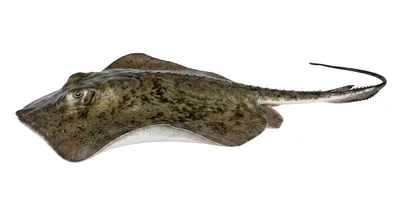
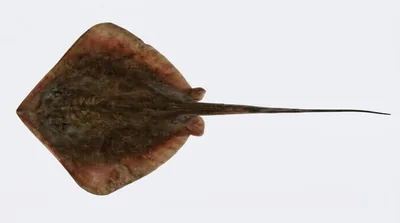
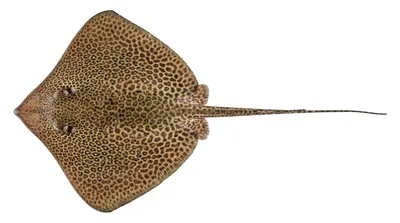
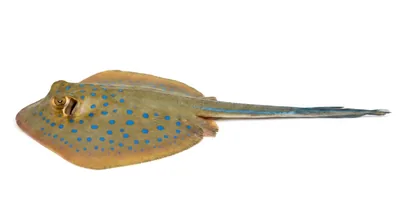
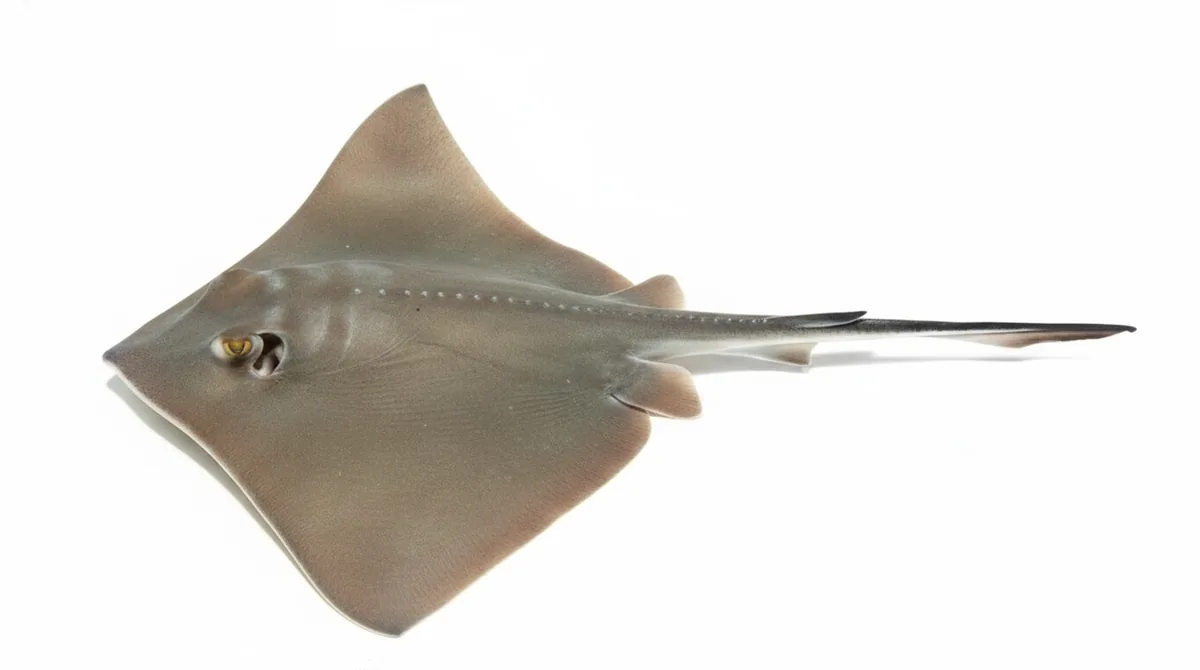
The common stingray (Dasyatis pastinaca) is a species of stingray in the family Dasyatidae, found in the northeastern Atlantic Ocean and the Mediterranean and Black Seas. It typically inhabits sandy or muddy habitats in coastal waters shallower than 60 m (200 ft), often burying itself in sediment. Usually measuring 45 cm (18 in) across, the common stingray has a diamond-shaped pectoral fin disc slightly wider than long, and a whip-like tail with upper and lower fin folds. It can be identified by its plain coloration and mostly smooth skin, except for a row of tubercles along the midline of the back in the largest individuals.
The predominant prey of the common stingray are bottom-dwelling crustaceans, though it also takes molluscs, polychaete worms, and small bony fishes. It is aplacental viviparous: the embryos are nourished by yolk and later histotroph ("uterine milk") produced by the mother. Females bear 4–9 young twice per year in shallow water, after a gestation period of four months. The common stingray can inflict a painful, though rarely life-threatening, wound with its venomous tail spine. During classical antiquity, its sting was ascribed many mythical properties. This species is not sought after by commercial fisheries, but is taken in large numbers as bycatch and utilized for food, fishmeal, and liver oil. Its population is apparently dwindling across its range, and the International Union for Conservation of Nature (IUCN) assesses it as Vulnerable.
Distribution
The common stingray is found throughout the Mediterranean and Black Seas. It also occurs, though in significantly lower numbers, in the northeastern Atlantic Ocean from southern Norway and the western Baltic Sea to Madeira and the Canary Islands. This bottom-dwelling species can be found from the shore to a depth of 200 m (660 ft), though it is not usually found deeper than 60 m (200 ft). It favors sandy or muddy bottoms in calm water, and is also sometimes encountered near rocky reefs or in estuaries, as it is tolerant of low salinity. Off the Azores, common stingrays are most abundant in summer and least abundant in winter, suggestive of a seasonal shift in range and/or depth as has been documented in other ray species.
Description from Wikipedia, available under CC BY-SA.
Where the common stingray lives
Distribution data from GBIF (DOI: 10.15468/dl.8rzs8d).
Also known as
- Stingray
- Pastenague
- Pastenague commune
- Gewöhnlicher Stechrochen
- Brauner Stechrochen
- Stechroche
- Stechrochen
- Spjutrocka
- Pastinaca
- Morski bič
- Chuchos
- Milano
- Raya látigo
- Ogończa pastynak
- Pilskate
- Rae zu
- Escurçana
- Trnucha obecná
- Morgath Ddu
- Bastanga arrunt
- Keihäsrausku
- Közönséges mérgesrája
- Gewone pijlstaartrog
- Pisică de mare comună
- Dikenli vatoz
- Морской кот
- Кот морской
- Скат хвостокол обыкновенный
- コモンスティングレイ
- الشفنين البحري
- الشفنين البحرى
- Морска котка
- لقمهماهی معمولی
- טריגון חד-אף
- ზღვის კატა
- Деңиз мышыгы
- ஆடா திருக்கை
- Морський кіт
- 蓝纹魟
Where to catch common stingray
- Dubrovnik Coast Croatia Coast · Dubrovnik-Neretva
- Istria Coast Croatia Coast · Istria
- Kornati Archipelago Croatia Archipelago · Šibenik-Knin
- Kvarner Gulf Croatia Gulf · Kvarner
- Neretva Delta Croatia Delta · live river data
- Pag Channel Croatia Channel · Zadar