Fishing Calendar App
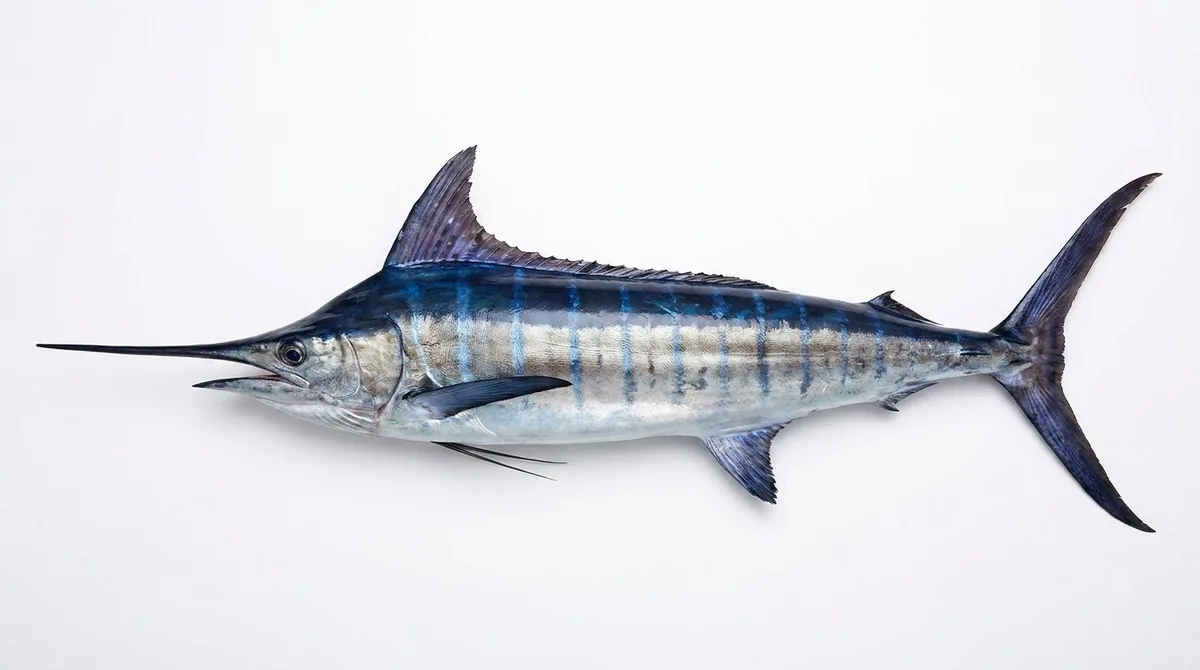
Atlantic blue marlin
Makaira nigricans
- Saltwater
- Vulnerable
- Max length
- 500 cm
- Class
- Teleostei
- Order
- Carangiformes
- Family
- Istiophoridae
- Genus
- Makaira
- Atlantic, Eastern Central
- Atlantic, Southeast
- Atlantic, Western Central
- Indian Ocean, Western
- Pacific, Eastern Central
- Pacific, Western Central
About the atlantic blue marlin
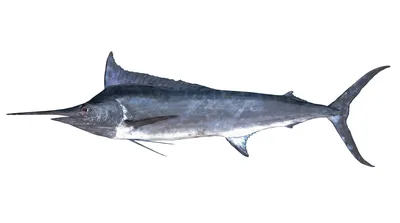
The Atlantic blue marlin (Makaira nigricans) is a species of marlin endemic to the Atlantic Ocean. It is closely related to, and usually considered conspecific with, the Indo-Pacific blue marlin, then simply called blue marlin. Some authorities consider both species distinct. Blue marlin are distributed throughout the tropical and subtropical waters of the Atlantic Ocean. It is a bluewater fish that spends the majority of its life in the open sea far from land.
The blue marlin preys on a wide variety of marine organisms, mostly near the surface, often using its bill to stun or injure its prey then returning to eat the injured or stunned fish. Females can grow up to four times the weight of males. The maximum published weight is 818 kg (1,803 lb) and length 5 m (16.4 ft). Greater lengths have been claimed unofficially. Estimates of the maximum swimming speed of the blue marlin commonly go as high as 72 km/h, though the casual swimming speed at which it moves most of the time is under 4.5 km/h.
They are sought after as a highly prized game fish by anglers and are taken by commercial fishermen, both as a directed catch and as bycatch in major industrial tuna fisheries. Blue marlin are currently considered a threatened species by the IUCN due to overfishing, particularly in the international waters off the coast of Portugal where they migrate to breed in the June/July months. Some other historic English names for the blue marlin are Cuban black marlin, ocean gar, and ocean guard. The relatively high fat content of its meat makes it commercially valuable in certain markets. It is the national fish of the Commonwealth of The Bahamas and is featured on its coat of arms.
Distribution
Blue marlin are found year-round in tropical oceanic waters of the Atlantic. The range expands into temperate waters of the Northern and Southern Hemispheres during the warmer months and contracts towards the Equator during colder months. Warm currents, such as the Gulf Stream, in the western Atlantic have a major influence on their seasonal distribution.
Being the most tropic of all the billfishes, they spend a lot of time in the water column shifting from the top to a depth of 100 meters. They spend most nights near the surface and dive to deeper depths during the day. Limited from going any lower by the water temperature and oxygen levels.
The blue marlin's latitudinal range extends from about 45°N to about 35°S. It is less abundant in the eastern Atlantic, where it mostly occurs off Africa between the latitudes of 25°N and 25°S. The largest numbers are usually found in waters warmer than 24 °C (75 °F), but blue marlin have been found at surface water temperatures as high as 30.5 °C (86.9 °F) and as low as 21.7 °C (71.1 °F).
Tagging studies, using conventional "spaghetti" tags, and more recently pop-up satellite tags, have given researchers a glimpse into blue marlin migration patterns and habits. Recaptures of tagged fish have shown multiple movements between the Caribbean Islands and Venezuela and the Bahamas, as well as between the Caribbean Saint Thomas, U.S. Virgin Islands and West Africa, and interocean travel. Most notably, a blue marlin tagged off the coast of Delaware was recovered near the island of Mauritius off the southeast coast of Africa in the Indian Ocean – a voyage of 9,254 miles. Several fish have been recaptured in the same general area where they were tagged, implying reverse migration after/over several years, but the data are insufficient to accurately determine seasonality.
Behaviour
The larvae feed upon a variety of zooplankton along with drifting fish eggs and other larvae. They progress to feeding on a wide range of fishes, particularly scombrids, such as mackerel and tuna, squid, and especially near oceanic islands and coral reefs, on juvenile inshore fish. Studies of stomach contents have found that smaller schooling scombrids such as frigate mackerel, bullet tuna, and skipjack tuna make up a substantial proportion of their diet. Squid and deep-sea fishes such as pomfret and snake mackerel are also important prey items in certain areas. Blue marlin have been recorded to take prey as large as white marlin, as well as yellowfin and bigeye tuna in the 100-lb range. Conversely, they are also capable of feeding on small but numerous prey such as filefish and snipefish.
Scientists and fishermen have long debated the extent to which blue marlin and other billfish use their elongated upper jaw in feeding. A 2007 Japanese study of stomach contents of fish captured in a commercial trolling fishery found that 130 undigested prey items obtained from 227 blue marlin had spearing, slashing, and other injuries that were judged to have been inflicted by the bill.
Description from Wikipedia, available under CC BY-SA.
Where the atlantic blue marlin lives
Distribution data from GBIF (DOI: 10.15468/dl.8rzs8d).
Also known as
- Blue marlin
- Marlin azul
- Makaire bleu
- Makaire bleu de l'Atlantique
- Blauer Marlin
- Atlantischer Blauer Marlin
- Makaira błękitna
- Marlim-azul
- Bloumarlyn
- Marlín modrý
- Sinimarliini
- Kék marlin
- Setuhuk biru atlantik
- Blauwe marlijn
- Атлантический голубой марлин
- Голубой атлантический марлин
- 대서양녹새치
- ニシクロカジキ
- クロカジキ
- مرلين أزرق أطلسي
- مرلين ازرق اطلسى
- Атлантически син марлин
- نیزهماهی آبیرنگ اطلس
- מקאירה כחולה
- Ատլանտյան կապույտ մարլին
- ബ്ലൂ മാർലിൻ
- ایٹلانٹی نیلی نیزہ مچھی
- Атлантски плави марлин
- ปลากระโทงสีน้ำเงิน
- 大西洋藍槍魚
Where to catch atlantic blue marlin
- Cape Fear River United States River · North Carolina
- Florida Bay (Everglades) United States Bay · Florida
- Florida Keys United States Coast · Florida
- Galveston Bay United States Bay · Texas
- Lake Pontchartrain United States Lake · Louisiana
- Port Aransas United States Coast · Texas