Fishing Calendar App
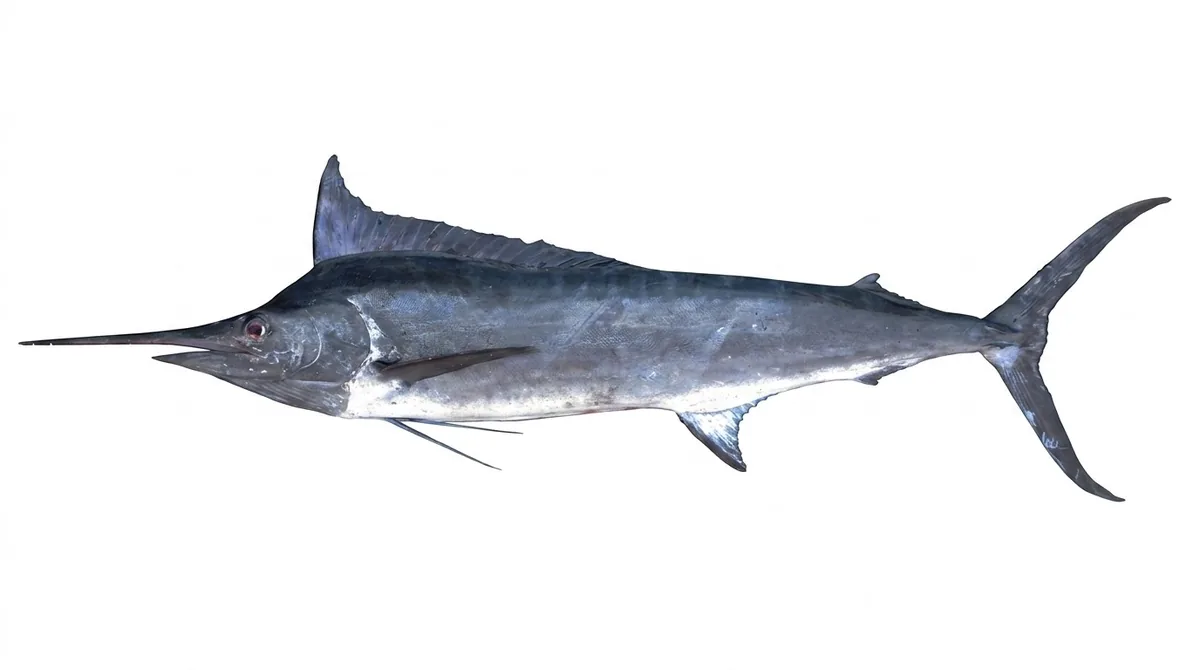
Black marlin
Istiompax indica
- Saltwater
- Data Deficient
- Max length
- 465 cm
- Class
- Teleostei
- Order
- Carangiformes
- Family
- Istiophoridae
- Genus
- Istiompax
- Atlantic, Southeast
- Indian Ocean, Eastern
- Indian Ocean, Western
- Pacific, Eastern Central
- Pacific, Southwest
- Pacific, Western Central
About the black marlin
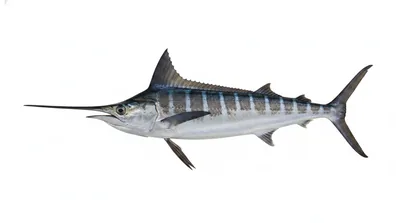
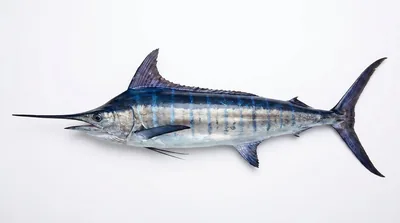
The black marlin (Istiompax indica) is a species of marlin found in tropical and subtropical areas of the Indian and Pacific Oceans approximately between 40 degrees North and 45 degrees South, while in some instances venturing into more temperate waters. Reaching lengths of over 4.5 m (15 ft), it is one of the largest marlins and also one of the largest bony fish. Marlin are among the fastest fish, but speeds may be exaggerated in popular media, such as reports of 129 km/h (80 mph). A 2016 study estimated maximum swimming speeds from muscle contraction times, which in turn limit the tail-beat frequency; the study suggested a theoretical upper limit for the black marlin's burst speed of 36 km/h (22 mph).
Black marlin are fished commercially and are also a highly prized game fish. Black marlins were known to drag ancient Maldivian fishing boats for very long distances after being hooked, until the marlins finally tired; it would take many hours for the fishermen to row or sail back home. Due to the common misidentification of large billfish such as the black marlin, as well as its highly migratory habits and the lack of research into the species, much about populations are unknown. The species was first known as Tetrapturus indicus and later was reclassified as Makaira indica before taking on its current scientific name. One of the earliest scientific records of black marlin is its description by French zoologist Georges Cuvier in 1832.
Habitat
Black marlins spend more time closer to the surface than most other billfish, except for sailfish. Scientists found in one population of black marlin that at night the fish would spend up to 87% of their time at depths above 30 meters deep, but during the day less than 60% of their time was spent in the upper 30 meter depths of the sea. Because of this, black marlin distribution is influenced by the surface height of the ocean throughout the time of year. Black Marlin live in temperatures from 15 degrees Celsius to 30 degrees Celsius. Juvenile black marlin around Australia utilize the great barrier reef lagoon as an area to grow and develop due to an abundance of resources. During the younger life stages, black marlin will form seasonal aggregations (aggregation: temporary assemblage of individuals) throughout the great barrier reef lagoon.
Distribution
The species occurs in the tropical and subtropical Indo-Pacific approximately between 40 degrees North and 45 degrees South, with uncommon movements into temperate waters, and rare reports from the Atlantic. There has been no evidence to suggest that there is a breeding population in the Atlantic. They are found anywhere from surface level down to depths of approximately 500 meters. The relative abundance of black marlin is currently unknown. In Taiwan, data from studies have provided evidence from population samples that there is likely a larger female to male ratio.
Behaviour
French naturalist Georges Cuvier described the black marlin in 1832 as Tetrapturus indicus. Diet mostly consists of various fish and cephalopods. They may eat tuna, mackerel, snake mackerel, flying fish, squid, crustaceans, octopus, etc, but mackerel scad have been found to be the preferred prey of black marlin. Scientists have even found young sharks in the stomachs of some black marlin. When black marlin hunt prey they swallow the prey head first. Prey observed from the stomachs of black marlins often show slashes from the bill of the fish. Because of this, it is believed that these fish utilize their bills when hunting within a school of fish.
Description from Wikipedia, available under CC BY-SA.
Where the black marlin lives
Distribution data from GBIF (DOI: 10.15468/dl.8rzs8d).
Also known as
- Makaire noir
- Schwarzer Marlin
- Makaira czarna
- Svart marlin
- Marlim-preto
- Swartmarlyn
- Qara marlin
- Mustamarliini
- Fekete marlin
- Setuhuk hitam
- Mersuji hitam
- Marlijn
- Makaira indica
- Чёрный марлин
- 흑새치
- シロカジキ
- مرلين أسود هندي
- مرلين اسود هندى
- Черен марлин
- ކަޅުމަސް ހިބަރު
- نیزهماهی سیاه
- מפרשן שחור
- کالی نیزہ مچھی
- கருங்கொப்பரான்
- Марлін чорний
- Cá cờ Ấn Độ
- 印度枪鱼