Fishing Calendar App
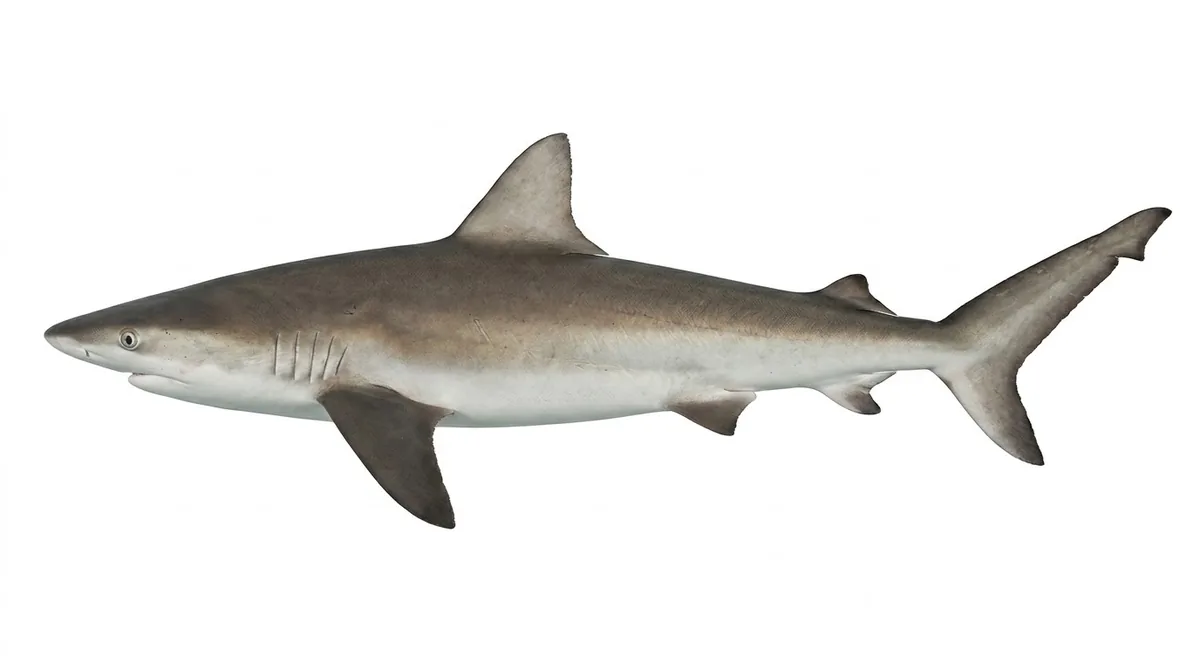
Dusky shark
Carcharhinus obscurus
- Saltwater
- Endangered
- Max length
- 400 cm
- Class
- Elasmobranchii
- Order
- Carcharhiniformes
- Family
- Carcharhinidae
- Genus
- Carcharhinus
- Atlantic, Eastern Central
- Atlantic, Northeast
- Atlantic, Northwest
- Atlantic, Western Central
- Indian Ocean, Eastern
- Indian Ocean, Western
- Pacific, Eastern Central
- Pacific, Southwest
About the dusky shark
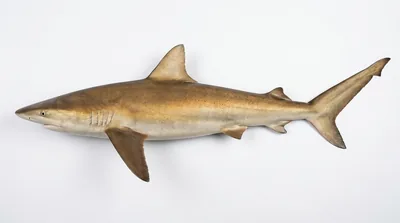
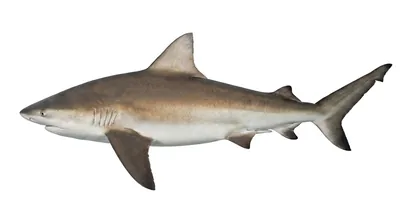
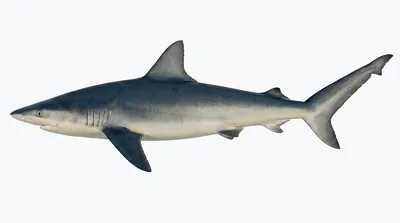
The dusky shark (Carcharhinus obscurus) is a species of requiem shark, in the family Carcharhinidae, occurring in tropical and warm-temperate continental seas worldwide. A generalist apex predator, the dusky shark can be found from the coast to the outer continental shelf and adjacent pelagic waters, and has been recorded from a depth of 400 m (1,300 ft). Populations migrate seasonally towards the poles in the summer and towards the equator in the winter, traveling hundreds to thousands of kilometers. One of the largest members of its genus, the dusky shark reaches more than 4 m (13 ft) in length and 350 kg (770 lb) in weight. It has a slender, streamlined body and can be identified by its short round snout, long sickle-shaped pectoral fins, ridge between the first and second dorsal fins, and faintly marked fins.
Adult dusky sharks have a broad and varied diet, consisting mostly of bony fishes, sharks and rays, and cephalopods, but also occasionally crustaceans, sea stars, bryozoans, sea turtles, marine mammals, carrion, and humans. This species is viviparous with a three-year reproductive cycle; females bear litters of 3–14 young after a gestation period of 22–24 months, after which there is a year of rest before they become pregnant again. This shark, tied with the Spiny dogfish as a result is the animal with the longest gestation period. Females are capable of storing sperm for long periods, as their encounters with suitable mates may be few and far between due to their nomadic lifestyle and low overall abundance. Dusky sharks are one of the slowest-growing and latest-maturing sharks, not reaching adulthood until around 20 years of age.
Because of its slow reproductive rate, the dusky shark is very vulnerable to human-caused population depletion. This species is highly valued by commercial fisheries for its fins, used in shark fin soup, and for its meat, skin, and liver oil. It is also esteemed by recreational fishers. The International Union for Conservation of Nature (IUCN) has assessed this species as Endangered worldwide and Vulnerable off the eastern United States, where populations have dropped to 15–20% of 1970s levels. The dusky shark is regarded as potentially dangerous to humans due to its large size, but there are few attacks attributable to it.
Distribution
The range of the dusky shark extends worldwide, albeit discontinuously, in tropical and warm-temperate waters. In the western Atlantic Ocean, it is found from Massachusetts and the Georges Bank to southern Brazil, including the Bahamas and Cuba. In the eastern Atlantic Ocean, it has been reported from the western and central Mediterranean Sea, the Canary Islands, Cape Verde, Senegal, Sierra Leone, and possibly elsewhere including Portugal, Spain, Morocco, and Madeira. In the Indian Ocean, it is found off South Africa, Mozambique, and Madagascar, with sporadic records in the Arabian Sea, the Bay of Bengal, and perhaps the Red Sea. In the Pacific Ocean, it occurs off Japan, mainland China and Taiwan, Vietnam, Australia, and New Caledonia in the west, and from southern California to the Gulf of California, around Revillagigedo, and possibly off northern Chile in the east. Records of dusky sharks from the northeastern and eastern central Atlantic, and around tropical islands, may in fact be of Galapagos sharks. Mitochondrial DNA and microsatellite evidence suggest that Indonesian and Australian sharks represent distinct populations.
Residing off continental coastlines from the surf zone to the outer continental shelf and adjacent oceanic waters, the dusky shark occupies an intermediate habitat that overlaps with its more specialized relatives, such as the inshore sandbar shark, the pelagic silky shark (C. falciformis) and oceanic whitetip shark, the deepwater bignose shark, and the islandic Galapagos shark and silvertip shark (C. albimarginatus). One tracking study in the northern Gulf of Mexico found that it spends most of its time at depths of 10–80 m (33–262 ft), while making occasional forays below 200 m (660 ft); this species has been known to dive as deep as 400 m (1,300 ft). It prefers water temperatures of 19–28 °C (66–82 °F), and avoids areas of low salinity such as estuaries.
The dusky shark is nomadic and strongly migratory, undertaking recorded movements of up to 3,800 km (2,400 mi); adults generally move longer distances than juveniles. Sharks along both coasts of North America shift northward with warmer summer temperatures, and retreat back towards the equator in winter. Off South Africa, young males and females over 0.9 m (3.0 ft) long disperse southward and northward respectively (with some overlap) from the nursery area off KwaZulu-Natal; they join the adults several years later by a yet-unidentified route. In addition, juveniles spend spring and summer in the surf zone and fall and winter in offshore waters, and as they approach 2.2 m (7.2 ft) in length begin to conduct a north–south migration between KwaZulu-Natal in the winter and the Western Cape in summer. Still-larger sharks, over 2.8 m (9.2 ft) long, migrate as far as southern Mozambique. Off Western Australia, adult and juvenile dusky sharks migrate towards the coast in summer and fall, though not to the inshore nurseries occupied by newborns.
Behaviour
The dusky shark is a generalist that takes a wide variety of prey from all levels of the water column, though it favors hunting near the bottom. A large individual can consume over a tenth of its body weight at a single sitting. The bite force exerted by a 2 m (6.6 ft) long dusky shark has been measured at 60 kg (130 lb) over the 2 mm2 (0.0031 in2) area at the tip of a tooth. This is the highest figure thus far measured from any shark, though it also reflects the concentration of force at the tooth tip. Dense aggregations of young sharks, forming in response to feeding opportunities, have been documented in the Indian Ocean.
The known diet of the dusky shark encompasses pelagic fishes, including herring and anchovies, tuna and mackerel, billfish, jacks, needlefish and flyingfish, threadfins, hairtails, lancetfish, and lanternfish; demersal fishes, including mullets, porgies, grunts, and flatheads, eels, lizardfish, cusk eels, gurnards, and flatfish; reef fishes, including barracudas, goatfish, spadefish, groupers, scorpionfish, and porcupinefish; cartilaginous fishes, including dogfish, sawsharks, angel sharks, catsharks, thresher sharks, smoothhounds, smaller requiem sharks, sawfish, guitarfish, skates, stingrays, and butterfly rays; and invertebrates, including gastropods, cephalopods, decapod crustaceans, barnacles, and sea stars.
Very rarely, the largest dusky sharks may also consume sea turtles, marine mammals (mainly as carrion), and human refuse. However, in waters of Massachusetts, dusky sharks have been observed multiple times actively prey on grey seals (Halichoerus grypus).
In the northwestern Atlantic, around 60% of the dusky shark's diet consists of bony fishes, from over ten families with bluefish (Pomatomus saltatrix) and summer flounder (Paralichthys dentatus) being especially important. Cartilaginous fishes, mainly skates and their egg cases, are the second-most important dietary component, while the lady crab (Ovalipes ocellatus) is also a relatively significant food source. In South African and Australian waters, bony fishes are again the most important prey type. Newborn and juvenile sharks subsist mainly on small pelagic prey such as sardines and squid; older sharks over 2 m (6.6 ft) long broaden their diets to include larger bony and cartilaginous fishes. The run of the southern African pilchard (Sardinops sagax), occurring off the eastern coast of South Africa every winter, is attended by medium and large-sized dusky sharks. Pregnant and post-partum females do not join, possibly because the energy cost of gestation leaves them unable to pursue such swift prey. One South African study reported that 0.2% of the sharks examined had preyed upon bottlenose dolphins (Tursiops truncatus).
Description from Wikipedia, available under CC BY-SA.
Where the dusky shark lives
Distribution data from GBIF (DOI: 10.15468/dl.8rzs8d).
Also known as
- Jaquetón lobo
- Tiburón arenero
- Tiburón gambuso
- Requin obscur
- Schwarzhai
- Düsterer Hai
- Żarłacz ciemnoskóry
- Mörkhaj
- Tubarão-negro
- Donkerhaai
- Tauró fosc
- Žralok velrybář
- Sumuhai
- Shark mai duhu
- Sötétcápa
- Hiu kelabu
- Schemerhaai
- Žralok tmavý
- Тёмная акула
- 흑상어
- ドタブカ
- Σκοτεινός καρχαρίας
- کوسه تیره
- כריש עפרורי
- Күңгірт акула
- سانولی شارک
- Акула смуглява
- 灰色真鲨
- قرش داكن
Where to catch dusky shark
- Limfjord Denmark Fjord · North Jutland
- Skagen Coast Denmark Coast · North Jutland
- Helsinki Archipelago Finland Archipelago · Uusimaa
- Rügen (Baltic Coast) Germany Coast · Mecklenburg-Vorpommern
- Sylt (Wadden Sea) Germany Coast · Schleswig-Holstein
- Dingle Bay Ireland Bay · Munster