Fishing Calendar App
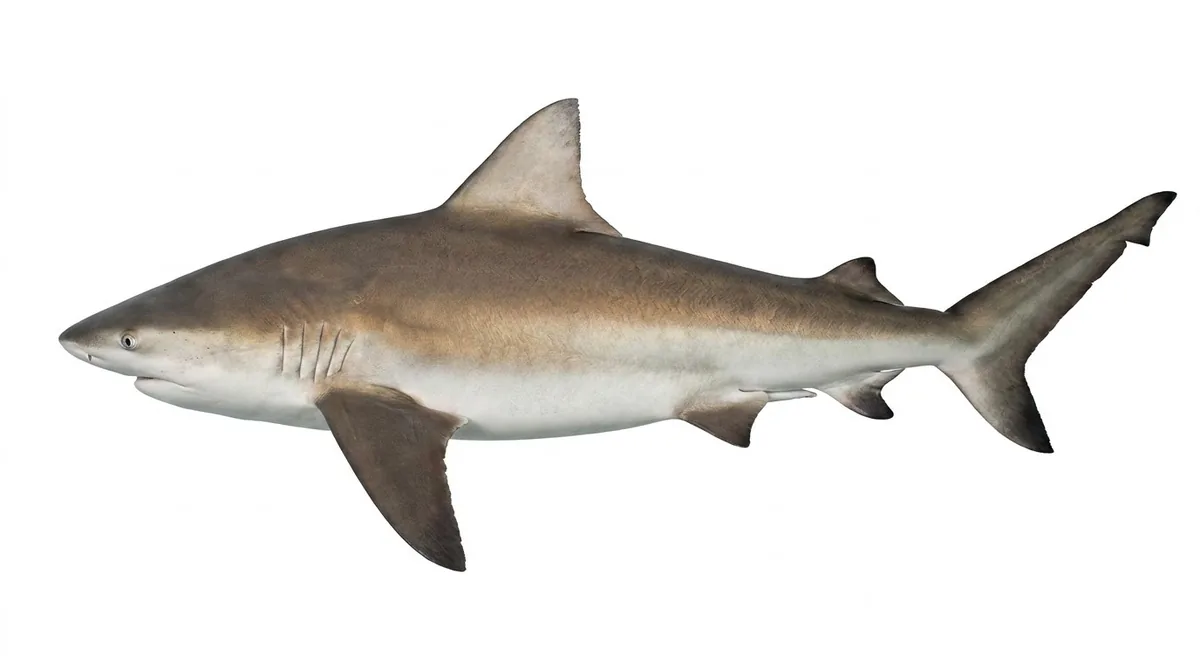
Bull shark
Carcharhinus leucas
- Freshwater & Saltwater
- Vulnerable
- Max length
- 350 cm
- Class
- Elasmobranchii
- Order
- Carcharhiniformes
- Family
- Carcharhinidae
- Genus
- Carcharhinus
- Atlantic, Southwest
- Atlantic, Western Central
- Europe - Inland waters
- Indian Ocean, Western
- North America - Inland waters
- Oceania - Inland waters
- Pacific, Southwest
- Pacific, Western Central
About the bull shark
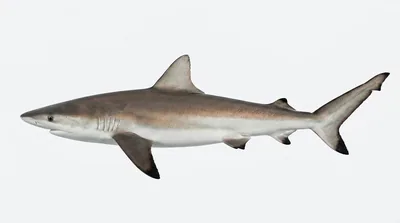
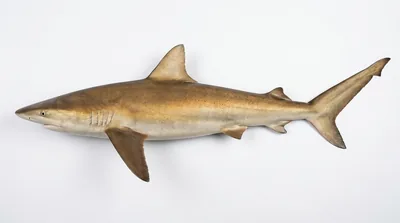
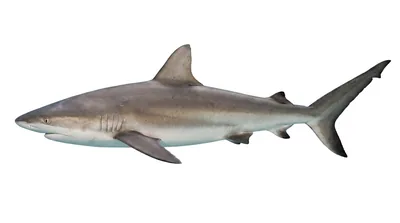
The bull shark (Carcharhinus leucas), also known as the Zambezi shark (informally zambi) in Africa and Lake Nicaragua shark in Nicaragua, is a species of requiem shark commonly found worldwide in warm, shallow waters along coasts and in rivers. It is known for its aggressive nature, and presence mainly in warm, shallow brackish and freshwater systems including estuaries and (usually) lower reaches of rivers. Their aggressive nature has led to ongoing shark-culling efforts near beaches to protect beachgoers, which is one of the causes of bull shark populations continuing to decrease. Bull sharks are listed as vulnerable on the IUCN Red List.
Bull sharks are euryhaline and can thrive in both salt and fresh water. They are known to travel far up rivers, and have been known to travel up the Mississippi River as far as Alton, Illinois, about 1,100 kilometres (700 mi) from the ocean, but few freshwater interactions with humans have been recorded. Larger-sized bull sharks are responsible for a large part of nearshore shark attacks, and may be responsible for many attacks involving unidentified species.
Unlike the river sharks of the genus Glyphis, bull sharks are not true freshwater sharks, despite their ability to survive in freshwater habitats.
This shark appears in the image of the 2000 colones banknote from Costa Rica.
Distribution
The bull shark is commonly found worldwide in coastal areas of warm oceans, in rivers and lakes, and occasionally salt and freshwater streams if they are deep enough. It is found to a depth of 150 m (490 ft), but does not usually swim deeper than 30 m (98 ft). In the Atlantic, it is found from Massachusetts to southern Brazil, and from Morocco to Angola.
Populations of bull sharks are also found in several major rivers, with more than 500 bull sharks thought to be living in the Brisbane River. One was reportedly seen swimming the flooded streets of Brisbane, Queensland, Australia, during the 2010–11 Queensland floods. Several were sighted in one of the main streets of Goodna, Queensland, shortly after the peak of the January 2011, floods. A large bull shark was caught in the canals of Scarborough, just north of Brisbane within Moreton Bay. Still greater numbers are in the canals of the Gold Coast, Queensland. In the warmer months of the year, bull sharks frequent Sydney Harbour. In the Pacific Ocean, it can be found from Baja California to Ecuador.
The bull shark has traveled 4,000 km (2,500 mi) up the Amazon River to Iquitos in Peru and north Bolivia. It also lives in freshwater Lake Nicaragua, in the Ganges and Brahmaputra Rivers of West Bengal, and Assam in Eastern India and adjoining Bangladesh. It can live in water with a high salt content as in St. Lucia Estuary in South Africa. Bull sharks have been recorded in the Tigris River since at least 1924 as far upriver as Baghdad, and has been rumored to also inhabit the Cahora Bassa lake upstream of the Zambezi. The species has a distinct preference for warm currents.
After Hurricane Katrina, many bull sharks were sighted in Lake Pontchartrain. In July 2023 some local fishermen in the Atchafalaya River have reported increasing numbers. Bull sharks have occasionally gone as far upstream in the Mississippi River as Alton, Illinois. Bull sharks have also been found in the Potomac River in St. Mary's County, Maryland. From 1996 to 2013, a golf course lake at Carbrook, Logan City, Queensland, Australia was the home to several bull sharks. They were trapped following a flood of the Logan and Albert Rivers in 1996, and resided in the 51 acres (21 ha) lake until 2013, when they disappeared after another series of floods. The golf course capitalized on the novelty, changing their logo to feature the sharks and hosting a monthly tournament called the "Shark Lake Challenge".
Behaviour
The bull shark is a marine apex predator, capable of taking a variety of prey. The bull shark's diet consists mainly of bony fish and small sharks, including other bull sharks, and stingrays. Their diet can also include turtles, birds, dolphins, terrestrial mammals, crustaceans, and echinoderms. They hunt in murky waters where it is harder for the prey to see the shark coming. Bull sharks have been known to use the bump-and-bite technique to attack their prey. After the first initial contact, they continue to bite and tackle prey until the prey is unable to flee.
The bull shark is a solitary hunter, though may briefly pair with another bull shark to make hunting and tricking prey easier.
Sharks are opportunistic feeders, and the bull shark is no exception to this, as it is part of the Carcharhinus family of sharks. Normally, sharks eat in short bursts, and when food is scarce, sharks digest for a much longer period of time in order to avoid starvation. As part of their survival mechanism, bull sharks will regurgitate the food in their stomachs in order to escape from a predator. This is a distraction tactic; if the predator moves to eat the regurgitated food the bull shark can use the opportunity to escape.
Description from Wikipedia, available under CC BY-SA.
Where the bull shark lives
Distribution data from GBIF (DOI: 10.15468/dl.8rzs8d).
Also known as
- Zambezi shark
- Lake nicaragua shark
- Squalo leuca
- Tiburón sarda
- Tiburón toro
- Requin-bouledogue
- Requin du Zambèze
- Bullenhai
- Gemeine Grundhai
- Sambesihai
- Stierhai
- Żarłacz tępogłowy
- Tjurhaj
- Tubarão-cabeça-chata
- Tubarão-do-zambeze
- Tubarão-touro
- Tubarão-buldogue
- Oksehai
- Yèe beuton
- Zambezihaai
- Kakia banténg
- Cucut bantèng
- Zambezi ajkula
- Tauró camús
- Žralok bělavý
- Tyrehaj
- Taŭrŝarko
- Sarda marrazo
- Härkähai
- Qio
- Tarbhshiorc
- Tiburón touro
- Piraroto akãmbéva
- Morski pas bik
- Bikacápa
- Hiu banteng
- Nautháfur
- Bukasnukis ryklys
- Hiu Bhântèng
- Yu garang
- Stierhaai
- Žralok belavý
- Peshkaqeni dem
- Boğa köpek balığı
- Тупорылая акула
- 황소상어
- オオメジロザメ
- オオメジロザメ/ウシザメ
- ウシザメ
- Бича акула
- ষাঁড় হাঙ্গর
- Ταυροκαρχαρίας
- گاوکوسه
- כריש שורי
- Ցուլ շնաձուկ
- ബുൾ ഷാർക്ക്
- سنڈا شارک
- Бик ајкула
- ปลาฉลามหัวบาตร
- Акула-бик
- Cá mập bò mắt trắng
- 公牛鯊
- قرش الثور
- Акула-бык
Where to catch bull shark
- Achensee Austria Lake · Tyrol
- Attersee Austria Lake · live river data
- Danube River at Vienna Austria River · Vienna
- Inn River at Innsbruck Austria River · live river data
- Neusiedler See Austria Lake · live river data
- Traunsee Austria Lake · live river data