Fishing Calendar App
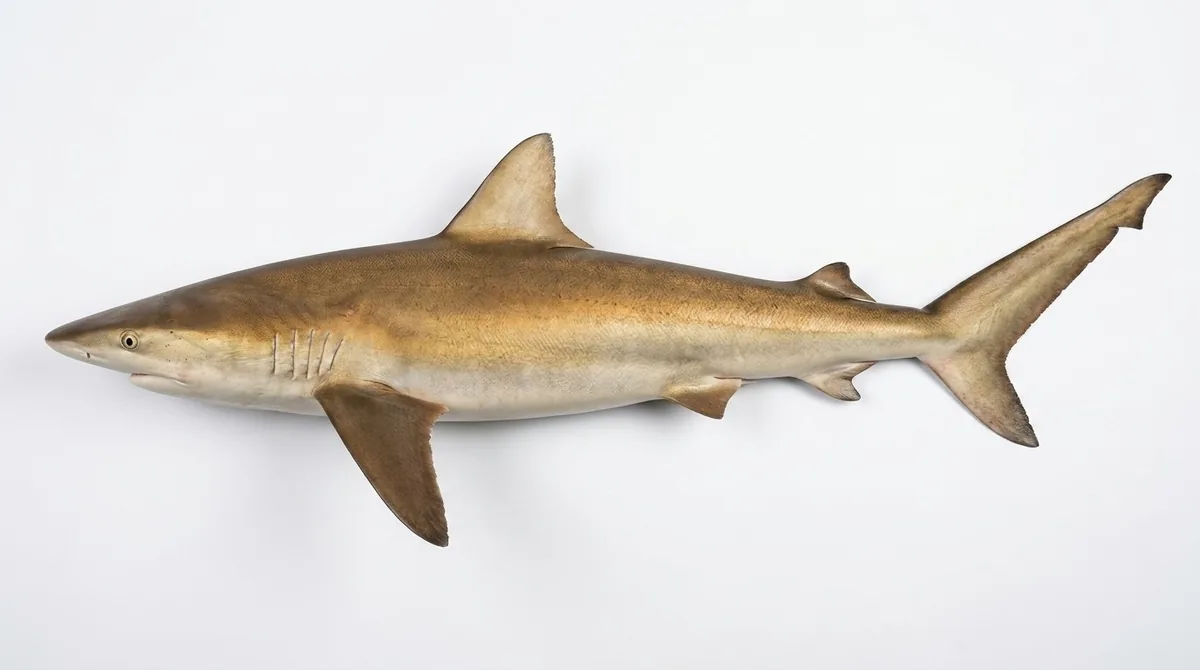
Copper shark
Carcharhinus brachyurus
- Saltwater
- Vulnerable
- Max length
- 325 cm
- Class
- Elasmobranchii
- Order
- Carcharhiniformes
- Family
- Carcharhinidae
- Genus
- Carcharhinus
- Atlantic, Southeast
- Indian Ocean, Eastern
- Indian Ocean, Western
- Pacific, Eastern Central
- Pacific, Southwest
About the copper shark
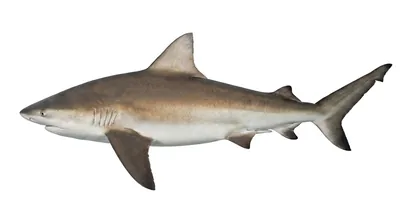
The copper shark (Carcharhinus brachyurus), bronze whaler, or narrowtooth shark is a species of requiem shark found mostly in temperate latitudes. It is distributed in a number of separate populations in the northeastern and southwestern Atlantic, off southern Africa, in the northwestern and eastern Pacific, and around Australia and New Zealand, with scattered reports from equatorial regions. The species can be found from brackish rivers and estuaries to shallow bays and harbors, to offshore waters 100 m (330 ft) deep or more. Females are found apart from males for most of the year, and conduct seasonal migrations. A large species reaching 3.3 m (11 ft) long, the copper shark is difficult to distinguish from other large requiem sharks. It is characterized by its narrow, hook-shaped upper teeth, lack of a prominent ridge between the dorsal fins, and plain bronze coloration.
Feeding mainly on cephalopods, bony fishes, and other cartilaginous fishes, the copper shark is a fast-swimming predator that has been known to hunt in large groups, using their numbers to their advantage; however, for most of the time they remain solitary. Off South Africa, this species associates closely with the annual sardine run, involving millions of southern African pilchard (Sardinops sagax). Like other requiem sharks, it is viviparous, with the developing embryos mainly nourished through a placental connection formed from the depleted yolk sac. Females bear litters of 7 to 24 pups every other year in coastal nursery areas, after a gestation period of 12 or perhaps as long as 21 months. It is extremely slow-growing, with males and females not reaching maturity until 13–19 and 19–20 years of age respectively.
This species is valued by commercial and recreational fisheries throughout its range, and utilized as food. The species population size is unknown, but the IUCN's Red List assesses the species as vulnerable because it is very susceptible to population depletion due to its low growth and reproductive rates and because its numbers are believed to have declined in some areas.
Copper sharks attack humans infrequently, but the species places tenth in the number of unprovoked attacks on people. However, the actual number of recorded shark attacks is low – 15 non-fatal, unprovoked attacks and only one fatal unprovoked attack.
Distribution
The copper shark is the only member of its genus largely found in temperate rather than tropical waters, in temperatures above 12 °C (54 °F). It is widely distributed but as disjunct regional populations with little to no interchange between them. In the Atlantic, this shark occurs from the Mediterranean Sea to Morocco and the Canary Islands, off Argentina, and off Namibia and South Africa (where there may be two separate populations), with infrequent records from Mauritania, the Gulf of Guinea, and possibly the Gulf of Mexico. In the Indo-Pacific, it is found from the East China Sea to Japan (excluding Hokkaido) and southern Russia, off southern Australia (mostly between Sydney and Perth but occasionally further north), and around New Zealand but not as far as the Kermadec Islands; there are also unconfirmed reports from the Seychelles and the Gulf of Thailand. In the eastern Pacific, it occurs from northern Chile to Peru, and from Mexico to Point Conception, California, including the Gulf of California. The copper shark is common off parts of Argentina, South Africa, Australia, and New Zealand, and rare elsewhere; in many areas its range is ill-defined because of confusion with other species. The shark is one of the most commonly found in the waters of New Zealand.
Copper sharks can be found from the surf zone to slightly beyond the continental shelf in the open ocean, diving to depths of 100 m (330 ft) or more. This species commonly enters very shallow habitats, including bays, shoals, and harbors, and also inhabits rocky areas and offshore islands. It is tolerant of low and changing salinities, and has been reported from estuaries and the lower reaches of large rivers. Juveniles inhabit inshore waters less than 30 m (98 ft) deep throughout the year, while adults tend to be found further offshore and regularly approach the coast only in spring and summer, when large aggregations can be readily observed in shallow water.
Populations of copper sharks in both hemispheres perform seasonal migrations, in response to temperature changes, reproductive events, and/or prey availability; the movement patterns differ with sex and age. Adult females and juveniles spend winter in the subtropics and generally shift to higher latitudes as spring nears, with pregnant females also moving towards the coast to give birth in inshore nursery areas. Adult males remain in the subtropics for most of the year, except in late winter or spring when they also move into higher latitudes, in time to encounter and mate with post-partum females dispersing from the nurseries. During migrations, individual sharks have been recorded traveling up to 1,320 km (820 mi). It is philopatric, returning to the same areas year after year.
The oldest evidence for a copper shark nursery in the fossil record is known from the Pisco Basin of Peru, with its evidence being preserved in the Chilcatay and Pisco Formations, from the Early Miocene to the Late Miocene.
Behaviour
The copper shark feeds more towards the bottom of the water column than the top, consuming cephalopods, including squid (Loligo spp.), cuttlefishes, and octopus; bony fishes, including gurnards, flatfishes, hakes, catfishes, jacks, Australian salmon, Atlantic salmon, mullets, sea breams, smelts, tunas, sardines, Cape horse mackerel, and anchovies; and cartilaginous fishes, including dogfish sharks (Squalus spp.), stingrays, skates, electric rays, and sawfishes. Cephalopods and cartilaginous fishes become relatively more important food for sharks over 2 m (6.6 ft) long. Young sharks also consume scyphozoan jellyfish and crustaceans, including mud shrimps (Callianassa) and penaeid prawns. It does not attack marine mammals, though it has been known to scavenge (rarely) on dolphins that had succumbed to fishing nets. The predominant prey of this species off South Africa is the southern African pilchard (Sardinops sagax), which comprise 69–95% of its diet. Every winter, schools of copper sharks follow the "run" of the pilchard from the Eastern Cape to KwaZulu-Natal. The gathering of millions of forage fish attract a multitude of predators, including several species of sharks, of which copper sharks are the most numerous.
Large numbers of copper sharks have been observed hunting together in a seemingly cooperative fashion. Small schooling fish are "herded" into a tight ball, whereupon each shark swims through in turn with its mouth open to feed. For groups of tuna and larger prey, the pursuing sharks may adopt a "wing" formation to force their quarry closer together, with each shark targeting a particular fish and attacking in turn. In False Bay, South Africa, this species reportedly follows seine net fishing vessels.
Description from Wikipedia, available under CC BY-SA.
Where the copper shark lives
Distribution data from GBIF (DOI: 10.15468/dl.8rzs8d).
Also known as
- Bronze whaler
- Narrowtooth shark
- Tiburón cobrizo
- Requin cuivre
- Bronzehai
- Carcharhinus acarenatus
- Kopparhaj
- Tubarão-cobre
- Tauró bronzat
- Bronzcápa
- Hiu tembaga
- Koperhaai
- Узкозубая акула
- 무태상어
- クロヘリメジロザメ
- قرش نحاسي
- قرش نحاسى
- Медна акула
- Καρχαρίνος ο βραχύουρος
- کوسه مسی
- כריש קופר
- تانبہ شارک
- Акула бронзова
- 短尾真鲨