Fishing Calendar App
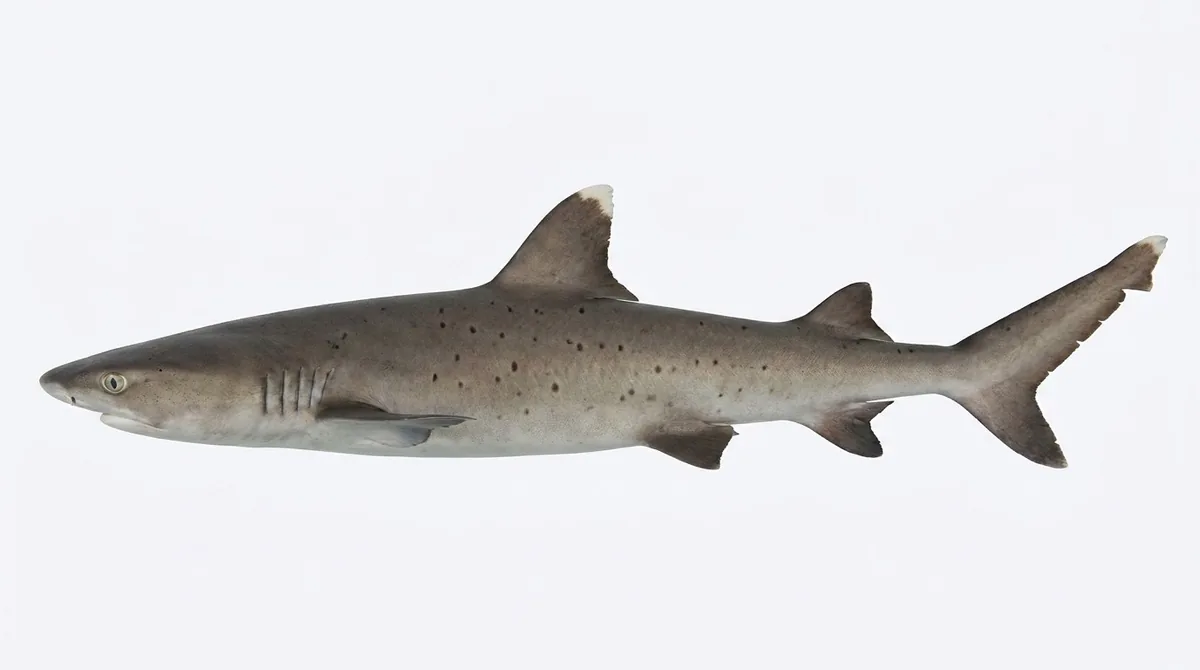
Whitetip reef shark
Triaenodon obesus
- Saltwater
- Vulnerable
- Max length
- 210 cm
- Class
- Elasmobranchii
- Order
- Carcharhiniformes
- Family
- Carcharhinidae
- Genus
- Triaenodon
- Indian Ocean, Eastern
- Indian Ocean, Western
- Pacific, Eastern Central
- Pacific, Northwest
- Pacific, Southeast
- Pacific, Western Central
About the whitetip reef shark
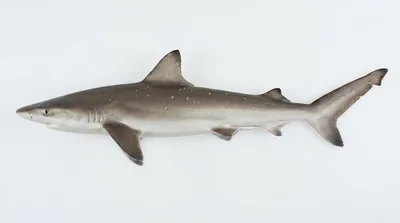
The whitetip reef shark (Triaenodon obesus) is a species of requiem shark, in the family Carcharhinidae. It is the only extant species of genus Triaenodon. A small shark that does not usually exceed 1.6 m (5.2 ft) in length, this species is easily recognizable by its slender body and short but broad head, as well as tubular skin flaps beside the nostrils, oval eyes with vertical pupils, and white-tipped dorsal and caudal fins. One of the most common sharks found on Indo-Pacific coral reefs, the whitetip reef shark occurs as far west as South Africa and as far east as Central America. It is typically found on or near the bottom in clear water, at a depth of 8–40 m (26–131 ft).
During the day, whitetip reef sharks spend much of their time resting inside caves. Unlike other requiem sharks, which rely on ram ventilation and must constantly swim to breathe, this shark can pump water over its gills and lie still on the bottom. At night, whitetip reef sharks emerge to hunt bony fishes, crustaceans, and octopus in groups, their elongate bodies allowing them to force their way into crevices and holes to extract hidden prey. Individuals may stay within a particular area of the reef for months or years, frequently returning to the same shelter. This species is viviparous, in which the developing embryos are sustained by a placental connection to their mother.
Whitetip reef sharks are rarely aggressive towards humans, though they may investigate swimmers closely. However, spear fishers are at risk of being bitten by one attempting to steal their catch. This species is caught for food, though ciguatera poisoning resulting from its consumption has been reported. The IUCN has assessed the whitetip reef shark as Vulnerable, noting its numbers are dwindling due to increasing levels of unregulated fishing activity across its range. The slow reproductive rate and limited habitat preferences of this species renders its populations vulnerable to overfishing.
Distribution
The whitetip reef shark is distributed widely across the entire Indo-Pacific region. It was once thought to have existed in the Atlantic Ocean, based on fossil teeth found in North Carolina dated to the Miocene epoch, although subsequent research has suggested that the teeth are of a mackerel shark, and that the whitetip has never colonized the Atlantic. In the Indian Ocean, whitetip reef sharks can be found off of northern KwaZulu-Natal, South Africa and all along the East African coast, from the Horn of Africa to the Red Sea and along the Indian subcontinent (including Sri Lanka). They are found near many major island chains as well, including Madagascar, Mauritius, Mayotte, the Comoros, the Aldabra Group, the Seychelles and the Chagos Archipelago.
In the western and central Pacific Ocean, whitetips occur off South China, Taiwan, and the Ryukyu Islands, south to the Philippines and throughout the entire Coral Triangle, including the coastlines of Indonesia, East Timor and Papua New Guinea. Their range continues south to the northern Australia and the Great Barrier Reef. Whitetips are also found around numerous Pacific atolls and islands, including Melanesia, Micronesia, and Polynesia, north to Hawaii and south to the Pitcairn Islands. They have also been sighted near Midway and Johnston Atolls and Laysan. In the Eastern Pacific, they may be found off the west coasts of Costa Rica and Panama south to the Galápagos Islands, and as far north as Isla Isabel, Isla Socorro, and the southern tip of Baja California (Cabo San Lucas and Cabo Pulmo National Marine Park).
Associated almost exclusively with coral reef habitats, whitetip reef sharks are most often encountered around coral heads and ledges with high vertical relief, and additionally over sandy flats, in lagoons, and near drop-offs to deeper water. They prefer very clear water, and rarely stray far from the bottom during the day. The species is most common at a depth of 8–40 m (26–131 ft). On occasion, they may enter water less than 1 m deep when foraging; there is an exceptional record of a whitetip reef shark being captured from a depth of 330 m (1,080 ft) off the Ryukyu Islands.
Behaviour
With its slender, lithe body, the whitetip reef shark specializes in wriggling into narrow crevices and holes in the reef and extracting prey inaccessible to other reef sharks. Alternatively, it is rather clumsy when attempting to take food suspended in open water. This species feeds mainly on bony fishes, including eels, squirrelfishes, snappers, damselfishes, parrotfishes, surgeonfishes, triggerfishes and goatfishes, as well as octopuses, spiny lobsters, and crabs. The whitetip reef shark is highly responsive to the olfactory, acoustic, and electrical cues given off by potential prey, while its visual system is attuned more to movement and/or contrast than to object details. It is especially sensitive to natural and artificial low-frequency sounds in the 25–100 Hz range, which evoke struggling fish.
Whitetip reef sharks hunt primarily at night, when many fishes are asleep and easily taken. After dusk, groups of sharks methodically scour the reef, often breaking off pieces of coral in their vigorous pursuit of prey. Multiple sharks may target the same prey item, covering every exit route from a particular coral head. Each shark hunts for itself and in competition with the others in its group. Unlike blacktip reef sharks and grey reef sharks, whitetip reef sharks do not become more excited when feeding in groups and are unlikely to be stirred into a feeding frenzy. Despite their nocturnal habits, whitetip reef sharks will hunt opportunistically in daytime. Off Borneo, this species gathers around reef drop-offs to feed on food brought up by the rising current. Off Hawaii, they follow Hawaiian monk seals (Monachus schauinslandi) and attempt to steal their catches. A whitetip reef shark can survive for six weeks without food.
Description from Wikipedia, available under CC BY-SA.
Where the whitetip reef shark lives
Distribution data from GBIF (DOI: 10.15468/dl.8rzs8d).
Also known as
- Cazón coralero trompacorta
- Requin-corail
- Weißspitzen-Riffhai
- Korallhaj
- Tubarão-de-pontas-brancas-de-recife
- Stompkophaai
- Kakia karang képés putih
- Tauró de puntes blanques
- Žralok lagunový
- Hvidtippet revhaj
- Punta zuriko arrezife marrazo
- Valkoevähai
- Fehéruszonyú szirtcápa
- Hiu karang sirip putih
- Witpuntrifhaai
- Žralok bielohrotý
- Рифовая акула
- 백기흉상어
- ネムリブカ
- قرش الشعاب المرجانية البيضاء
- সাদাডগা প্রবালপ্রাচীর হাঙর
- އޮޅުފަތި މިޔަރު
- כרישון לבן-קצוות
- Ақ ұшты риф акуласы
- വെള്ളച്ചിറകൻ സ്രാവ്
- Белорепа гребенска ајкула
- ปลาฉลามครีบขาว
- Акула рифова білопера
- 灰三齿鲨