Fishing Calendar App
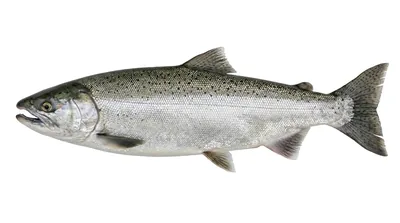
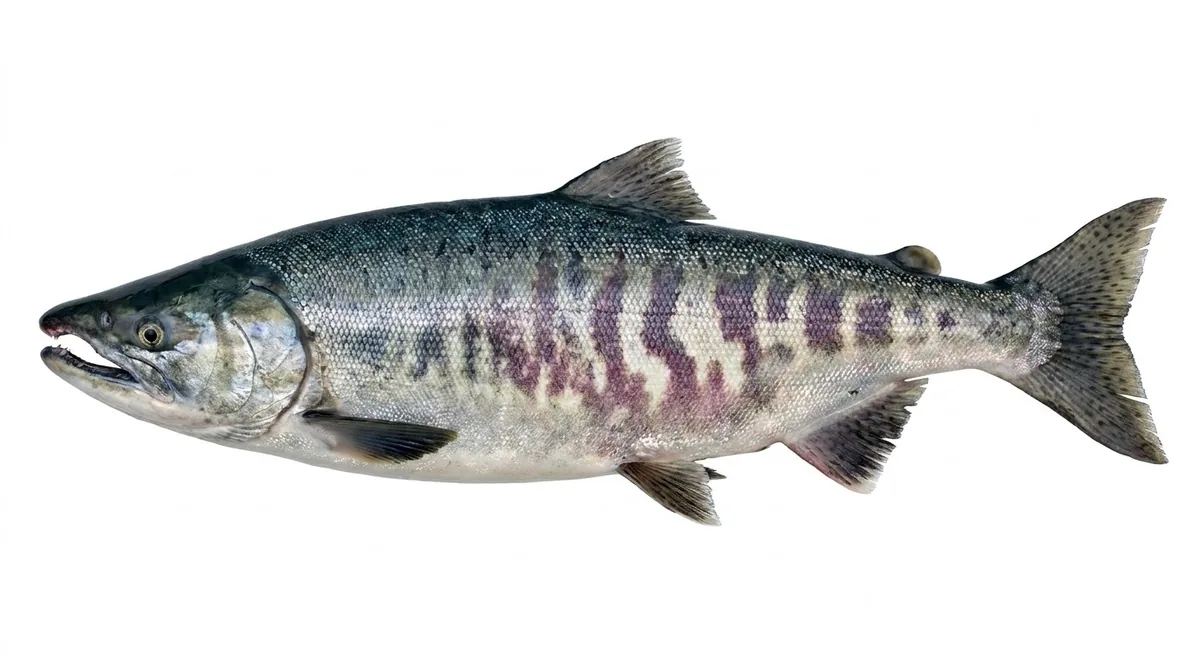
Chum salmon
Oncorhynchus keta
- Freshwater & Saltwater
- Least Concern
- Max length
- 100 cm
- Class
- Teleostei
- Order
- Salmoniformes
- Family
- Salmonidae
- Genus
- Oncorhynchus
- North America - Inland waters
- Asia - Inland waters
- Pacific, Northeast
- Pacific, Northwest
About the chum salmon
The chum salmon (Oncorhynchus keta), also known as dog salmon or keta salmon, is a species of anadromous salmonid fish from the genus Oncorhynchus (Pacific salmon) native to the coastal rivers of the North Pacific and the Beringian Arctic. The English name "chum salmon" comes from the Chinook Jargon term tsəm, meaning "spotted" or "marked"; while keta in the scientific name comes from Russian, which in turn comes from the Evenki language of Eastern Siberia.
In Japan, chum salmon is also known as the white salmon (白鮭 シロサケ, shiro sake), autumn salmon (秋鮭 アキサケ, aki sake) or simply "the salmon" (鮭 サケ, sa ke), while historically it was known in kun'yomi as "stone katsura fish" (石桂魚 さけ, sa ke) up until the Meiji period. In Greater China, it is known academically as the "hook-snout salmon" (Chinese: 钩吻鲑), but is more often called the damaha fish (simplified Chinese: 大马哈鱼; traditional Chinese: 大麻哈魚), which is borrowed from dawa ịmaχa, the Nanai name of the fish used by the Hezhe minority in northern Northeast China.
Distribution
Chum salmon have the largest natural range of any Pacific salmon. Chum are found all around the North Pacific, off the coasts of Japan, Korea, the Russian Far East, British Columbia in Canada, and from Alaska to California in the United States. They undergo the longest migrations within the genus Oncorhynchus, far up the Yukon River in Alaska and Canada, and deep into the Amur River basin in Northeast China and Russia. In lesser numbers they migrate thousands of kilometers up the Mackenzie River. In the Arctic Ocean they are found in limited numbers from the Laptev Sea to the Beaufort Sea. In North America chum salmon spawn from the Mackenzie River in the Arctic to as far south as the Umpqua River, Oregon, although they were also reported in the San Lorenzo River near Santa Cruz, California in 1915 and the Sacramento River in northern California in the 1950s. In fall 2017 a half dozen chum salmon were counted in Lagunitas Creek about 25 miles (40 km) north of San Francisco, California.
In the open ocean, chum salmon stay fairly high on the water column, rarely diving below 50 m (160 ft). Their typical swimming depths are 13 m (43 ft) from the surface during the day, and 5 m (16 ft) during the night.
Behaviour
Juvenile chum eat zooplankton and insects. Recent studies show that they also eat comb jellies. As adults, they eat smaller fish.
Description from Wikipedia, available under CC BY-SA.
Where the chum salmon lives
Distribution data from GBIF (DOI: 10.15468/dl.8rzs8d).
Also known as
- Dog salmon
- Keta salmon
- Keta
- Saumon chien
- Saumon kéta
- Ketalachs
- Hundlax
- Ketalaks
- Losos keta
- Keta (ryba)
- Salmó keta
- Ketao
- Keta izokin
- Koiralohi
- Ketalazac
- Chumzalm
- Peenuvluosâ
- Кета
- 연어
- サケ
- سمك السلمون
- Куча сьомга
- آزادماهی سگی
- אלתית צ'אם
- Կետա
- კეტა
- Кете
- Кэтэ
- Cá hồi chó
- 大麻哈鱼
Where to catch chum salmon
- Arkansas River at Salida United States River · live river data
- Bristol Bay United States Bay · Alaska
- Cape Fear River United States River · North Carolina
- Columbia River at Astoria United States River · Oregon-Washington
- Green River (Flaming Gorge) United States River · live river data
- Kenai River United States River · Alaska