Fishing Calendar App
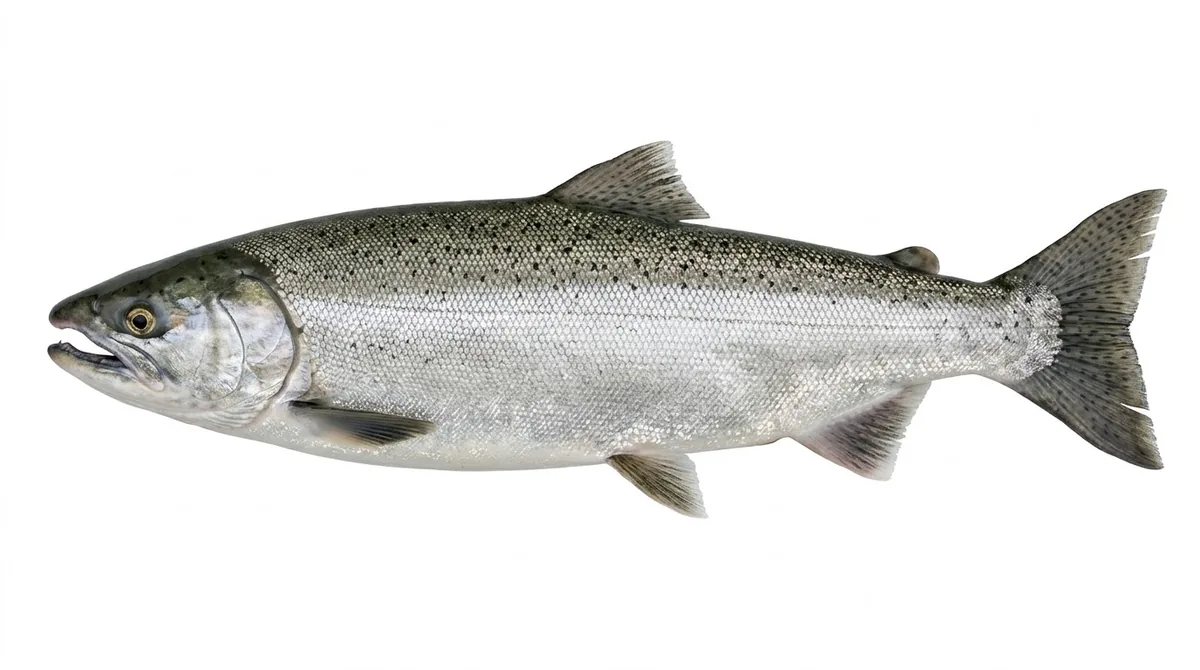
Coho salmon
Oncorhynchus kisutch
- Freshwater & Saltwater
- Least Concern
- Max length
- 108 cm
- Class
- Teleostei
- Order
- Salmoniformes
- Family
- Salmonidae
- Genus
- Oncorhynchus
- North America - Inland waters
- Pacific, Eastern Central
- Pacific, Northeast
- Pacific, Northwest
About the coho salmon
The coho salmon (Oncorhynchus kisutch; Karuk: achvuun) is a species of anadromous fish in the salmon family and one of the six Pacific salmon species. Coho salmon are also known as silver salmon (or "silvers") and is often sold as medium red salmon. The scientific species name is based on the Russian common name kizhuch (кижуч).
Habitat
In their freshwater stages, coho feed on plankton and aquatic invertebrates in the benthos and water column, such as Chironomids, midge larvae, and terrestrial insects that fall into the water. Upon entering the marine environment, they switch to a diet of plankton and fish, with fish making up most of their diets after a certain size. Introduced populations in the Great Lakes feed primarily on alewife and smelt. Great Lakes salmon are known to compete with native lake trout, brook trout, and brown trout for food and space when resources are scarce. Due to emerging earlier and having a larger hatching size, coho salmon typically have an advantage in these confrontations.
Salmonid species on the west coast of the United States have experienced dramatic declines in abundance during the past several decades as a result of human-induced and natural factors.
Distribution
The traditional range of the coho salmon runs along both sides of the North Pacific Ocean, from Hokkaidō, Japan and eastern Russia, around the Bering Sea to mainland Alaska, and south to Monterey Bay, California. Coho salmon have also been introduced in all the Great Lakes, as well as many landlocked reservoirs throughout the United States. Coho salmon were first introduced in Lake Erie in the 1920s to control the lake's alewife population. Large-scale stocking began in 1966, when 660,000 fingerlings were introduced in Lake Michigan. Wisconsin began a program of introduction of 500,000 fry a year, mainly on the coastline of Lake Michigan. By 1970, the species was present in all of the Great Lakes. Ontario and Minnesota adopted stocking programs in 1969, but later abandoned them. Colorado began stocking coho salmons in the early 1900s, although only limited reproduction is recorded in the Colorado River. Another stocking was done in New Hampshire in the late 1960s, which dispersed to Maine and Massachusetts and were recorded to engage in sporadic reproduction.
Natural reproduction in introduced areas is generally low. Limited self-sustaining populations are recorded in Lake Superior and Michigan, but the salmon does not reproduce naturally in the Wisconsin tributaries of Lake Michigan and relies on stocking to maintain a large population. The species is no longer stocked in Lake Erie, although stray individuals from elsewhere in the Great Lakes are caught on occasion. Efforts to establish the species in Connecticut began in the 1800s, but were discontinued when the species failed to establish a stable population. Introductions in Connecticut and Delaware also failed to found permanent populations.
Over twenty specimens were caught in waters surrounding Denmark and Norway in 2017. Their source is currently unknown, but the salmon species is farmed at several locations in Europe, making it probable that the animal has slipped the net at such a farm.
Description from Wikipedia, available under CC BY-SA.
Where the coho salmon lives
Distribution data from GBIF (DOI: 10.15468/dl.8rzs8d).
Also known as
- Silver salmon
- Salmón plateado
- Coho
- Salmón
- Saumon argenté
- Saumon argenté du Pacifique
- Saumon coho
- Silberlachs
- Coho Lachs
- Pazifik Silberlachs
- Kiżucz
- Silverlax
- Srebrni losos
- Kijuç
- Salmó platejat
- Kiĵuĉo
- Hopealohi
- Cohozalm
- Silbâluosâ
- Imbothwane
- Кижуч
- 은연어
- ギンザケ
- كوهو, سمك السلمون
- Сребриста сьомга
- ماهی آزاد کوهو
- אלתית כסופה
- კიჟუჩი
- Сребрен лосос
- Cá hồi Coho
- 銀鮭
Where to catch coho salmon
- Arkansas River at Salida United States River · live river data
- Bristol Bay United States Bay · Alaska
- Cape Fear River United States River · North Carolina
- Columbia River at Astoria United States River · Oregon-Washington
- Green River (Flaming Gorge) United States River · live river data
- Kenai River United States River · Alaska