Fishing Calendar App
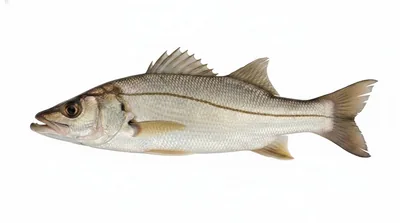
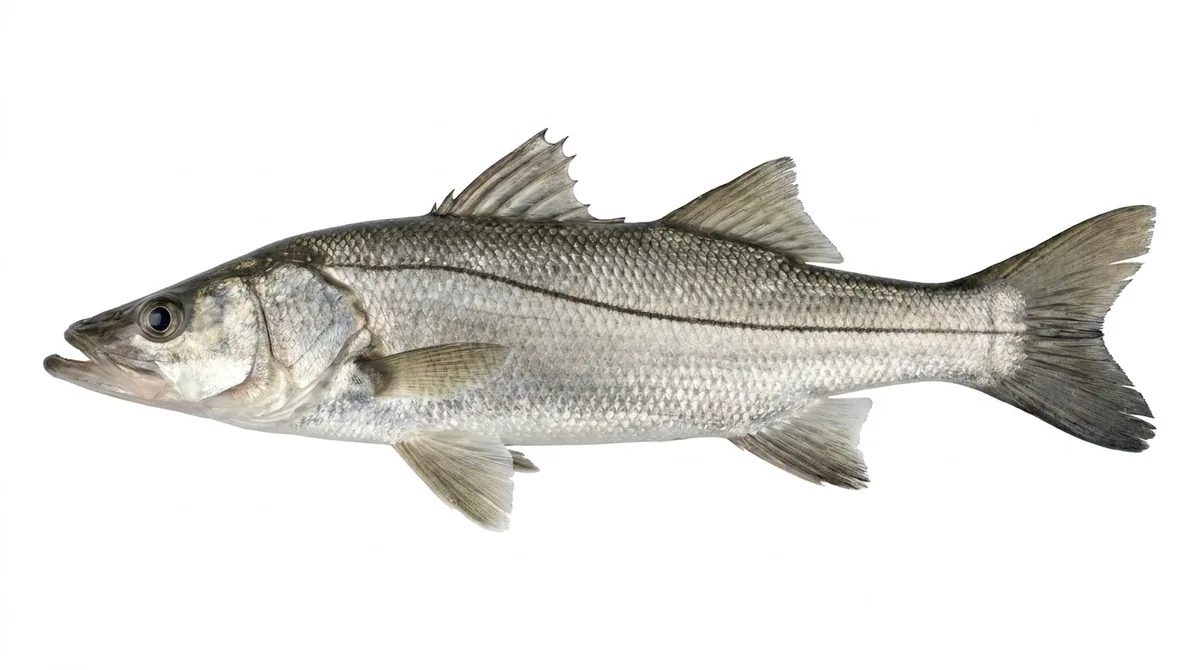
Common snook
Centropomus undecimalis
- Freshwater & Saltwater
- Least Concern
- Max length
- 140 cm
- Class
- Teleostei
- Order
- Carangaria incertae sedis
- Family
- Centropomidae
- Genus
- Centropomus
- Atlantic, Western Central
- Europe - Inland waters
- North America - Inland waters
- South America - Inland waters
About the common snook
The common snook (Centropomus undecimalis) is a species of marine fish in the family Centropomidae of the order Perciformes. The common snook is also known as the sergeant fish or robalo. It was originally assigned to the sciaenid genus Sciaena; Sciaena undecimradiatus and Centropomus undecimradiatus are obsolete synonyms for the species.
One of the largest snooks, C. undecimalis grows to a maximum overall length of 140 cm (4.6 ft). The common length is 50 cm (1.6 ft). The IGFA world record is 24.32 kg (53 lb 10 oz) caught in Parismina Ranch, Costa Rica, by Rafael Montalvo. Of typical centropomid form, it possesses drab coloration except for a distinctive black lateral line. It can also have bright yellow pelvic and caudal fins, especially during spawn.
Habitat
The common snook is an estuarine and freshwater-dependent fish species. Within estuaries, juvenile common snook are most often found inhabiting areas such as coastal wetland ponds, island networks, and creeks. Despite being a euryhaline species of fish, the common snook shows a tendency to gravitate towards lower-salinity conditions in the early stages of its life. By being able to adapt and thrive in both high- and low-salinity conditions through osmoregulation, common snook display a high level of habitat plasticity.
Common snook are opportunistic predators whose feeding habits indicate a positive relationship between their size and the size of their prey, meaning that as the snook grows, it feeds on larger and larger prey. Common snook occasionally engage in cannibalism. This usually occurs during the winter when adults and juveniles are in close proximity to one another within their estuarine habitats. This form of cannibalism where the juveniles are fed on by the adults is referred to as intercohort cannibalism. The adult common snook that cannibalize juveniles most likely target them because the juveniles may be the largest of the available prey, so are nutritionally efficient to prey upon.
Distribution
C. undecimalis is widespread throughout the tropical waters of the western Atlantic Ocean, from the coast of the North Carolina to Brazil including the Gulf of Mexico and the Caribbean Sea.
Snook likely originated in Central America, and changes in the Earth's climate brought the snook to Florida. During a great warming trend after the Ice Age, snook moved northward along the Mexico shoreline. They followed the perimeter of the Gulf of Mexico, along the west and east coasts of Florida.
Massive snook are found in Central America, although they seem to look a little different because of the weather and water quality, but they are the same species. No restrictions exist in most of Central America on the size or quantity of snook one can keep, consequently many locals have been keeping and killing these large snook for quite a while. Occurring in shallow coastal waters (down to 20 m (66 ft)), estuaries, and lagoons, the fish often enter fresh water. They are carnivorous, with a diet dominated by smaller fishes, crustaceans such as shrimp, and occasionally crabs.
Due to their limited cold tolerance, snook have been physiologically restricted from inhabiting temperate climates. In Florida, northern limits in their geographic range have historically been Tarpon Springs along the Gulf Coast and Cape Canaveral on the East Coast. Over the past 15 years, snook have extended their range as far north as the Suwannee River Estuary (~29°N), where an exponential increase in their population has occurred. Warmer winter temperatures resulting from climate change has been suggested as a likely cause. There may be potential food-web effects, particularly for sea trout (Cynoscion species), related to the snook colonization.
Description from Wikipedia, available under CC BY-SA.
Where the common snook lives
Distribution data from GBIF (DOI: 10.15468/dl.8rzs8d).
Also known as
- Sergeant fish
- Róbalo
- Robalo-branco
- Robalo blanco
- Brochet de mer
- Crossie blanc
- Binnensnoek
- Обыкновенный робало
- سوف شیشهای معمولی
- 鋸蓋魚
Where to catch common snook
- Achensee Austria Lake · Tyrol
- Attersee Austria Lake · live river data
- Danube River at Vienna Austria River · Vienna
- Inn River at Innsbruck Austria River · live river data
- Neusiedler See Austria Lake · live river data
- Traunsee Austria Lake · live river data