Fishing Calendar App
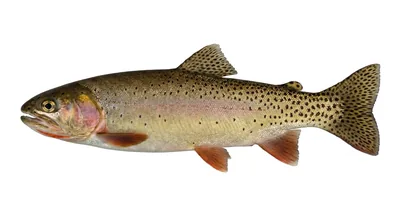
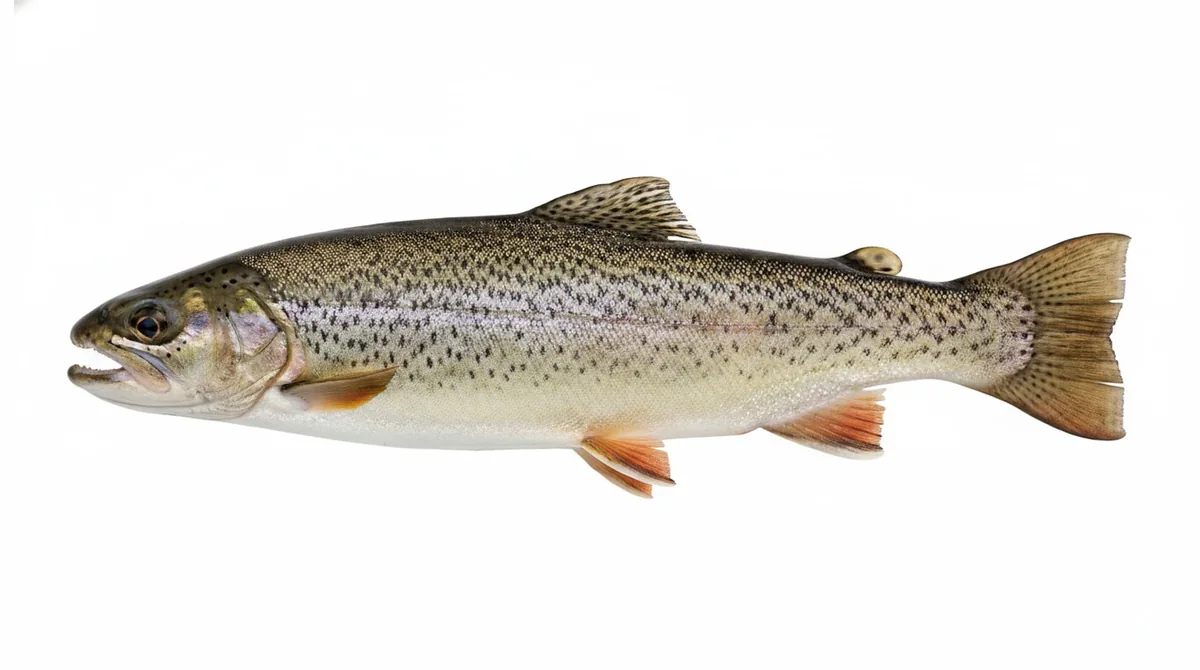
Coastal cutthroat trout
Oncorhynchus clarkii clarkii
- Freshwater & Saltwater
- Max length
- 99 cm
- Class
- Teleostei
- Order
- Salmoniformes
- Family
- Salmonidae
- Genus
- Oncorhynchus
- Pacific, Northeast
About the coastal cutthroat trout
The coastal cutthroat trout (Oncorhynchus clarkii, sometimes referred as Oncorhynchus clarkii clarkii), also known as the sea-run cutthroat trout, blue-back trout or harvest trout, is one of the four species of cutthroat trout found in western North America. The coastal cutthroat trout occurs in four distinct forms. A semi-anadromous or sea-run form is the most well known. Freshwater forms occur in both large and small rivers and streams and lake environments. The native range of the coastal cutthroat trout extends south from the southern coastline of the Kenai Peninsula in Alaska to the Eel River in Northern California. Coastal cutthroat trout are resident in tributary streams and rivers of the Pacific basin and are rarely found more than 100 miles (160 km) from the ocean.
Adults migrate from the ocean to spawn in fresh water. Juveniles migrate to the sea where they feed and become sexually mature before returning to fresh water to overwinter and spawn. Unlike steelhead and Pacific salmon, coastal cutthroat do not make lengthy migrations out to sea. Generally speaking, coastal cutthroat will remain in or near estuarine waters, usually within 5–10 miles (8.0–16.1 km) of their natal stream. Some cutthroat, however, have been shown to move as far as 70 miles (110 km) into the open ocean. There are also lacustrine and riverine populations that spend their entire lives in freshwater. One such population is the trout of Lake Crescent in Washington state that was formerly considered to be a separate subspecies called the Lake Crescent cutthroat trout, Oncorhynchus clarkii crescenti.
Distribution
The native range of the coastal cutthroat trout extends south from the southern coastline of the Kenai Peninsula in Alaska to the Eel River in Northern California. Coastal cutthroat trout are resident in tributary streams and rivers of the Pacific basin and are rarely found more than 100 miles (160 km) from the ocean. Semi-anadromous, stream resident, fluvial and lake resident forms exist. The great majority of coastal cutthroat trout habitat coincides with the belt of Pacific coast coniferous rainforest that extends from Alaska southward into Northern California.
Coastal cutthroat trout use a large variety of habitat types, including lower and upper reaches of both large and small river systems, urban environments, estuaries, sloughs, ponds, lakes, and near shore ocean waters. They spend more time in fresh water environments than other anadromous Pacific salmonids. In fresh water they prefer deeper pool habitat and cover, such as that formed by woody debris. The semi-anadromous forms of coastal cutthroat trout do not overwinter in saltwater and rarely make extended migrations across large bodies of water. Migrations in the marine environment are usually within 6 miles (9.7 km) of land. Semi-anadromous coastal cutthroat typically spend two to five years rearing in fresh water before making their initial migration into saltwater. Generally, semi-anadromous coastal cutthroat trout spend short periods offshore during summer months and return to estuaries and fresh water by fall or winter.
Description from Wikipedia, available under CC BY-SA.
Also known as
- سمك السلمون المرقط الساحلي
Where to catch coastal cutthroat trout
- Bristol Bay United States Bay · Alaska
- Columbia River at Astoria United States River · Oregon-Washington
- Monterey Bay United States Bay · California
- Puget Sound at Seattle United States Sound · Washington
- San Diego Bay United States Bay · California
- San Francisco Bay United States Bay · California