Fishing Calendar App
Brook trout
Salvelinus fontinalis
- Freshwater & Saltwater
- Least Concern
- Max length
- 86 cm
- Class
- Teleostei
- Order
- Salmoniformes
- Family
- Salmonidae
- Genus
- Salvelinus
- Asia - Inland waters
- Atlantic, Northwest
- Europe - Inland waters
- North America - Inland waters
- Oceania - Inland waters
About the brook trout
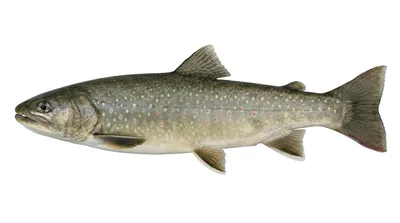
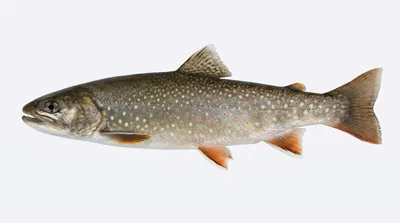
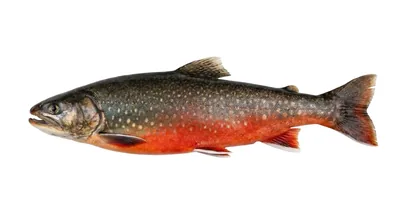
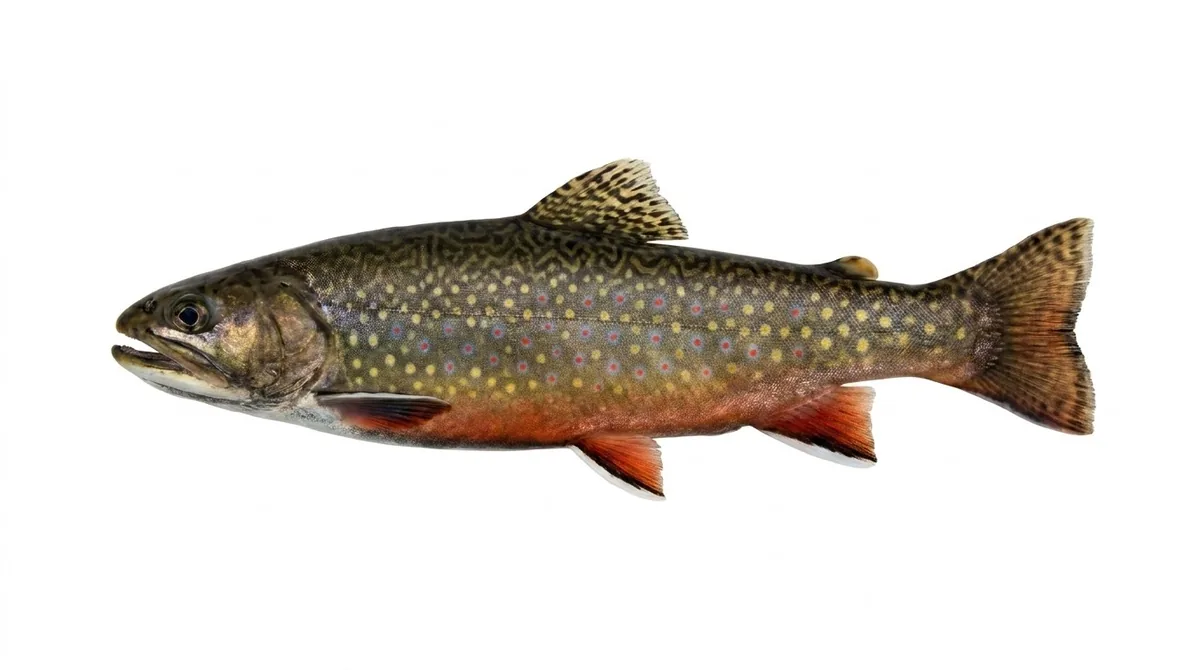
The brook trout (Salvelinus fontinalis) is a species of freshwater fish in the char genus Salvelinus of the salmon family Salmonidae native to Eastern North America in the United States and Canada. Two ecological forms of brook trout have been recognized by the US Forest Service. One ecological form is long-lived potamodromous populations in Lake Superior known as coaster trout or coasters. The second ecological form is the short-living predaceous anadromous populations which are found in northern lakes and coastal rivers from Long Island to Hudson Bay, which are referred to as salters. In parts of its range, it is also known as the eastern brook trout, speckled trout, brook char (or charr), squaretail, brookie, or mud trout, among others. Adult coaster brook trout are capable of reaching sizes over 2 feet in length and weigh up to 6.8 kg (15 lb), whereas adult salters average between 6 and 15 inches in length and weigh between 0.5 and 2.3 kg (1 and 5 lb). The brook trout is characterized by its distinctive olive-green body with yellow and blue-rimmed red spots, white and black edged orange fins, and dorsal vermiculation. The diet of the brook trout is restrictive to the season and location of the fish, but will typically consist of terrestrial and aquatic insects, fry, crustaceans, zooplankton, and worms.
Throughout history, non-native brook trout have been transplanted beyond its native borders, where it has spread across North America and much of the world. These brook trout have been introduced since the 1800s by means of artificial propagation and aquaculture in hope of promoting fishery resources. Through this transplantation, brook trout have been observed to affect native populations by outcompeting, preying upon, and hybridizing with many native aquatic species. This invasive nature via human-mediated introductory has led to their classification in the list of the top 100 globally invasive species.
Since the 19th century, isolated native eastern brook trout populations have faced extirpation due to stream pollution, habitat destruction, invasive species, and waterway damming. Although facing these pressures, the brook trout is not listed as an endangered species by the International Union for Conservation of Nature, but native population decline has been observed.
Distribution
Brook trout are native to a wide area of Eastern North America, but are increasingly confined to higher elevations southward in the Appalachian Mountains to northern Georgia and northwest South Carolina, Canada from the Hudson Bay basin east, the Great Lakes–Saint Lawrence system, the Canadian maritime provinces, and the upper Mississippi River drainage as far west as eastern Iowa. Their southern historic native range has been drastically reduced, with fish being restricted to higher-elevation, remote streams due to habitat loss and introductions of brown and rainbow trout. As early as 1850, the brook trout's range started to extend west from its native range through introductions. The brook trout was eventually introduced into suitable habitats throughout the western U.S. during the late 19th and early 20th centuries at the behest of the American Acclimatization Society and by private, state, and federal fisheries authorities. Acclimatization movements in Europe, South America, and Oceania resulted in brook trout introductions throughout Europe, in Argentina, and New Zealand. Although not all introductions were successful, a great many established wild, self-sustaining populations of brook trout in non-native waters.
Behaviour
Brook trout have a diverse diet that includes larval, pupal, adult forms of aquatic insects (typically caddisflies, stoneflies, mayflies, and aquatic dipterans), adult forms of terrestrial insects (typically ants, beetles, grasshoppers, and crickets) that fall into the water, crustaceans, frogs and other amphibians, molluscs, smaller fish, invertebrates, and even small aquatic mammals such as voles and sometimes other young brook trout.
Description from Wikipedia, available under CC BY-SA.
Where the brook trout lives
Distribution data from GBIF (DOI: 10.15468/dl.8rzs8d).
Also known as
- Brook charr
- Salmerino di fontane
- Potočna zlatovčica
- Salvelino
- Trucha de arroyo
- Omble de fontaine
- Saumon de fontaine
- Truite mouchetée
- Bachsaibling
- Pstrąg źródlany
- Bäckröding
- Bekkerøye
- Beekforel
- Truita de rierol
- Siven americký
- Torgoch Afon
- Ameerika paalia
- Puronieriä
- Pataki pisztráng
- Lindableikja
- Upokšninė šalvis
- Bronforel
- Păstrăv fântânel
- Trutsang pangsapa
- Американская палия
- カワマス
- لفاشة الينابيع
- تراوت بروك
- Сивен
- قزلآلای جویباری
- Поточна златовчица
- Палія американська
- 美洲紅點鮭
Where to catch brook trout
- Achensee Austria Lake · Tyrol
- Attersee Austria Lake · live river data
- Danube River at Vienna Austria River · Vienna
- Inn River at Innsbruck Austria River · live river data
- Neusiedler See Austria Lake · live river data
- Traunsee Austria Lake · live river data