Fishing Calendar App
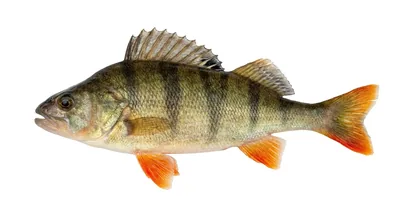
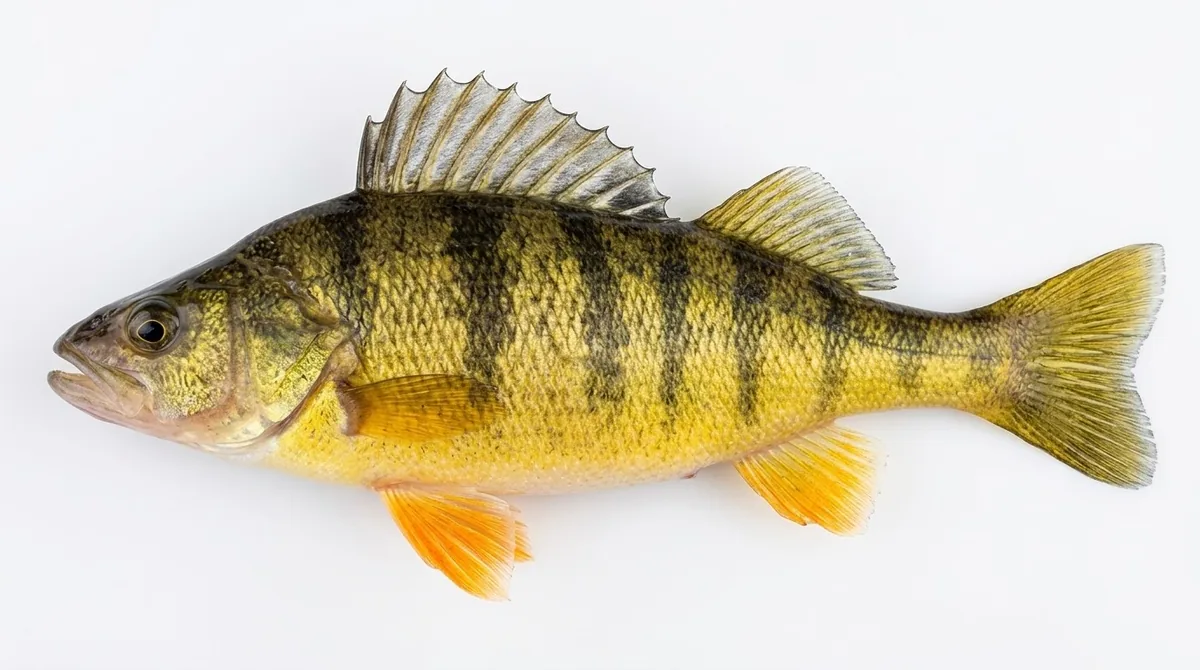
Yellow perch
Perca flavescens
- Freshwater
- Least Concern
- Max length
- 50 cm
- Class
- Teleostei
- Order
- Perciformes
- Family
- Percidae
- Genus
- Perca
- North America - Inland waters
About the yellow perch
The yellow perch (Perca flavescens), commonly referred to as perch, striped perch, American perch or preacher is a freshwater perciform fish native to much of North America. The yellow perch was described in 1814 by Samuel Latham Mitchill from New York. It is closely related, and morphologically similar to the European perch (Perca fluviatilis); and is sometimes considered a subspecies of its European counterpart.
Latitudinal variability in age, growth rates, and size have been observed among populations of yellow perch, likely resulting from differences in day length and annual water temperatures. In many populations, yellow perch often live 9 to 10 years, with adults generally ranging 4–10 in (10–25 cm) in length.
The world record for a yellow perch by weight is 4 lb 3 oz (1.9 kg), and was caught in May 1865 in Bordentown, New Jersey, by Dr. C. Abbot. It is the longest-standing record for a freshwater fish in North America.
Habitat
Yellow perch are commonly found in the littoral zones of both large and small lakes, but also inhabit slow-moving rivers and streams, brackish waters, and ponds. Due to human intervention, they are currently found in many man-made lakes, reservoirs, and river impoundments. The perch are most abundant in lakes that may be warm or cool and are extremely productive in smaller lakes where they can dominate unless controlled by predation.
Distribution
Yellow perch are native to the tributaries of the Atlantic Oceans and Hudson Bay in North America, particularly the Great Lakes–St. Lawrence River and Mississippi River basins.
In Canada, its native range includes all the Great Lakes, and from Nova Scotia to the Prairie provinces north to the Mackenzie River. It also is common in the Great Slave Lake.
In the United States, the native range extends south into Ohio and Illinois, and throughout most of the northeastern United States. Native distribution was driven by postglacial melt from the Mississippi River. It is also considered native to the Atlantic Slope basin, extending south to the Savannah River. There is also a small, likely native population in the Dead Lakes region of the Apalachicola River system in Florida.
The yellow perch has also been widely introduced for sport and commercial fishing purposes. It has also been introduced to establish a forage base for bass and walleye. These introductions were predominantly performed by the U.S. Fish Commission in the late 19th and early 20th centuries. However, unauthorized introductions have likely occurred from illegal introductions, dispersal through connected waterways, and use as live bait. The current native and introduced range in the United States is through northern Missouri to western Pennsylvania to South Carolina and north to Maine, with introduced populations in the northwest and southwest portions of the United States. It has been extirpated in Arkansas.
Introductions in Canada have been less intense than in the United States. It was primarily limited to the lakes in the Peace River drainage of British Columbia, but has currently expanded to other bordering areas since. A population in Swan Lake of the Peace River drainage, however, may be indigenous. The yellow perch has been introduced to China and Japan.
Description from Wikipedia, available under CC BY-SA.
Where the yellow perch lives
Distribution data from GBIF (DOI: 10.15468/dl.8rzs8d).
Also known as
- American perch
- Striped perch
- Perchaude
- Amerikanischer Flussbarsch
- Okoń żółty
- Gul abborre
- Asawew
- Okoun žlutý
- Flava perko
- Perka hori
- Kelta-ahven
- Kelduahven
- Biban galben
- Sary okun
- Cá pecca vàng
- Жёлтый окунь
- برش اصفر
- Жълт костур
- لوتی زرد
- Сар алангы
- Ӵуж юш
- Окунь жовтий
- 黃鱸
Where to catch yellow perch
- Arkansas River at Salida United States River · live river data
- Cape Fear River United States River · North Carolina
- Green River (Flaming Gorge) United States River · live river data
- Kenai River United States River · Alaska
- Kentucky Lake United States Reservoir · Kentucky-Tennessee
- Lake Champlain United States Lake · live river data