Fishing Calendar App
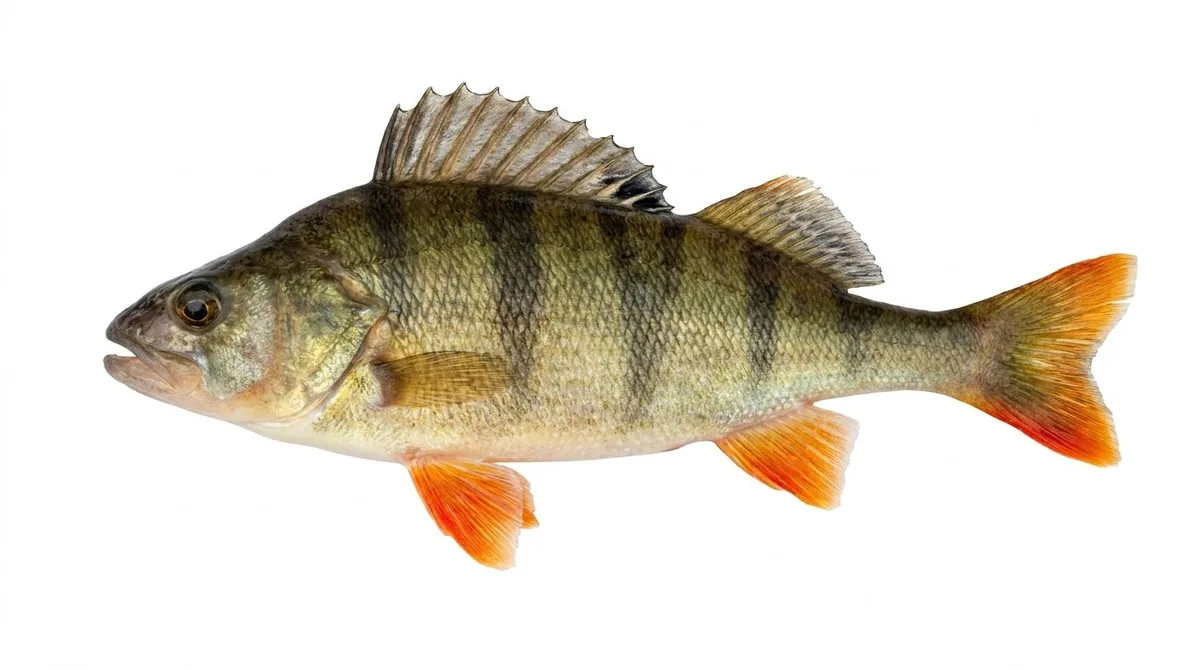
European perch
Perca fluviatilis
- Freshwater
- Least Concern
- Max length
- 60 cm
- Class
- Teleostei
- Order
- Perciformes
- Family
- Percidae
- Genus
- Perca
- North America - Inland waters
- Asia - Inland waters
- Europe - Inland waters
- Oceania - Inland waters
About the european perch
The European perch (Perca fluviatilis), also known as the common perch, redfin perch, big-scaled redfin, English perch, Euro perch, Eurasian perch, Eurasian river perch, Hatch, poor man's rockfish or in Anglophone parts of Europe, simply the perch, is a predatory freshwater fish native to Europe and North Asia. It is the type species of the genus Perca.
The perch is a popular game fish for recreational anglers, and has been widely introduced beyond its native Eurasian habitats into Australia, New Zealand and South Africa. Known locally simply as "redfin", they have caused substantial damage to native fish populations in Australia and have been proclaimed a noxious species in New South Wales.
Distribution
The range of the European perch covers fresh water basins all over Europe, excluding the Iberian Peninsula. Their range is known to reach the Kolyma River in Siberia to the east. It is also common in some of the brackish waters of the Baltic Sea.
The European perch lives in slow-flowing rivers, deep lakes and ponds. It tends to avoid cold or fast-flowing waters but some specimens penetrate waters of these type, although they do not breed in this habitat. They are most abundant in relatively shallow lakes and lakes with deep light penetration, and less abundant in deep lakes and those with low light penetration.
Behaviour
The European perch is carnivorous, with juveniles feeding on zooplankton, bottom invertebrate fauna and other perch fry, while adults feed on both invertebrates and fish, mainly sticklebacks, perch, roach and minnows. Perch start eating other fish when they become fingerlings at a size of around 120 mm (4.7 in). Male perch become sexually mature at between one and two years of age, females between two and four. In the Northern Hemisphere they spawn between February and July. Males reach spawning areas ahead of females, and court mates by chasing through underwater vegetation. During reproduction, the female lays a white ribbon of eggs up to one meter long, which is deposited on water plants or on the branches of trees or shrubs immersed in the water. There has been speculation, but only anecdotal evidence, that eggs stick to the legs of wading birds and are then transferred to other waters.
The eggs hatch after a period of 8 to 16 days. The larvae are 5 millimetres (0.20 in) long on hatching, and live in open water where they feed on plankton. Juveniles migrate to areas nearer the shore and bottom during their first summer.
Description from Wikipedia, available under CC BY-SA.
Where the european perch lives
Distribution data from GBIF (DOI: 10.15468/dl.8rzs8d).
Also known as
- Perch
- Eurasian perch
- River perch
- Perche commune
- Perche européenne
- Perche fluviatile
- Flussbarsch
- Barsch
- Egli
- Kretzer
- Abborre
- Pesce persico
- Navadni ostriž
- Perca
- Perca de río
- Okoń pospolity
- Okoń
- Okoń europejski
- Abbor
- Europese baars
- Çay xanısı
- Ešerīs
- Perca de riu
- Okoun říční
- Òkùnk
- Draenogyn Dŵr Croyw
- Aborre
- Eŭropa perko
- Perka arrunt
- Ahhun
- Bears
- Perca común
- Csapósügér
- Kerakap Eropa
- Piisch
- Ešerys
- Asaris
- Baars
- Åbor
- Pércout
- Biban european
- Vuoskku
- Ostriež zelenkastý
- Vuásku
- Boars
- Tatlısu levreği
- Cá pecca châu Âu
- Grgeč
- Ahven
- 유라시아민물농어
- Речной окунь
- Окунь
- Окунь речной обыкновенный
- ヨーロピアンパーチ
- فرخ أوروبي
- فرخ اوروبى
- Акунь звычайны
- Акунь
- Костур
- Алгана
- Πέρκα
- لوتی اروپایی
- פרקה
- ქორჭილა
- Өзен алабұғасы
- Пиштемгал
- Костреш
- Алангы
- Кострыш
- Гргеч
- ปลาเพิร์ชยุโรป
- Ала-буга
- Юш
- Окунь звичайний
- 鱸魚
- 河鲈
Where to catch european perch
- Traunsee Austria Lake · live river data
- Ammersee Germany Lake · live river data
- Bodensee (Lake Constance) Germany Lake · live river data
- Chiemsee Germany Lake · live river data
- Elbe River at Hamburg Germany River · live river data
- Havel at Wannsee Germany Lake · live river data