Fishing Calendar App
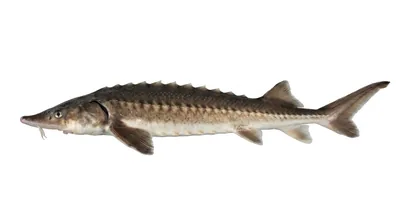
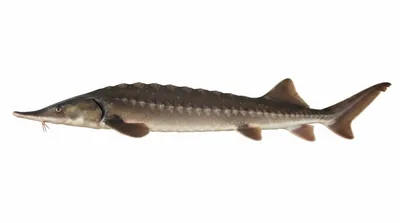
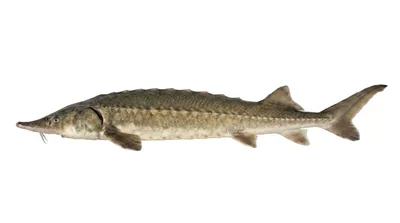
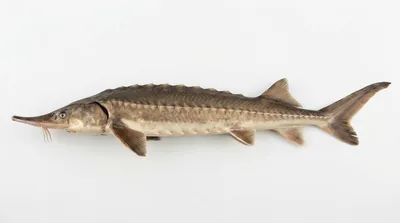
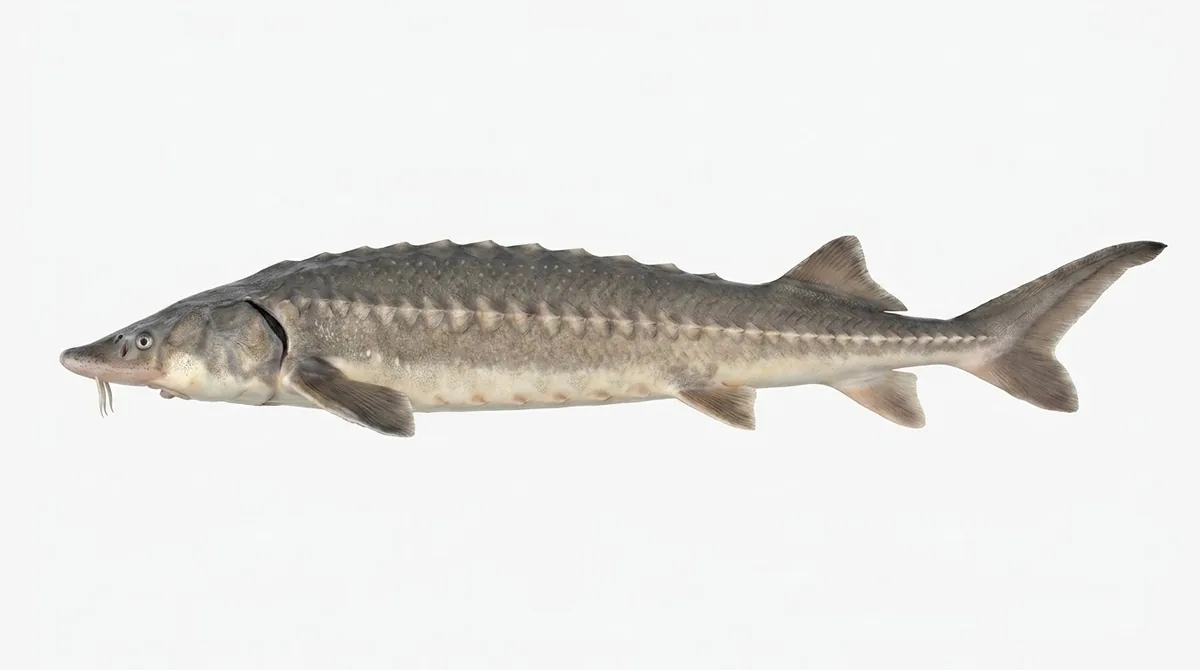
White sturgeon
Acipenser transmontanus
- Freshwater & Saltwater
- Vulnerable
- Max length
- 600 cm
- Class
- Chondrostei
- Order
- Acipenseriformes
- Family
- Acipenseridae
- Genus
- Acipenser
- North America - Inland waters
- Pacific, Eastern Central
- Pacific, Northeast
About the white sturgeon
White sturgeon (Sinosturio transmontanus) is a species of sturgeon in the family Acipenseridae of the order Acipenseriformes. They are an anadromous (migratory) fish species ranging in the Eastern Pacific; from the Gulf of Alaska to Monterey, California. However, some are landlocked in British Columbia, the Fraser River and Columbia River, Montana, Snake River, and Clearwater River in Idaho, and Lake Shasta in California, with reported sightings in northern Baja California, Mexico.
Distribution
White sturgeon are native to several large North American rivers that drain to the Pacific Ocean. They primarily live in estuaries of large rivers, but migrate to spawn in freshwater, and travel long distances between river systems. Reproducing populations have been documented along the West Coast, from northern Mexico up to the Aleutian Islands in Alaska. White sturgeon are commonly found in deep, soft bottomed areas of estuaries, where movements in the water column is dependent on salinity.
Historical ranges have been modified substantially by overharvesting, habitat changes due to dams, and river regulations; all affecting habitat quality, suitability and connectivity.
In the lower Fraser River, British Columbia, movement and abundance are assessed by acoustic tags and mark recapture methods. While the model developed by Robichaud, English and Nelson assumes a closed homogenous population, acoustic tags and mark-recapture data shows that they are sedentary during the winter months and mobile in the spring and fall, with data indicating that they leave the Fraser River and enter the Strait of Georgia during their mobile periods; this conclusion has been validated by microchemical evidence of marine exposure in Fraser River white sturgeon fin rays.
Construction of dams for hydroelectric power production affects seasonal movement of white sturgeon in many river systems, with the Columbia River Basin being a large contributor to shifts in the distribution and movement. The dams present in the basin have largely blocked the upstream movement of sturgeon, due to designs of fish ladders being more specified for salmon and steelhead. While downstream passage of sturgeon through the dams has been reported, the route of passage was never identified. Downstream movement through the dams are only possible through operating turbines, open spill gates and the ice and trash sluiceway.
Behaviour
Larval white sturgeon 10–11 mm (0.39–0.43 in) in TL experience the highest mortality when they transition from endogenous to exogenous feeding, around 8–14 days post-hatch depending on conditions. Once larvae metamorphose into young of the year (YOY) and juveniles, they actively feed on the substrate, dominantly Corophium spp., relying on water currents to carry them downriver to areas of suitable food. The availability of Corophium spp. could play a key role in the survival of larval and YOY white sturgeon in the Columbia River and could possibly explain the apparent poor survival of larvae and YOY in some Snake and Columbia River reservoirs that apparently have successful spawning but poor recruitment. Juveniles less than 600 mm (2.0 ft) TL are known to feed on tube-dwelling amphipods, mysids, isopods, Corophium spp, and other benthic invertebrates, as well as on the eggs and fry of other fish species. Adults greater than 600 mm (2.0 ft) consume a variety prey species, adjusting to a piscivorous diet of herring, shad, starry flounder, goby, smelt, anchovy, lamprey, and salmon, as well as benthic items such as invasive overbite clam. With feeding movements influenced due to tidal cycles, studies show more active movement at night, hinting that white sturgeon may be nocturnal foragers.
Studies have shown that dietary lipid requirements on larval white sturgeon effect overall body composition, plasma biochemical parameters and liver fatty acids. With increasing dietary lipid levels, whole body and muscle lipid content increases, as well as increased plasma triglycerides and cholesterol content. This shows that larval sturgeon post-hatch grow faster on high lipid diets, reducing glycogen stores but increasing stores of lipid in the liver. The importance of this can help to understand growth rates in changing environments with varying food sources.
Description from Wikipedia, available under CC BY-SA.
Where the white sturgeon lives
Distribution data from GBIF (DOI: 10.15468/dl.8rzs8d).
Also known as
- Storione bianco
- Beli jeseter
- Sinosturio transmontanus
- Esturión blanco
- Esturgeon blanc
- Weißer Stör
- Sacramentostör
- Jesiotr amerykański
- Vit stör
- Witsteur
- Esturió blanc
- Jeseter bílý
- Valkosampi
- Bijela jesetra
- Fehér tok
- Witte steur
- Белый осётр
- سمك الحفش الابيض
- Ağ nərə
- Бяла есетра
- חדקן לבן
- Бела есетра
- ปลาสเตอร์เจียนแปซิฟิก
- Осетер білий
- Cá tầm trắng
- 美國白鱘
Where to catch white sturgeon
- Arkansas River at Salida United States River · live river data
- Bristol Bay United States Bay · Alaska
- Cape Fear River United States River · North Carolina
- Columbia River at Astoria United States River · Oregon-Washington
- Green River (Flaming Gorge) United States River · live river data
- Kenai River United States River · Alaska