Fishing Calendar App
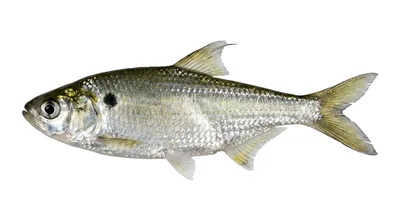
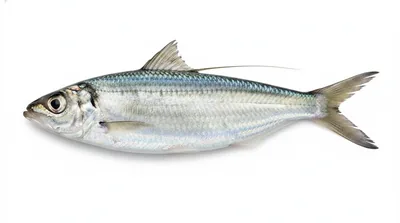
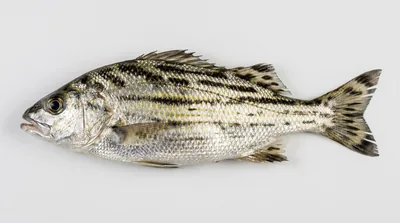
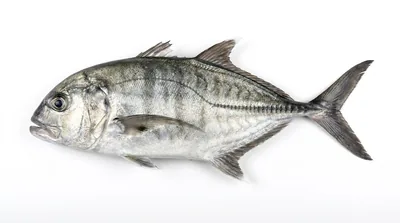
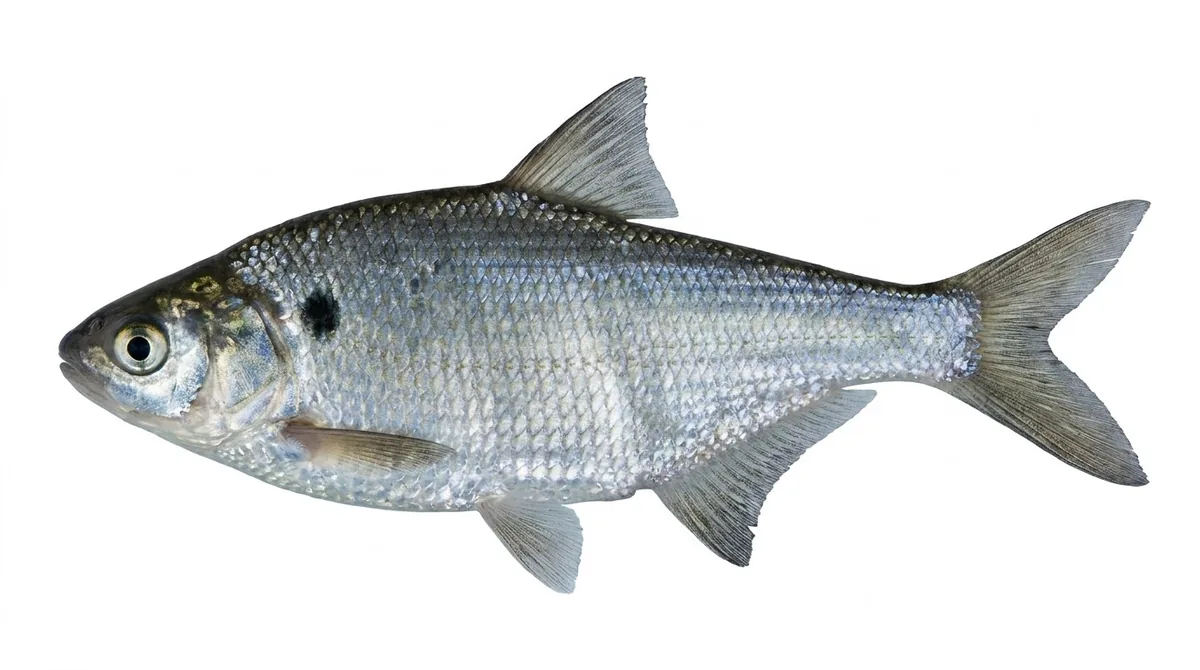
American gizzard shad
Dorosoma cepedianum
- Freshwater & Saltwater
- Least Concern
- Max length
- 48 cm
- Class
- Teleostei
- Order
- Clupeiformes
- Family
- Dorosomatidae
- Genus
- Dorosoma
- Asia - Inland waters
- Atlantic, Northwest
- Atlantic, Western Central
- North America - Inland waters
About the american gizzard shad
The American gizzard shad (Dorosoma cepedianum), also known as the mud shad, is a member of the herring family of fish and is native to large swaths of fresh and brackish waters in the United States of America, as well as portions of Canada, and Mexico. The adult has a deep body, with a silvery-green coloration above fading to plain silver below. The gizzard shad commonly resides in freshwater lakes, reservoirs, rivers, and streams but can also reside in brackish waters, as it does on the Atlantic coast of the United States. Their range is across most of the continental United States, although they typically go no further north than New York and no further west than New Mexico. They are a large part of many of the ecosystems they inhabit and can drive changes in phyto- and zooplankton, thereby indirectly affecting other planktivorous fishes. The gizzard shad has been widely used as a food source for game fish, with varied success in management and effectiveness.
Distribution
Gizzard shad have historically ranged from North Dakota in the northwest of the United States south to New Mexico in the southwest, east to Florida in the southeast, and north to 40°N latitude (they have historically been seen no farther north than the lower New York Harbor). They were not seen in many of the Great Lakes until the late 1800s and early 1900s, although they are suspected to be native to Lake Erie, reaching it after the last ice age.
Gizzard shad typically live in lakes and reservoirs, although they can live in rivers and streams, and brackish waters. They reside in the limnetic zone, and can comprise up to 80% of fish biomass in certain lake systems. They prefer shallow lakes with muddy bottoms and relatively high turbidity. This may be due in part to their breeding preferences, but it probably arises from the fact that they have lower survival rates in clear waters and waters with high vegetative cover.
Behaviour
Gizzard shad are planktivorous in early life, feeding mainly on phytoplankton and zooplankton, such as periphyton, chrysophyta and rotifera, as larvae. Consumptive demand of young of year fish (including larvae) can be intense enough to cause collapses in the zooplankton community, which has far-reaching effects through the ecosystem of which they are a part. In midwestern USA reservoirs, where gizzard shad are often the most abundant fish (by biomass), they usually switch to diets dominated by sediment detritus during the first year of life, whereas in some natural lakes they may rely heavily on zooplankton throughout their lives. As zooplankton are a nutritionally superior food than detritus, if large zooplankton (e.g., Daphnia) are available, gizzard shad probably prefer to feed on this resource. However, in many reservoirs, large zooplankton are scarce so gizzard shad rely on detritus. Gizzard shad growth rates may be lower when they feed only on detritus (compared to zooplankton), and in reservoirs they may consume more zooplankton (and less detritus) when density of conspecifics is low and the abundance of large-bodied zooplankton is high. In such cases, Daphnia and other crustaceans make up a large portion of some gizzard shad diets. Sediment and sand are also ingested by the gizzard shad, which helps it digest food in its muscular gizzard.
Gizzard shad feed mainly during the day, with minimal activity at night. They have been observed at night in Lake Mead, Arizona congregating in schools in very shallow water two to three feet deep during the fall.
Description from Wikipedia, available under CC BY-SA.
Where the american gizzard shad lives
Distribution data from GBIF (DOI: 10.15468/dl.8rzs8d).
Also known as
- Gizzard shad
- Mud shad
- Alose à gésier
- Sardina molleja
- Alosa de pedrer americana
- Kupusilli
- Draadvinnige elft
- Северна дорозома
- 美洲真鰶
Where to catch american gizzard shad
- Arkansas River at Salida United States River · live river data
- Cape Cod Bay United States Bay · Massachusetts
- Cape Fear River United States River · North Carolina
- Chesapeake Bay United States Estuary · Maryland and Virginia
- Delaware Bay United States Bay · Delaware-New Jersey
- Florida Bay (Everglades) United States Bay · Florida