Fishing Calendar App
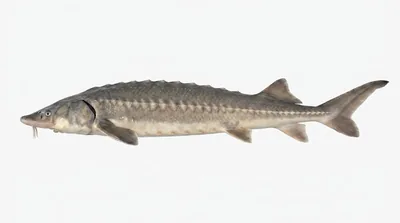
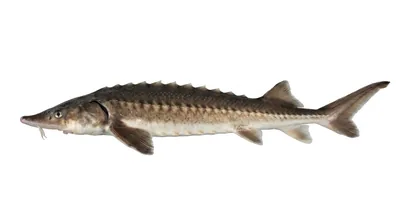
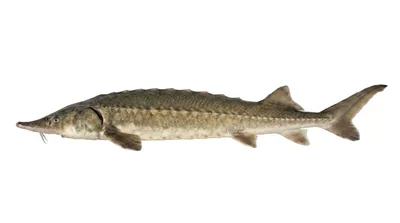
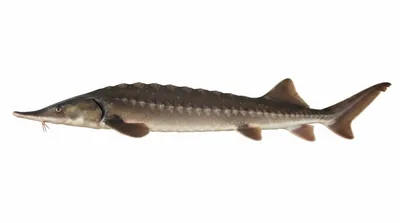
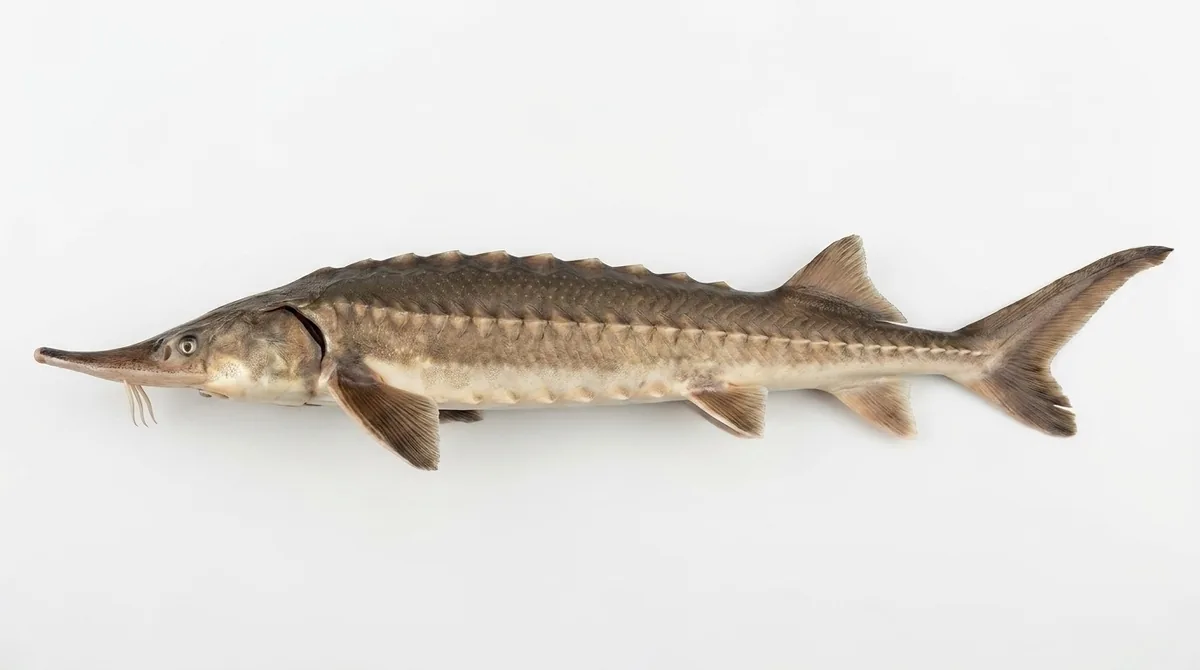
Shovelnose sturgeon
Scaphirhynchus platorynchus
- Freshwater
- Vulnerable
- Max length
- 100 cm
- Class
- Chondrostei
- Order
- Acipenseriformes
- Family
- Acipenseridae
- Genus
- Scaphirhynchus
- North America - Inland waters
About the shovelnose sturgeon
The shovelnose sturgeon (Scaphirhynchus platorynchus) is the smallest species of freshwater sturgeon native to North America. It is often called hackleback, sand sturgeon, or switchtail. Switchtail refers to the long filament found on the upper lobe of the caudal fin (often broken off as adults). Shovelnose sturgeon are the most abundant sturgeon found in the Missouri River and Mississippi River systems, and were formerly a commercially fished sturgeon in the United States of America (Pflieger 1997). In 2010, they were listed as threatened under the U.S. Endangered Species Act due to their resemblance to the endangered pallid sturgeon (S. albus), with which shovelnose sturgeon are sympatric.
Distribution
The shovelnose sturgeon, as its distribution represents, is impacted very little by turbidity. The Missouri River and the Mississippi River systems tend to carry high sediment loads. Here the sturgeon inhabits the open channel or main channel areas of the large rivers. It lives on the bottom, often in areas with swift current and sand or gravel bottom. As with many riverine fish species, the shovelnose sturgeon does not have a restricted home range and may travel long distances (Pflieger 1997).
The shovelnose sturgeon feeds on the bottom, using its highly protrusible mouth to suck up its food. The diet is mainly aquatic insect larvae, consisting principally of mayflies, true flies (Diptera), and caddisflies. The sturgeon also feed on crustaceans, worms, and small fish (Carlson et al. 1985;Held 1969). As a result of bottom feeding, it is a host to the glochidia (larvae) of several species of freshwater mollusc, including Quadrula pustulosa (pimpleback), Obovaria olivaria (hickorynut) and Lampsilis teres (yellow sandshell). It is the only known host of the hickorynut mussel.
A typical sturgeon's life history includes a migration from feeding grounds to breeding grounds in large rivers. During spawning, behavior changes and swimming near the surface occurs. Females do not spawn every year and spawning chronology is not readily evident. Spawning takes place over gravel in fairly swift water. Eggs hatch after 3 to 5 days, and the larvae—about 1 cm long—drift downstream to suitable rearing areas in the river (Barton 2007). Carlson et al. (1985) found that the growth of the shovelnose sturgeon is relatively slow, reaching 21.3 inches (54 cm) in five years.
Description from Wikipedia, available under CC BY-SA.
Where the shovelnose sturgeon lives
Distribution data from GBIF (DOI: 10.15468/dl.8rzs8d).
Also known as
- Mississippiskovelstör
- Łopatonos amerykański
- Обыкновенный лопатонос
- Adi kürəkburun
- Звычайны лапатанос
- Обикновен лопатонос
- تاسماهی پوزهبیلچهای
- סקפירינכוס פלטורינכוס
- Лопатоносна есетра
- Лопатоніс плосконосий
- Cá tầm mũi xẻng
Where to catch shovelnose sturgeon
- Table Rock Lake United States Reservoir · live river data
- Arkansas River at Salida United States River · live river data
- Cape Fear River United States River · North Carolina
- Green River (Flaming Gorge) United States River · live river data
- Kenai River United States River · Alaska
- Kentucky Lake United States Reservoir · Kentucky-Tennessee