Fishing Calendar App
Western blacknose dace
Rhinichthys obtusus
- Freshwater
- Least Concern
- Max length
- 8 cm
- Class
- Teleostei
- Order
- Cypriniformes
- Family
- Cyprinidae
- Genus
- Rhinichthys
- North America - Inland waters
About the western blacknose dace
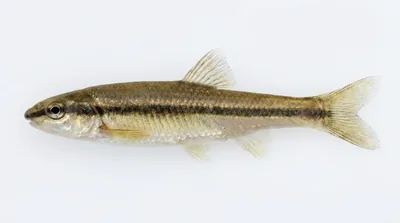
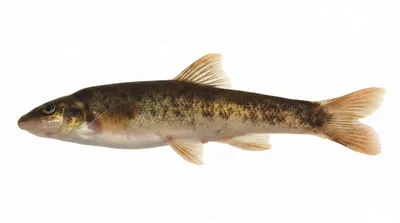
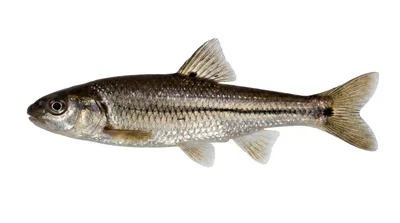
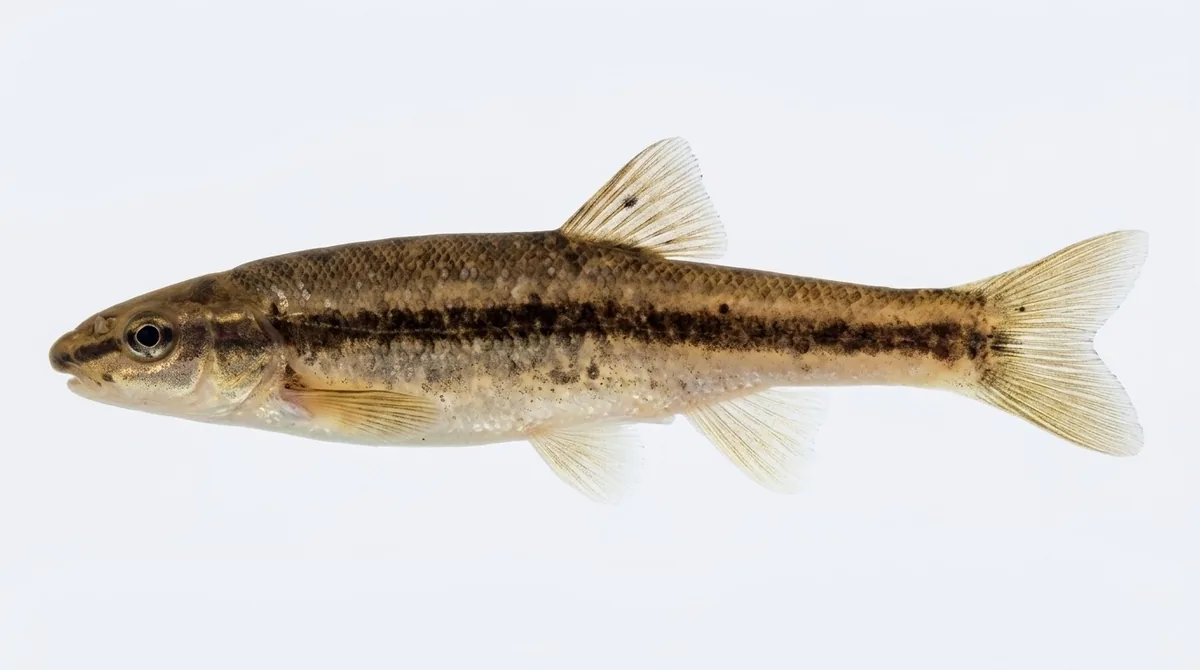
Western blacknose dace (Rhinichthys obtusus) is a common species of ray-finned fish belonging to the family Leuciscidae, the shiners, daces and minnows, and the genus Rhinichthys. Western blacknose dace have tan to dark brown backs, lighter sides, and cream colored undersides. Dark blotches are sporadically scattered across their sides and backs. A distinctive dark colored mid-lateral stripe from the tip of the snout to the caudal peduncle is present. The snout is relatively long and they have a slightly sub-terminal mouth. The stripe is dark brown in females and is a rusty pink color in males during spawning season. The lateral stripe is more pronounced and the caudal spot is present in juveniles. Similar to other species of dace the western blacknose dace give the illusion of having no scales but in actuality the scales are so small they are hard to see. Western blacknose dace are typically 2–3 inches long but can grow to as long as 4 inches. They have a forked tail, single dorsal fin with 8 rays and no spines, a pelvic fin on the abdominal, no adipose fin, and an anal fin with 7 rays and no spines.
Habitat
The western blacknose dace inhabits the upper Mississippi, Ohio, and Great Lakes drainages, from as far north as south-central Canada to northern Alabama and Georgia and east to eastern Lake Erie. Young daces prefer to inhabit shallower, quiet pools with silty bottoms while more mature daces prefer streams with consistently high turbulence patterns and plenty of places to hide since they are a prey species. Most often they occupy water depths ranging from 100 to 200 mm with gravel or cobble bottoms. They can also be found in riffles hiding under large rocks or boulders.
Behaviour
Western blacknose dace are mostly carnivorous and exhibit changes in diet as they grow older. Young dace diets consist mostly of Dipteran larvae. Mature daces continue to feed on Dipteran larvae when available but a large portion of their diet also include amphipods. The change in diet is thought to be because of the change in the areas that they inhabit once the daces mature.
Description from Wikipedia, available under CC BY-SA.
Where the western blacknose dace lives
Distribution data from GBIF (DOI: 10.15468/dl.8rzs8d).
Also known as
- الغرب الاسود داس
- 鈍頭吻鱥
Where to catch western blacknose dace
- Lake Champlain United States Lake · live river data
- Arkansas River at Salida United States River · live river data
- Cape Fear River United States River · North Carolina
- Green River (Flaming Gorge) United States River · live river data
- Kenai River United States River · Alaska
- Kentucky Lake United States Reservoir · Kentucky-Tennessee