Fishing Calendar App
Eastern blacknose dace
Rhinichthys atratulus
- Freshwater
- Least Concern
- Max length
- 12 cm
- Class
- Teleostei
- Order
- Cypriniformes
- Family
- Cyprinidae
- Genus
- Rhinichthys
- North America - Inland waters
About the eastern blacknose dace
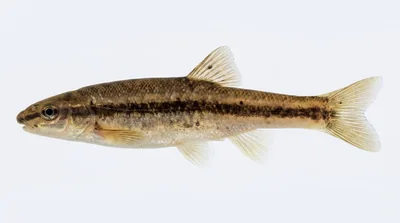
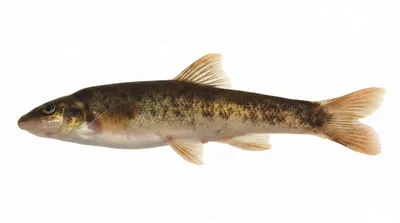
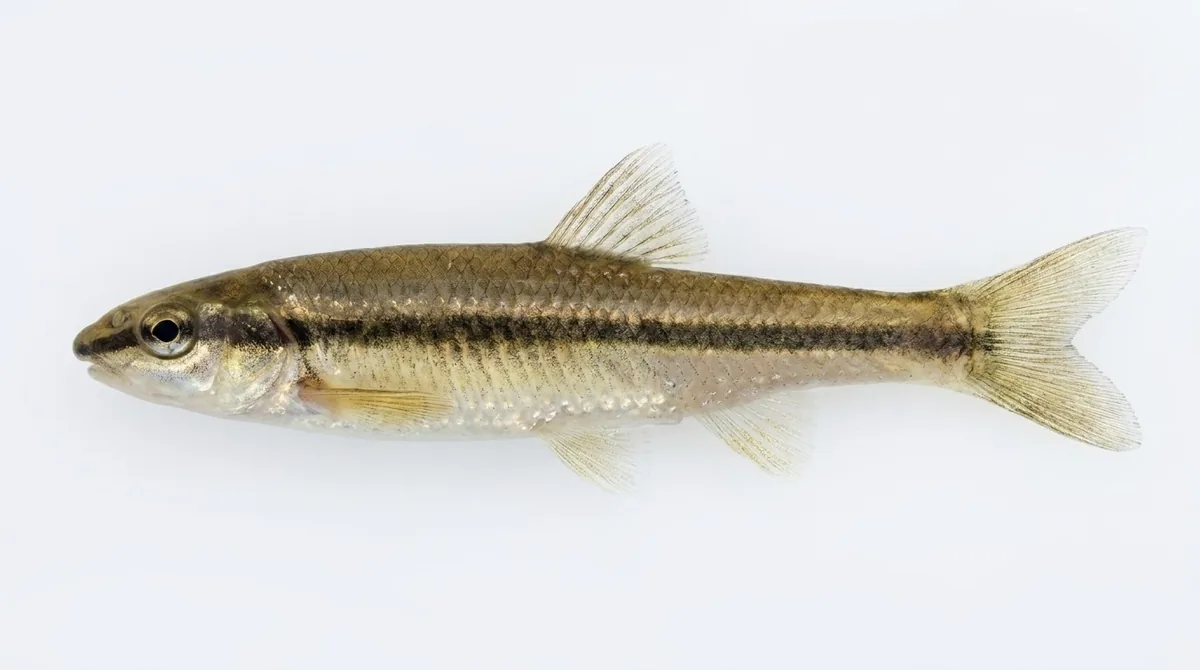
Eastern blacknose dace (Rhinichthys atratulus) is a species of ray-finned fish in the genus Rhinichthys. Its name originates from the Old French word "dars" which is the nominative form of the word "dart" in reference to their swimming pattern. The western blacknose dace (Rhinichthys obtusus) formerly was considered conspecific. While morphologically the two species are not significantly different, they are allopatric. The eastern blacknose dace is found across the southeast portion of Canada and down along the United States' east coast. It is dark brown to olive on its dorsal surface and silvery white below, the two shades separated by the darkly pigmented lateral line. In the breeding season, males develop darker pigmentation and an orange lateral line. Blacknose dace live in rocky streams and rivers where they feed upon small invertebrates and microscopic biological matter and provide forage for larger fish.
Distribution
This fish is mainly found along the southern border of Canada extending along from Manitoba to the Atlantic Ocean, south along the east coast of the United States and slightly inland to South Carolina and Georgia. Scientists hypothesize that 20,000 years ago, as the glaciers retreated, blacknose dace recolonized the region from a single refugium in modern-day Connecticut, as soon as 75 years after the ice receded.
This fish tends to inhabit headwaters, creeks, and small rivers with swiftly moving water. However, fry mature in slower moving portions of the habitats like shoals and pool margins. The species as a whole prefers cool, rocky areas and uses the stones to rest under and around. They also use overhanging vegetation and undercut banks for additional refuge. In the winter, they migrate from headwater streams into rivers and can be found in deeper water under banks.
Behaviour
The eastern blacknose dace eats many small insects and other invertebrates including Acentria ephemerella, Telmatogetoninae, other Chironomidae, worms, algae, and small crustaceans such as young crayfish. They also feed on some plant species. Young fry forage in shallow silty water while adults move into riffles and deep eddying pools to find invertebrates.
Many larger fish feed on the eastern blacknose dace including smallmouth bass, brook trout, brown trout, and rainbow trout. They are also preyed upon by the common merganser and the blue heron.
Description from Wikipedia, available under CC BY-SA.
Where the eastern blacknose dace lives
Distribution data from GBIF (DOI: 10.15468/dl.8rzs8d).
Also known as
- Blacknose dace
- Mustajuovaseipi
- Naseux noir de l’est
- 黑吻鱥
Where to catch eastern blacknose dace
- Arkansas River at Salida United States River · live river data
- Cape Fear River United States River · North Carolina
- Green River (Flaming Gorge) United States River · live river data
- Kenai River United States River · Alaska
- Kentucky Lake United States Reservoir · Kentucky-Tennessee
- Lake Champlain United States Lake · live river data