Fishing Calendar App
Creek chub
Semotilus atromaculatus
- Freshwater
- Least Concern
- Max length
- 30 cm
- Class
- Teleostei
- Order
- Cypriniformes
- Family
- Cyprinidae
- Genus
- Semotilus
- North America - Inland waters
- Asia - Inland waters
About the creek chub
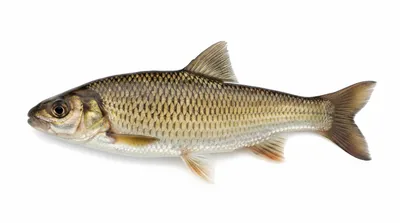
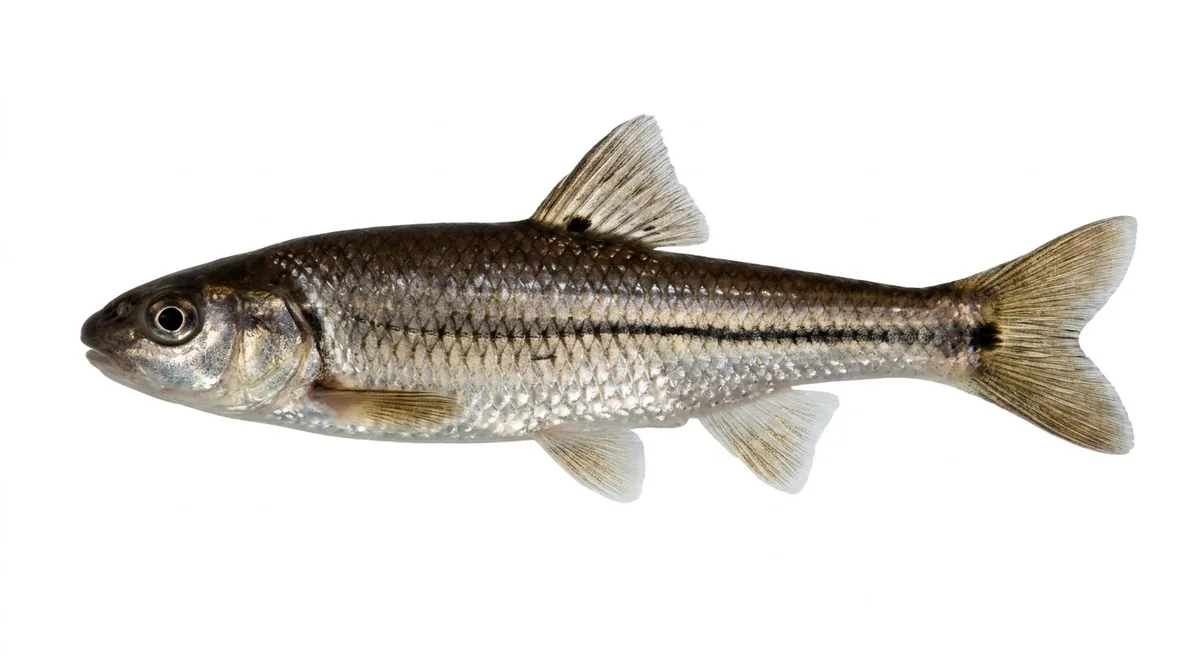
Semotilus atromaculatus, the creek chub or the common creek chub, is a species of freshwater ray-finned fish belonging to the family Leuciscidae. This species is found in the eastern US and Canada. Differing in size and color depending on origin of development, the creek chub can usually be defined by a dark brown body with a black lateral line spanning horizontally across the body. It lives primarily within streams and rivers. Creek chubs attain lengths of 2–6 inches (5.1–15.2 cm) with larger specimens of up to 12 inches (30 cm) long.
Distribution
A fish which can withstand many different environments, the creek chub's current range is the eastern two-thirds of the US and southeastern Canada. It can quickly adapt to different extreme environments, and can live on many different foods. Documented to span throughout the Great Lakes surrounding Wisconsin, and into Minnesota, this species has been described as plentiful. However, reports of this species have fallen throughout Wisconsin and the Great Lakes, suggesting a decline in its population in these regions.
Though populations have been declining within the Great Lakes, they have been continually documented throughout small and medium rivers and streams. Thriving in small stream environments, the creek chub gravitates toward areas of weeds to appear secure and avoid predation. Varying in environments containing a multitude of substrates, they have been documented over gravel, sand, silt, rubble, mud, boulders, clay, bedrock and detritus bottoms. This fish actually prefers the stream or river environment compared to that of a lake, as they have been recorded in streams far more than lakes. Of over 440 individuals caught, only 9 were from lakes, and when limiting the locations to solely lakes, only six individuals were caught.
Behaviour
The creek chub has specific behaviors at different ages. Commonly a school fish, they have been documented to school from birth to late adult, occupying the edges of pools. Their upper lethal temperature is 32 °C (90 °F), while the lower lethal temperature is 1.7 °C (35.1 °F). Initially, the creek chub is quite hesitant to venture from its known territory. For instance, while developing and growing, a school of creek chub travels together within the same 50-metre (160 ft) radius. Ensuring safety from unknown predators and environment, this increases their potential for survival.
As the creek chub develops, traveling outside its radius, it engages in aggressive behavior with other members of the species. The creek chub engages in ritualized aggression when others of the species invade its territory. Engaging in parallel swim, the fish widens its fins and mouth and swims at a caudal beat. Intimidating opponent fish throughout these rituals, the forward fish stops and directs blows to the head of the other fish. This ensures territory dominance, forcing intruders out of its area.
In central Ohio, creek chubs tend to dominate small creeks, where predators such as smallmouth, largemouth, and spotted bass are unable to thrive. They will be present in larger creeks and rivers, but they will no longer be a dominant species, and their population numbers will suffer from predation. Creek chubs can be caught on small hooks with small sections of nightcrawlers. They feed in schools during daylight, and aggressively compete for the bait at first. After several of their comrades are pulled from the water, creek chubs become wary, and they will no longer aggressively take the bait. At this point, they may nibble at the bait, or look at the bait and avoid striking at it. Creek chubs can be effectively caught in minnow traps with dry dog food. More information is needed about effective daytime angling hours. Creek chubs are a hardy minnow that can easily be caught in small creeks, stored in aquariums, and used as bait to catch larger fish such as bass and catfish. Since creek chubs do not have sharp spines that make up their dorsal fins, like a bluegill or largemouth bass does, they may be a preferred food source for fish that prey on smaller fish.
Description from Wikipedia, available under CC BY-SA.
Where the creek chub lives
Distribution data from GBIF (DOI: 10.15468/dl.8rzs8d).
Also known as
- Mulet à cornes
- 黑斑鬚雅羅魚
Where to catch creek chub
- Green River (Flaming Gorge) United States River · live river data
- Arkansas River at Salida United States River · live river data
- Cape Fear River United States River · North Carolina
- Kenai River United States River · Alaska
- Kentucky Lake United States Reservoir · Kentucky-Tennessee
- Lake Champlain United States Lake · live river data