Fishing Calendar App
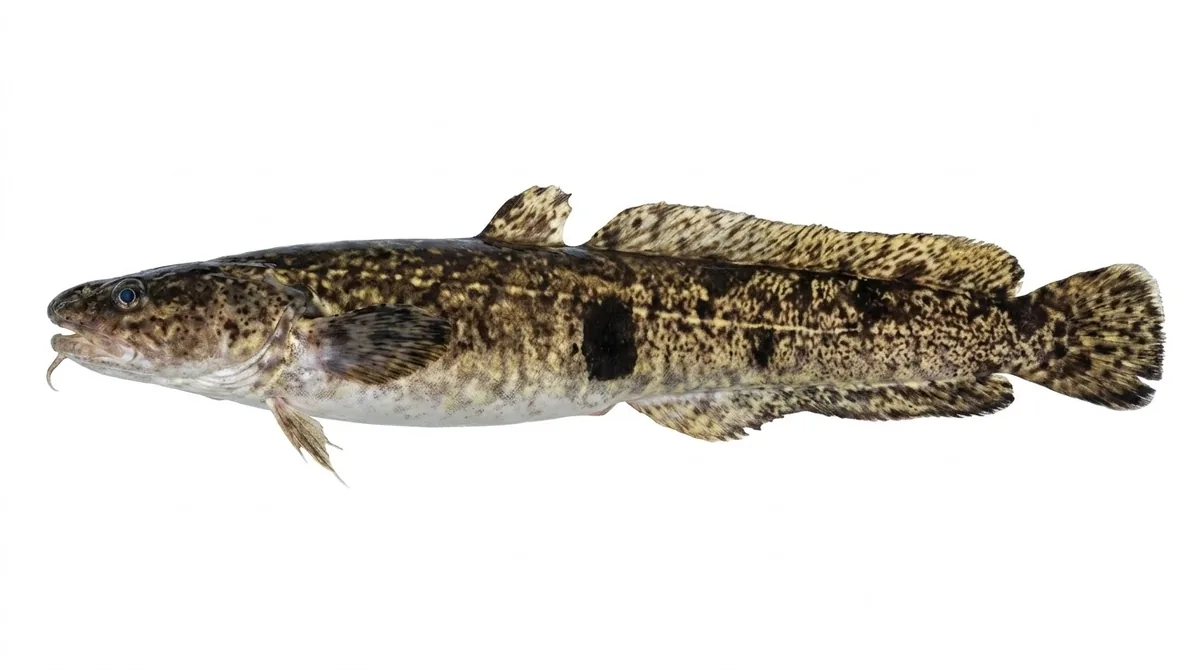
Burbot
Lota lota
- Freshwater
- Least Concern
- Max length
- 120 cm
- Class
- Teleostei
- Order
- Gadiformes
- Family
- Lotidae
- Genus
- Lota
- North America - Inland waters
- Asia - Inland waters
- Europe - Inland waters
About the burbot
The burbot (Lota lota), also known as bubbot, mariah, loche, cusk, freshwater cod, freshwater ling, freshwater cusk, the lawyer, coney-fish, lingcod, or eelpout, is a species of coldwater ray-finned fish native to the subarctic regions of the Northern Hemisphere. It is the only member of the genus Lota, and is the only freshwater species of the order Gadiformes. The species is closely related to marine fish such as the common ling and cusk, all of which belong to the family Lotidae (rocklings).
Habitat
Burbot live in large, cold rivers, lakes, and reservoirs, primarily preferring freshwater habitats, but able to thrive in brackish environments for spawning. For some time of the year, the burbot lives under ice, and it requires frigid temperatures to breed. During the summer, they are typically found in the colder water below the thermocline. In Lake Superior, burbot can live at depths below 300 m (980 ft). As benthic fish, they tolerate an array of substrate types, including mud, sand, rubble, boulder, silt, and gravel, for feeding. Adults construct extensive burrows in the substrate for shelter during the day. Burbot are active crepuscular hunters. Burbot populations are adfluvial during the winter, and they migrate to near-shore reefs and shoals to spawn, preferring spawning grounds of sand or gravel.
Distribution
Burbot have circumpolar distribution above 40° N. Populations are continuous from France across Europe and chiefly Russian Asia to the Bering Strait. In North America, burbot range from the Seward Peninsula in Alaska to New Brunswick along the Atlantic Coast. Burbot are most common in streams and lakes of North America and Europe. They are fairly common in Lake Erie, but are also found in the other Great Lakes. An anadromous population also lives in the brackish waters of the Baltic Sea. Recent genetic analysis suggests the geographic pattern of burbot may indicate multiple species or subspecies, making this single taxon somewhat misleading.
Behaviour
At the larval stage, month-old burbot begin exogenous feeding, consuming food through the mouth and digesting in the intestines. Burbot at the larval stage and into the juvenile stage feed on invertebrates based on size. Under 1 cm (0.39 in), burbot eat copepods and cladocerans, and above 1–2 cm (0.39–0.79 in), zooplankton and amphipods. As adults, they are primarily piscivores, preying on lamprey, whitefish, grayling, young northern pike, suckers, stickleback, trout, and perch. At times, burbot also eat insects and other macroinvertebrates, and have been known to eat frogs, snakes, and birds. Having such a wide diet is also correlated to their tendency to bite lures, making them very easy to catch. Burbot are preyed upon by northern pike, muskellunge, and some lamprey species.
Description from Wikipedia, available under CC BY-SA.
Where the burbot lives
Distribution data from GBIF (DOI: 10.15468/dl.8rzs8d).
Also known as
- Cusk
- Eelpout
- Freshwater cod
- Lawyer
- Ling
- Lota
- Lote
- Lotte
- Lotte de rivière
- Quappe
- Rutte
- Miętus pospolity
- Miętus
- Lake
- Lota-do-rio
- Menek
- Trüsche
- Yayın balığı
- Viegielie
- Mník jednovousý
- Mińtus
- Penfras dŵr croyw
- Knude
- Lojto
- Luts
- Made
- Menyhal
- Tittaaliq
- Lotao
- Vėgėlė
- Vēdzele
- Kwabaal
- Fisken lake
- Matikku
- Barbotte
- Mihalț
- Manić
- Njäähi
- Tatlısu gelinciği
- Madeh
- Налим
- Налим речной
- 모오케
- カワメンタイ
- Михалца
- Шампа
- ماهی ریشدار
- Շերեփաձուկ
- ღლაბუტა
- Нәлім
- Гутаарь
- Мнюх
- Сыалыһар
- Манић
- Мезил
- Нальым
- Минь річковий
- Cá tuyết sông
- 江鳕
- بربوط
- Шамбы
- Мянтуз
- Ментюк
- 江鱈
Where to catch burbot
- Lake Neuchâtel Switzerland Lake · live river data
- Green River (Flaming Gorge) United States River · live river data
- Achensee Austria Lake · Tyrol
- Attersee Austria Lake · live river data
- Danube River at Vienna Austria River · Vienna
- Inn River at Innsbruck Austria River · live river data