Fishing Calendar App
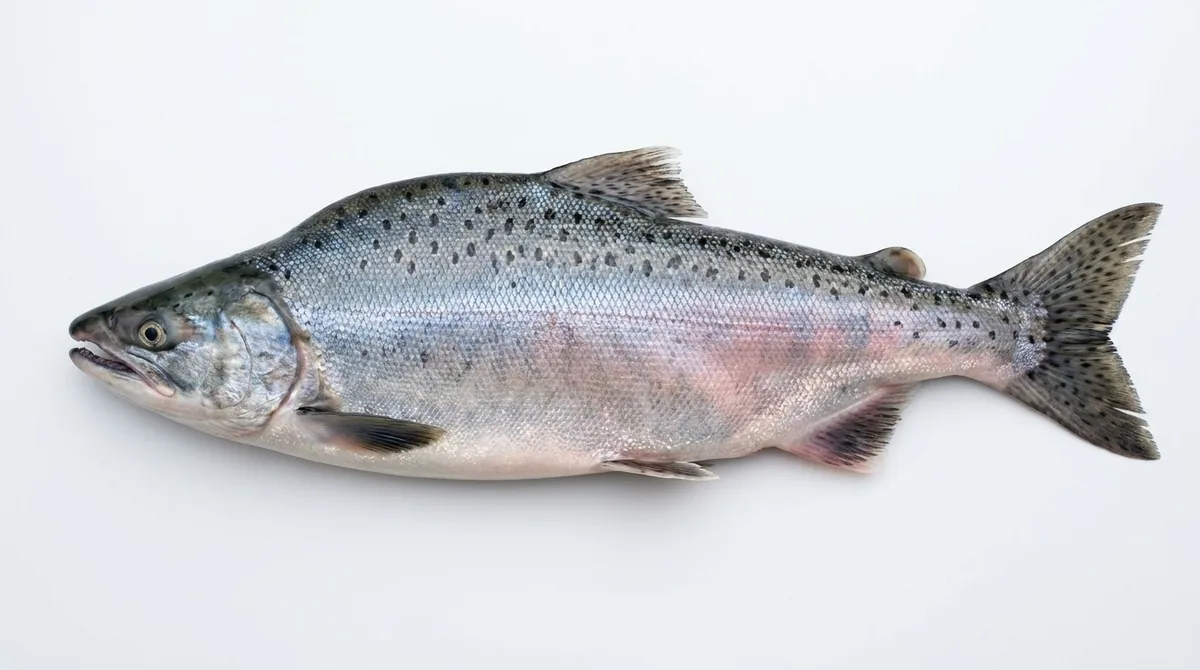
Pink salmon
Oncorhynchus gorbuscha
- Freshwater & Saltwater
- Least Concern
- Max length
- 76 cm
- Class
- Teleostei
- Order
- Salmoniformes
- Family
- Salmonidae
- Genus
- Oncorhynchus
- Atlantic, Northeast
- Europe - Inland waters
- North America - Inland waters
- Pacific, Eastern Central
- Pacific, Northeast
- Pacific, Northwest
About the pink salmon
Pink salmon or humpback salmon (Oncorhynchus gorbuscha) is a species of euryhaline ray-finned fish in the family Salmonidae. It is the type species of the genus Oncorhynchus (Pacific salmon), and is the smallest and most abundant of the seven officially recognized species of salmon. The species' scientific name is based on the Russian common name for this species gorbúša (горбуша), which literally means humpie.
Habitat
Pink salmon are coldwater fish with a preferred temperature range of 5.6 to 14.6 °C, an optimal temperature of 10.1 °C, and an upper incipient lethal temperature of 25.8 °C.
Distribution
The native range of the species is in the Pacific and Arctic coastal waters and rivers, from the Sacramento River in northern California to the Mackenzie River in Canada; and in the west from the Lena River in Siberia to Korea and Honshu in Japan. In North America, pink salmon spawn from the Mackenzie River in the Arctic to as far south as tributaries of Puget Sound, Washington, although they were also reported in the San Lorenzo River near Santa Cruz, California, in 1915, and the Sacramento River in northern California in the 1950s. In 2013, a new record for the southernmost extent of spawning pink salmon was published for the Salinas River. In the fall of 2017, a dozen pink salmon were counted in Lagunitas Creek about 25 miles (40 km) north of San Francisco, California.
Pink salmon were introduced into the Great Lakes of North America. The first recorded release was of about 100 salmon in 1956, which escaped into Thunder Bay of Lake Superior while being transported via seaplane to a hatchery. A population of about 21,000 fingerlings from a hatchery at Port Arthur, Ontario, were also released as surplus in the Current River, a tributary of the lake. Second-generation fish were first caught in 1959, showing that reproduction was occurring. The lake's population is self-sustaining and has adapted to tolerate freshwater over their entire lives, spending their adult phase in the open lake and swimming into its tributaries to spawn. Pink salmon were first recorded in a tributary of Lake Huron in 1969, reached northern Lake Michigan in 1975, and were first caught in Wisconsin in 1971 in Bayfield County. By 1979, the species had spread throughout the Great Lakes. Populations were also stocked on the coast of Maine and Maryland, but disappeared by 1973. While most salmon return to their birth streams to spawn, adults wander extensively during the open water phase and some adopt new streams. This habit led to the species spreading across the lakes within two decades.
Pink salmon have been introduced in Iran. In Europe, pink salmon have been periodically introduced to rivers of the White Sea and Barents Sea basins in Russia since 1956. Stray fish from these rivers have been encountered ascending to rivers also in Norway, Sweden, Ireland, Great Britain, and Iceland; and, in Norway, even self-sustaining populations have been observed. In 2017, larger numbers than usual of this species were caught in rivers in Scotland and spawning was recorded. In 2021, they were reported to have invaded Akerselva in downtown Oslo, the capital of Norway.
Behaviour
In their freshwater stage, juvenile pink salmon consume invertebrates and zooplankton. In the ocean, they feed on a variety of plankton, invertebrates, and small fish. Adults do not feed as they return to freshwater to spawn.
Description from Wikipedia, available under CC BY-SA.
Where the pink salmon lives
Distribution data from GBIF (DOI: 10.15468/dl.8rzs8d).
Also known as
- Humpback salmon
- Salmon roseado
- Saumon rose à bosse
- Saumon à bosse
- Saumon rosé
- Saumon rose du Pacifique
- Buckellachs
- Pazifik Rosa-Lachs
- Gorbusza
- Puckellax
- Pukkellaks
- Grbavi losos
- Qorbuşa
- Salmó rosat del Pacífic
- Losos gorbuša
- Eog Cefngrwm
- Gorbuŝo
- Gorbuuša
- Kyttyrälohi
- Gorbusalazac
- Hnúðlax
- Kuprė
- Bultrugzalm
- Ruošâluosâ
- Bukri baliq
- Горбуша
- 곱사연어
- カラフトマス
- سمك السلمون الوردى
- آزادماهی صورتی
- אלתית דבשתית
- Սապատաձուկ
- ღურკანა
- Бүкүр сом
- گلابی سالمن
- Кыһыл балык
- Букримоҳӣ
- Cá hồi hồng
- 粉紅鮭
Where to catch pink salmon
- Achensee Austria Lake · Tyrol
- Attersee Austria Lake · live river data
- Danube River at Vienna Austria River · Vienna
- Inn River at Innsbruck Austria River · live river data
- Neusiedler See Austria Lake · live river data
- Traunsee Austria Lake · live river data