Fishing Calendar App
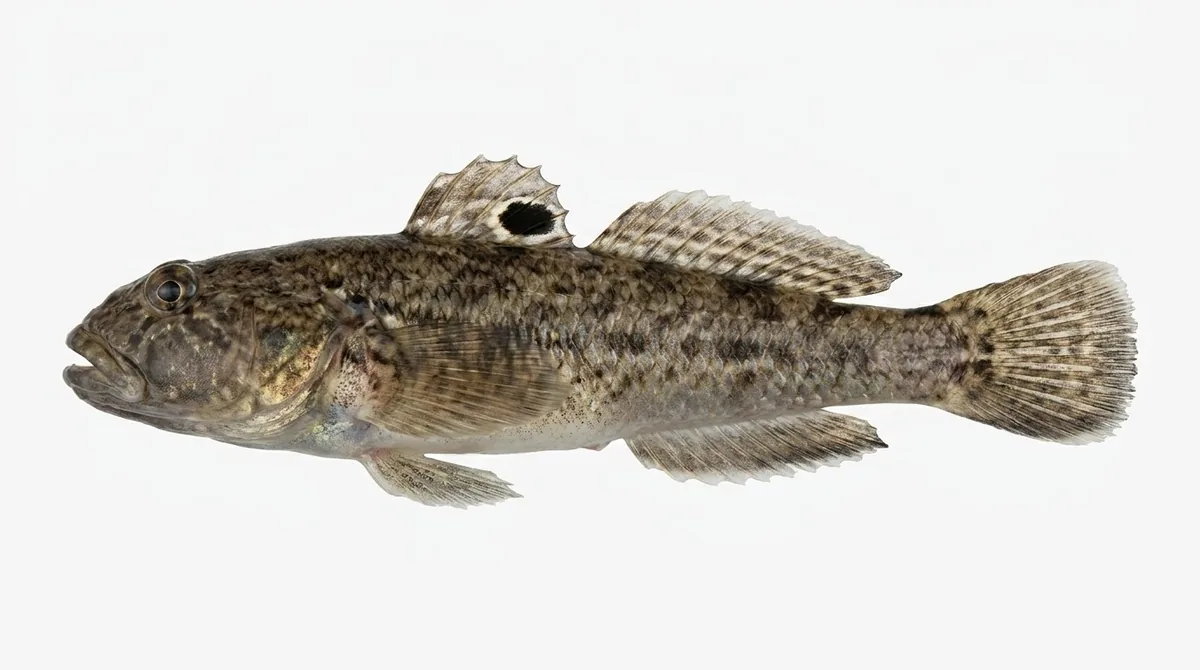
Round goby
Neogobius melanostomus
- Freshwater & Saltwater
- Least Concern
- Max length
- 25 cm
- Class
- Teleostei
- Order
- Gobiiformes
- Family
- Gobiidae
- Genus
- Neogobius
- North America - Inland waters
- Asia - Inland waters
- Atlantic, Northeast
- Europe - Inland waters
About the round goby
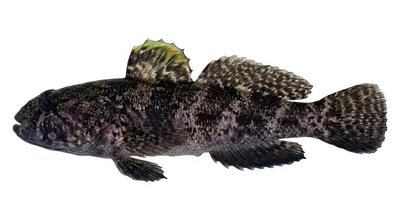
The round goby (Neogobius melanostomus) is a euryhaline bottom-dwelling species of fish of the family Gobiidae. It is native to Central Eurasia, including the Black Sea and the Caspian Sea. Round gobies have established large non-native populations in the Baltic Sea, several major Eurasian rivers, and the North American Great Lakes.
Distribution
Round gobies are widespread in the Sea of Marmara and in the rivers of its basin and can also be found in the Black Sea and the Sea of Azov, along all coasts and fresh waters of their basins as well as in the coastal lakes and lagoons. They are also found in the rivers of Crimea and the Caucasus (Mezib, Pshada, Vulan, Kodori, and Çoruh) and in the Caspian Sea, represented by subspecies Neogobius melanostomus affinis.
Since 1990, the round goby has been registered as introduced in the North American Great Lakes, in parts of Europe, and in the Baltic Sea as an invasive species. The first catch in North America was documented by Jude et al. 1992 and Crossman et al. 1992, caught by an angler in Sarnia, Ontario, fishing the St. Clair River on June 28, 1990. The studies of Jude, Crossman, together with Jude et al. 1995 found a range of sizes between 29 and 180 millimetres (1+1⁄8 and 7+1⁄8 in) in the St. Clair. Round gobies are also rapidly expanding into tributaries of the Great Lakes in North America and were recently discovered in at least one of the Finger Lakes in New York State (Cayuga Lake). The first round goby in the Hudson River was discovered by the state of New York in 2021.
Round gobies are euryhaline (salt-tolerant) and live in both freshwater and marine ecosystems, up to a mineralization of 18–24%. They are commonly found on continental shelves with sandy and rocky bottoms with low silting at depths from 1–2 m (3.3–6.6 ft) to 10–17 m (33–56 ft).
Behaviour
Round gobies actively feed both nocturnally and diurnally and are believed to detect prey only while stationary. The primary diet of round gobies includes mollusks, crustaceans, worms, fish eggs, zebra mussels, small fish, insect larvae, and other small invertebrates (insects and amphipods) living on the bottom of lakes and streams. In spring, the main elements of their diet in the Sasyk Lagoon are Hydrobia, Cerastoderma, and Abra. In the same season, near the Romanian coasts of the Black Sea, the round goby feeds on polychaetes, crustaceans (Idotea balthica, Pachygrapsus marmoratus, Xantho poressa, etc.), and juvenile gobies. Near Sevastopol, the round goby feeds on molluscs (Mytilaster lineatus and Abra sp.). In the Baltic Sea, they impact Mytilus edulis populations.
In the Gulf of Odessa, twenty-three items are identified in the diet of the round goby; Mytilus galloprovincialis, Setia pulcherrima, Mytilaster lineatus, Lentidium mediterraneum, Idotea balthica, and Alitta (Nereis) succinea dominate in the spring, while in the summer, the diet consists mainly of Sphaeroma pulchellum and L. mediterraneum. The mussels M. galloprovincialis and M. lineatus are important in all seasons.
In the Great Lakes, where it is invasive, they prey on Dreissena polymorpha, another Great Lakes exotic from the same native region. A complete lateral line system allows them to feed in complete darkness. In the Great Lakes, they also eat the young and eggs of Cottus bairdii, Percina caprodes, Etheostoma spp., and Salvelinus namaycush, among other species, making them a threat to those native populations.
Description from Wikipedia, available under CC BY-SA.
Where the round goby lives
Distribution data from GBIF (DOI: 10.15468/dl.8rzs8d).
Also known as
- Gobio de boca negra
- Gobio pintado
- Gobio redondo
- Gobie à taches noires
- Schwarzmund-Grundel
- Babka śniadogłowa
- Babka bycza
- Babka czarnopyska
- Svartmunnad smörbult
- Svartmunnet kutling
- Neogobi melanòstom
- Hlaváč černoústý
- Sortmundet kutling
- Ronda gobio
- Ümarmudil
- Mustatäplätokko
- Feketeszájú géb
- Schwaarzmiergrondel
- Apaļais jūrasgrundulis
- Zwartbekgrondel
- Strunghil
- Бычок-кругляк
- نيوجوبيوس ميلانوستوموس
- Girdə xul
- Стронгил
- گاوماهی گرد خزری
- Главоч округлак
- Бичок-кругляк
- Cá bống tròn
- 黑口新虾虎鱼
Where to catch round goby
- Achensee Austria Lake · Tyrol
- Attersee Austria Lake · live river data
- Danube River at Vienna Austria River · Vienna
- Inn River at Innsbruck Austria River · live river data
- Neusiedler See Austria Lake · live river data
- Traunsee Austria Lake · live river data