Fishing Calendar App
King George whiting
Sillaginodes punctatus
- Saltwater
- Max length
- 72 cm
- Class
- Teleostei
- Order
- Eupercaria incertae sedis
- Family
- Sillaginidae
- Genus
- Sillaginodes
- Indian Ocean, Eastern
- Oceania - Inland waters
About the king george whiting
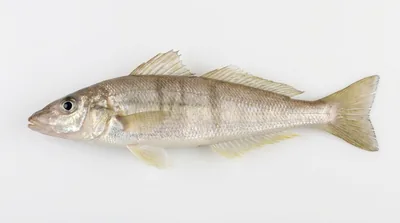
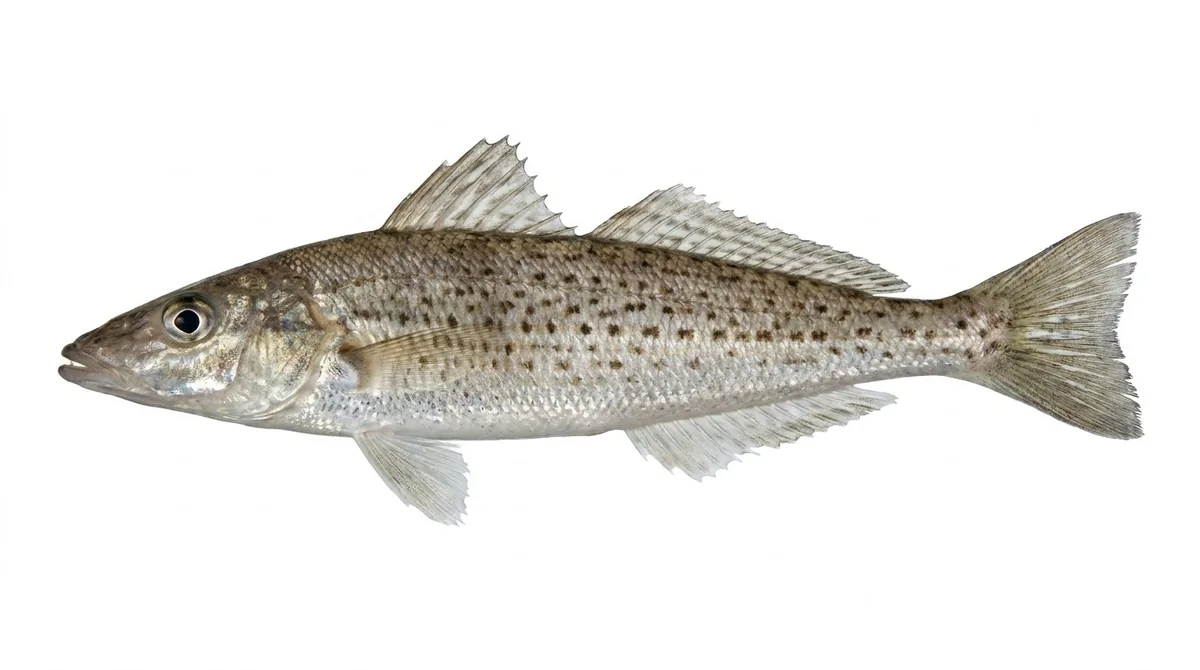
The King George whiting (Sillaginodes punctatus), also known as the spotted whiting or spotted sillago, is a coastal marine fish of the smelt-whitings family Sillaginidae. The King George whiting is endemic to Australia, inhabiting the south coast of the country from Jurien Bay, Western Australia to Botany Bay, New South Wales in the east. The King George whiting is the only member of the genus Sillaginodes and the largest member of the smelt-whiting family Sillaginidae, growing to a length of 80 cm and 4.8 kg in weight. The species is readily distinguishable from other Australian whitings by its unique pattern of spots, as well as its highly elongate shape. King George whiting are often found in bays and protected waterways over sand and seagrass beds, also venturing out onto deep continental shelf reefs during adulthood. The species is a benthic carnivore, consuming a variety of crustaceans, polychaete worms, molluscs and fish. The King George whiting forms the basis of one of southern Australia's most important commercial fisheries, reportedly worth over five million Australian dollars per year. The species is also heavily targeted by recreational anglers, who value the whiting for its sporting and eating qualities.
Distribution
The King George whiting is endemic to Southern Australia, ranging lower Western Australia, South Australia, Victoria and occasionally even lower New South Wales. The westernmost reported capture was in Jurien Bay and the furthest east King George whiting have been reported from is Botany Bay in New South Wales (although this appears to be a rare occurrence).
King George whiting are most commonly found in tidal bays, estuaries and creeks along the coast of the mainland and numerous islands scattered throughout the species' range.
There is a distinct difference in habitat between the adult and juvenile fish, with the juveniles more inclined to inhabit shallower waters in protected bays, creeks and estuaries. A favourite habitat of young fish appears to be Zostera and Posidonia seagrass beds in protected bays, apparently using the seagrass as protection and for foraging purposes.
Juveniles tend to form schools of varying sizes, occasionally schooling with other species, including other members of the family Sillaginidae. Adults tend to be solitary and found in deeper water in a range of habitats including bays, offshore surf gutters, broken bottom and deep reef, also venturing into shallower water on occasion.
Behaviour
The King George whiting's distinctive body shape and mouth placement is an adaptation to bottom feeding, which is the predominant method of feeding for all whiting species.
All larger whiting feed by using their protrusile jaws and tube-like mouths to suck up various types of prey from in, on or above the ocean substrate.
There is a large body of evidence that shows whiting do not rely on visual cues when feeding, instead using a system based on the vibrations emitted by their prey.
Studies of gut content have shown that the primary food items of King George whiting are amphipods, copepods and polychaete worms.
Unlike any of its relatives, the King George whiting does not appear to feed on molluscs, which is unusual because in many parts of Southern Australia, the main bait used by recreational fishers to catch whiting is the cockle; a mollusc, but then, it has been deshelled. An excellent bait for catching King George Whiting is raw king prawn, such as banana prawn. They are better bought in the shell and peeled shortly before using, as this keeps the bait fresh. Also rare in the diet are echinoderms, which are frequent prey for other species of Sillago. This may be a function of niche partitioning, as in many areas the King George whiting's habitat overlaps with other species of the genus Sillago. Other minor components of the diet include crustaceans such as carids, leptostracans, stomatopods, crabs, tanaids, cumaceans and isopods as well as other fish and benthic algae.
As previously mentioned, younger fish tend to school when foraging, and have been known to forage in groups with other species such as silver trevally, tarwhine and other species of whiting.
Larger fish tend to occupy areas with larger species such as Australasian snapper, blue morwong and larger trevally.
Description from Wikipedia, available under CC BY-SA.
Where the king george whiting lives
Distribution data from GBIF (DOI: 10.15468/dl.8rzs8d).
Also known as
- Spotted sillago
- Spotted whiting
- Силагиноид
- ダイオウギス