Fishing Calendar App
Giant trevally
Caranx ignobilis
- Saltwater
- Least Concern
- Max length
- 170 cm
- Class
- Teleostei
- Order
- Carangiformes
- Family
- Carangidae
- Genus
- Caranx
- Atlantic, Northwest
- Indian Ocean, Eastern
- Indian Ocean, Western
- Pacific, Eastern Central
- Pacific, Northwest
- Pacific, Western Central
About the giant trevally
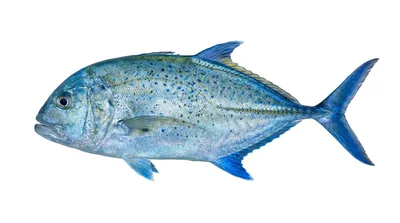
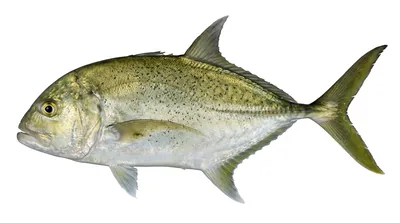
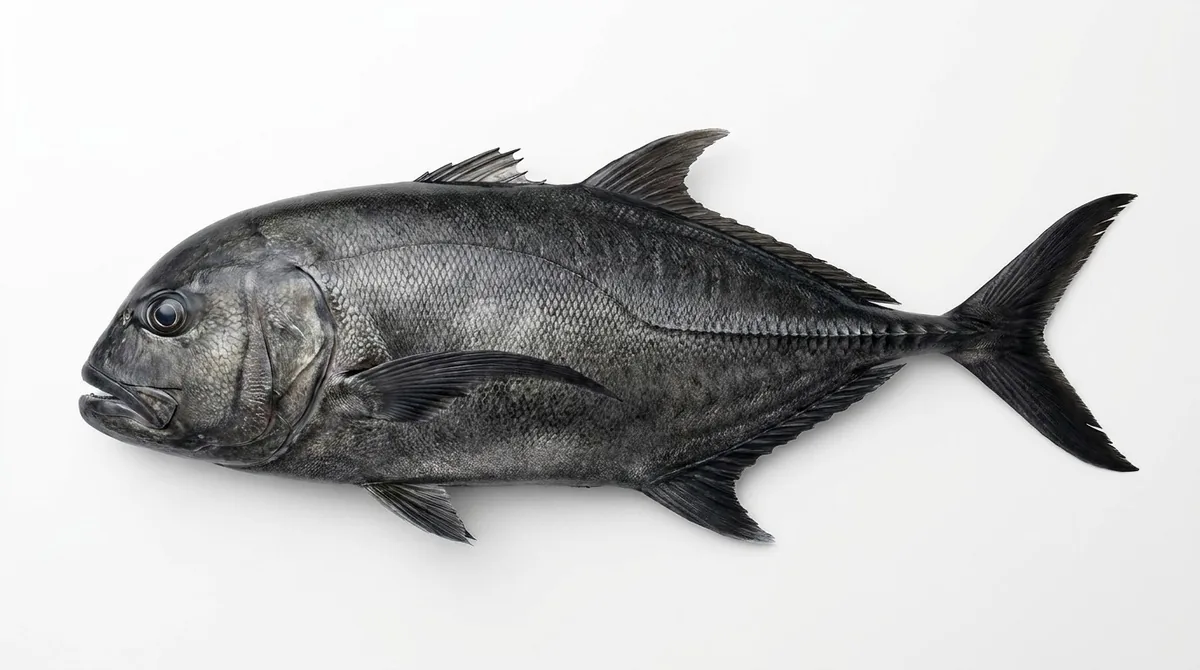
The giant trevally (Caranx ignobilis), also known as the lowly trevally, barrier trevally, giant kingfish, or ulua, is a species of large marine fish classified in the jack family, Carangidae. The giant trevally is distributed throughout the tropical waters of the Indo-Pacific region, with a range stretching from South Africa to Hawaii, including Japan in the north and Australia in the south.
The giant trevally is distinguished by its steep head profile, strong tail scutes, and a variety of other more detailed anatomical features. It is normally a silvery colour with occasional dark spots, but males may be black once they mature. It is the largest fish in the genus Caranx, growing to a maximum known size of 170 cm (67 in) and a weight of 80 kg (176 lb). The giant trevally inhabits a wide range of marine environments, from estuaries, shallow bays, and lagoons as a juvenile to deeper reefs, offshore atolls, and large embayments as an adult. Juveniles of the species are known to live in waters of very low salinity such as coastal lakes and upper reaches of rivers, and tend to prefer turbid waters.
The giant trevally is an apex predator in most of its habitats, and is known to hunt individually and in schools. The species predominantly takes various fish as prey, although crustaceans, cephalopods, and molluscs make up a considerable part of their diets in some regions. Their novel hunting strategies include shadowing monk seals to pick off escaping prey, using sharks to ambush prey, and leaping to catch birds.
The giant trevally reproduces in the warmer months, with peaks differing by region. Spawning occurs at specific stages of the lunar cycle, when large schools congregate to spawn over reefs and bays, with reproductive behaviour observed in the wild. The fish grow relatively fast, reaching sexual maturity at a length around 60 cm at three years of age.
The giant trevally is both an important species to commercial fisheries and a recognised gamefish, with the species taken by nets and lines by professionals and by bait and lures by anglers. Catch statistics in the Asian region show hauls of 4,000–10,000 tonnes, while around 10,000 lb of the species are taken in Hawaii each year. The species is considered poor to excellent table fare by different authors, although ciguatera poisoning is common from eating the fish. Dwindling numbers around the main Hawaiian Islands have also led to several proposals to reduce the catch of fish in this region.
Habitat
The giant trevally inhabits a very wide range of offshore and inshore marine environments, with the species also known to tolerate the low salinity waters of estuaries and rivers. It is a semipelagic fish known to spend time throughout the water column, but is mostly demersal in nature.
The species is most common in shallow coastal waters in a number of environments, including coral and rocky reefs and shorefaces, lagoons, embayments, tidal flats and channels. They commonly move between reef patches, often over large expanses of deeper sand and mud bottoms between the reefs. Older individuals tend to move to deeper seaward reefs, bomboras and drop-offs away from the protection of fringing reefs, often to depths greater than 80 m. Large individuals, however, often return to these shallower waters as they patrol their ranges, often to hunt or reproduce. In Hawaii, the juvenile to subadult giant trevally is the most common large carangid in the protected inshore waters, with all other species apparently preferring the outer, less protected reefs. It is also easily attracted to artificial reefs, where studies have found it to be one of the predominant species around these structures in Taiwan.
Juvenile to subadult giant trevally are known to enter and inhabit estuaries, the upper reaches of rivers and coastal lakes in several locations, including South Africa, Solomon Islands, Philippines, India, Taiwan, Thailand, northern Australia, and Hawaii. In some of these locations, such as Australia, it is a common and relatively abundant inhabitant, while in others, including South Africa and Hawaii, it is much rarer in estuaries. The species has a wide salinity tolerance, as evident from the ranges from which juvenile and subadult fish in South African estuaries have been recorded; 0.5 to 38 parts per thousand (ppt), with other studies also showing tolerance levels of less than 1 ppt. In these estuaries, the giant trevally is known from both highly turbid, dirty water to clean, high visibility waters, but in most cases, the species prefers the turbid waters. Younger fish apparently actively seek out these turbid waters, and when no estuaries are present, they live in the turbid inshore waters of bays and beaches. These young fish eventually move to inshore reefs as they mature, before again moving to deeper outer reefs.
In the Philippines, a population of giant trevally inhabit (and were once common in) the landlocked fresh waters of the formerly saltwater Taal Lake, and are referred to as maliputo to distinguish them from the marine variant (locally named talakitok). Along with Taal Volcano and Taal Lake, the maliputo is prominently featured on the reverse side of the newly redesigned Philippine 50 peso bill.
Distribution
The giant trevally is widely distributed throughout the tropical and subtropical waters of the Bay of Bengal and Indian and Pacific Oceans, ranging along the coasts of three continents and many hundreds of smaller islands and archipelagos. In the Indian Ocean, the species' westernmost range is the coast of continental Africa, being distributed from the southern tip of South Africa north along the east African coastline to the Red Sea and Persian Gulf. Its range extends eastwards along the Asian coastline, including Pakistan, India and into Southeast Asia, the Indonesian Archipelago and northern Australia. The southernmost record from the west coast of Australia comes from Rottnest Island, not far offshore from Perth. Elsewhere in the Indian Ocean, the species has been recorded from hundreds of small island groups, including the Maldives, Seychelles, Madagascar and the Cocos (Keeling) Islands.
The giant trevally is abundant in the central Indo-Pacific region, found throughout all the archipelagos and offshore islands including Indonesia, the Philippines, Fiji, and the Solomon Islands. Along continental Asia, the species has been recorded from Malaysia to Vietnam, but not China. Despite this, its offshore range does extend north to Hong Kong, Taiwan, and southern Japan. In the south, the species reaches as far south as New South Wales in Australia and even to the northern tip of New Zealand in the southern Pacific. Its distribution continues throughout the western Pacific, including Tonga, Western Samoa, and Polynesia, with its easternmost limits known to be the Pitcairn and Hawaiian Islands.
Two were documented in the eastern tropical Pacific in the 2010s (one captured off Panama and another sighted at the Galápagos), but whether the species will become established there remains to be seen.
Behaviour
The giant trevally is a powerful predatory fish, from the estuaries it inhabits as a juvenile to the outer reefs and atolls it patrols as an adult. Hunting appears to occur at different times of the day in different areas of its range; off South Africa it is most active during the day, especially at dawn and dusk, while off Zanzibar and Hong Kong, it is nocturnal in its habits. The species' diets have been determined in several countries and habitats; their diets generally vary slightly by locations and age. In all but one study (which was of juveniles), the giant trevally dominantly takes other fishes, with various crustaceans, cephalopods and occasionally molluscs making the remainder of the diet. In Hawaii, the species has a predominantly fish-based diet consisting of Scaridae and Labridae, with crustaceans, including lobsters, and cephalopods (squid and octopus) making up the remaining portion. The large number of reef fishes suggests it spends much of its time foraging over shallow-water reef habitats, but the presence of squid and the schooling carangid Decapterus macarellus indicates exploitation of more open-water habitats, as well. Off Africa, the diet is similar, consisting mostly of fish including eels, with minor squid, octopus, mantis shrimp, lobsters and other crustaceans. Younger fish inside Kaneohe Bay, Hawaii showed the only instance where crustaceans were preferred over fish; stomatopods, shrimp and crabs were the most common prey taken at 89% of stomach content by volume, with fish, mostly of the family Blennidae, making up only 7% of the stomach contents. Estuarine fish in both Hawaii and Australia have mostly fish-based diets, with crustaceans such as prawns and amphipods also of importance, and they are known to take more novel prey, such as spiders and insects, in these habitats. Juvenile turtles and dolphins were reported being found within the stomach contents of larger giant trevally. Studies of different size classes of fish have found their diets change with age in some locations, with the changes relating to an increased volume of fish taken.
Giant trevally also feed on fledgling sooty terns on Farquhar Atoll snatching them from the water surface and even jumping acrobatically to catch them in the air as seen on the BBC documentary Blue Planet II, episode 1. So far this behaviour has not been observed elsewhere.
Studies in controlled environments on the giant trevally's feeding strategies have found hunting in schools increases their capture efficiency, but is not necessary for an individual's survival. When a school is formed during feeding, one individual will take a leading position, with others trailing behind it. Several individuals will attack the prey school, striking and stunning the prey, with the leading individual generally being more successful. Some individuals act individually and opportunistically within the school if one of the prey fish becomes isolated, with the main advantage of schooling appearing to be the ability to further break up and isolate prey schools. The only time hunting in schools is a disadvantage is when only isolated prey are present, such as close to a reef; here, an individual hunter has a greater probability of capturing it than if a group is present. Another hunting strategy of the giant trevally is to 'escort' monk seals, a behavior which has been observed near the Hawaiian Islands. The trevally swim close by the seal, and when the seal stops to forage, the trevally positions its mouth inches away from the seal. If a prey item is disturbed, the trevally will attempt to steal the prey from the seal, which routinely does occur. The seal does not appear to gain any benefit from this relationship, and it is thought juvenile seals being followed in this way may be outcompeted by the larger fish. A similar strategy has been employed by fish in the presence of large reef sharks, as they use the larger animal as a tool to ambush prey. The opportunistic nature of giant trevally has also been made evident by studies on the mortality rate of undersized or egg-bearing lobsters released from traps at the water's surface of the Hawaiian Islands. The fish are efficient predators of these crustaceans, with individuals often seizing a lobster before it could sink to the seafloor after being released, or attacking before the lobster moves into a defensive position. Some bolder, large individuals are even known to eat the lobster head first when it is in a defensive stance.
Description from Wikipedia, available under CC BY-SA.
Where the giant trevally lives
Distribution data from GBIF (DOI: 10.15468/dl.8rzs8d).
Also known as
- Barrier trevally
- Giant kingfish
- Kingfish
- Lowly trevally
- Xaréu-gigante
- Dickkopf-Makrele
- Carangue à grosse tête
- Geureupôh
- Reuse-koningvis
- Sorella gegant
- Jättipiikkimakrilli
- Saqaleka
- Kuwe gerong
- Belokok mamung
- 무명갈전갱이
- Желтопёрый каранкс
- ロウニンアジ
- މުޑަ ހަނދި
- شاهگیش بزرگ
- צנינית ענק
- വറ്റ
- பெரும்பாரை
- ปลากะมงพร้าว
- گلپت
- Cá vẩu
- 珍鲹
- شيم عملاق
Where to catch giant trevally
- Cape Cod Bay United States Bay · Massachusetts
- Chesapeake Bay United States Estuary · Maryland and Virginia
- Delaware Bay United States Bay · Delaware-New Jersey
- Long Island Sound United States Sound · New York-Connecticut
- Outer Banks United States Coast · North Carolina