Fishing Calendar App
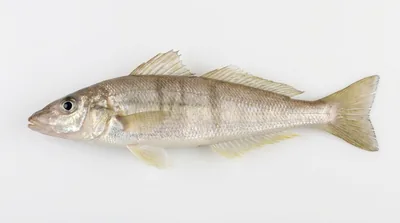
Sand whiting
Sillago ciliata
- Saltwater
- Least Concern
- Max length
- 51 cm
- Class
- Teleostei
- Order
- Eupercaria incertae sedis
- Family
- Sillaginidae
- Genus
- Sillago
- Pacific, Southwest
- Pacific, Western Central
About the sand whiting
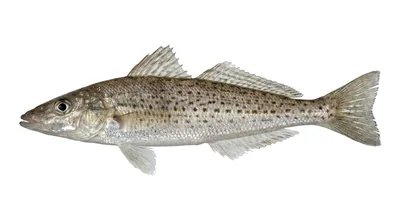
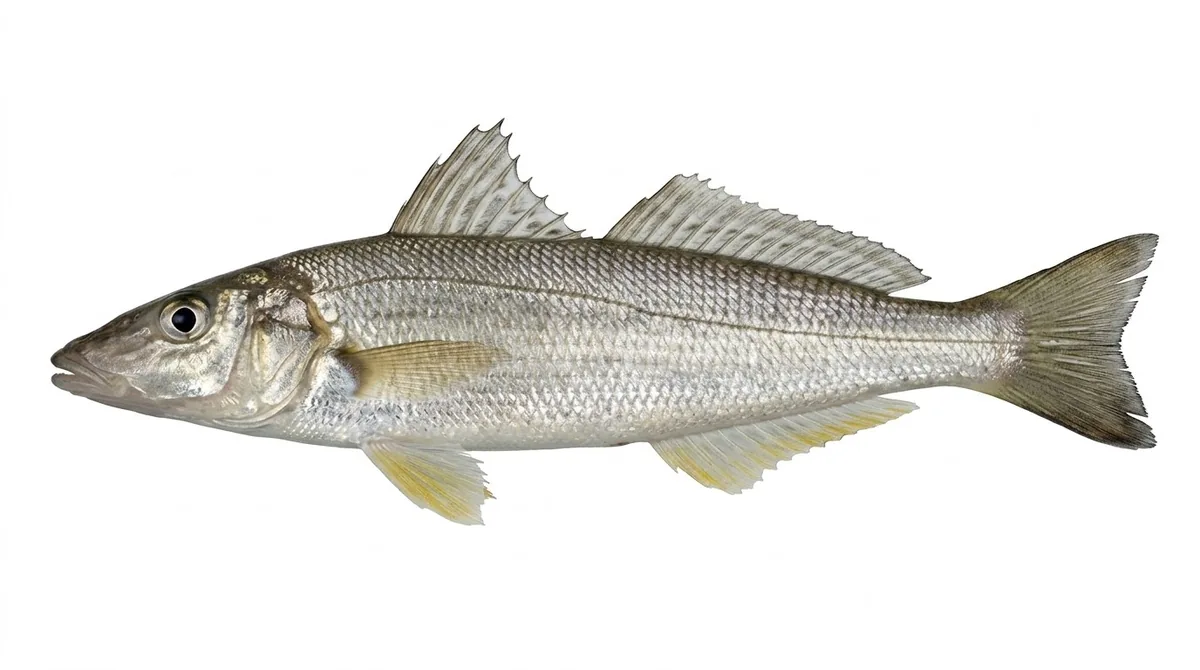
The sand whiting (Sillago ciliata), also known as the summer whiting, yellowfin whiting or blue-nose whiting, is a common species of coastal marine fish of the family Sillaginidae, the smelt-whitings. It is a slender, slightly compressed fish that is very similar to other species of Sillago, with detailed spine, ray and lateral line scale counts needed to distinguish the species between its nearest relative Sillago analis. The sand whiting is distributed along the east coast of Australia from Cape York south to Tasmania, as well as Lord Howe Island and New Caledonia in the Pacific Ocean.
The sand whiting commonly inhabits shallow sandy substrates in bays, estuaries and surf zones where it preys on polychaete worms, small crustaceans and bivalve molluscs. Reproduction in the species is variable over its range, generally spawning twice between September and April. Young fish inhabit shallow sand flats, both along the coast and well into the upper reaches of estuaries.
First described in 1829, the species has long been prized as a table fish and is commonly sought by both recreational and commercial fishermen in New South Wales and Queensland. The sand whiting fishery is most prolific in southern Queensland and northern New South Wales where the species is most abundant, often caught along other species of whiting in estuaries and from beaches. Due to its importance as a commercial fish, substantial research has been carried out on the species, especially feasibility studies involving the use of sand whiting in aquaculture.
Distribution
The sand whiting inhabits a range along the east coast of Australia from Cape York, Queensland, southward along the coast and the Great Barrier Reef to eastern Victoria and the east coast of Tasmania down to Southport. The species also inhabits a number of islands; Lord Howe Island, New Caledonia, and Woodlark Island, Papua New Guinea. The species is most abundant in lower Queensland and New South Wales, where studies show it inhabits every estuary sampled throughout the course of a study, while in north Queensland, the species is very patchily distributed along the coast.
The sand whiting is an inshore species, inhabiting exposed coastal areas such as beaches, sandbars and surf zones as well as quieter bays, estuaries and coastal lakes. Sand whiting enter estuaries, including intermittently open ones, and penetrate far upstream to the tidal limits of rivers and creeks where juveniles and adolescent fish may be abundant. The adults congregate around the mouths of estuaries, bars, and spits, in depths down to 5 m where they may constitute a large percentage of the icthyofauna of such regions. As implied by their name, they are often found exclusively over sandy substrates, with occasional appearances in Zostera seagrass beds. Individuals are occasionally taken in offshore waters to 40 m during winter.
Behaviour
The sand whiting is a schooling species, whose movements are associated with a variety of factors including prey, lunar patterns and spawning movements; although there appears to be little consistency in its movements in relation to these factors. Studies on the species over the period of a year have shown the species does not change its local distribution over the course of a day, generally being of the same abundance during both night and day. Seasonal abundance due to spawning is variable, with studies conducted in Moreton Bay, Queensland finding the species recruits heavily to shallow waters and increase numbers during winter months, while studies in the Noosa River estuary have shown no difference in numbers recruited over the course of a season. Like other sillaginids, they have the ability to 'burrow' into the sand and remained hidden until a predator or seine net has passed by.
Description from Wikipedia, available under CC BY-SA.
Where the sand whiting lives
Distribution data from GBIF (DOI: 10.15468/dl.8rzs8d).
Also known as
- Blue-nose whiting
- Summer whiting
- Песчаная силага
- سفیدگون ماسهزی