Fishing Calendar App
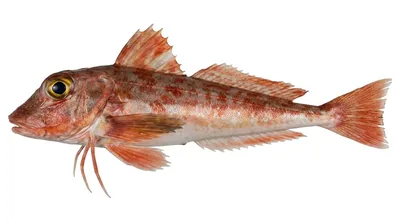
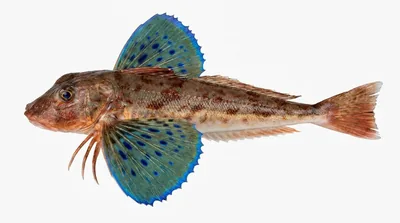
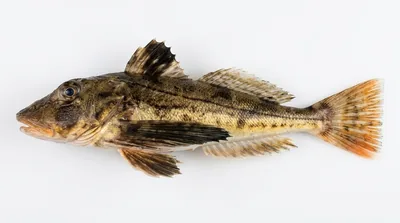
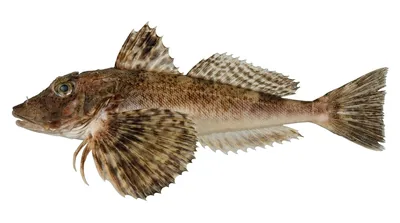
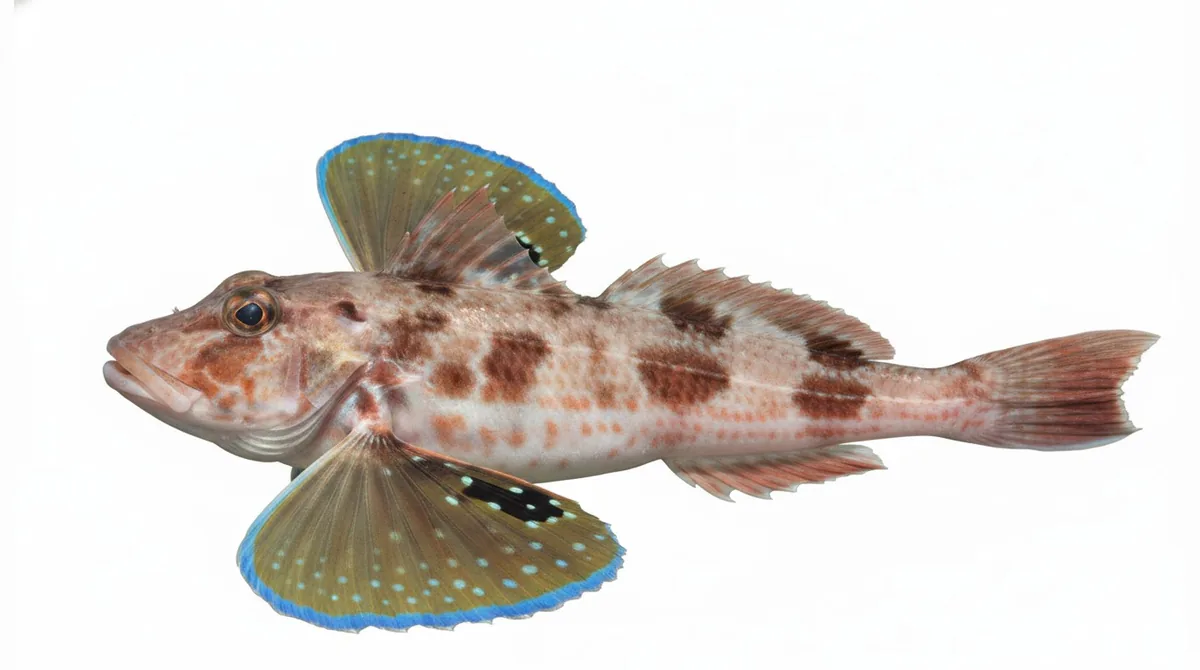
Bluefin gurnard
Chelidonichthys kumu
- Saltwater
- Least Concern
- Max length
- 60 cm
- Class
- Teleostei
- Order
- Perciformes
- Family
- Triglidae
- Genus
- Chelidonichthys
- Atlantic, Southeast
- Indian Ocean, Eastern
- Indian Ocean, Western
- Pacific, Northwest
- Pacific, Southwest
About the bluefin gurnard
The bluefin gurnard or Pacific red gurnard (Chelidonichthys kumu) is a species of marine ray-finned fishes belonging to the family Triglidae, the gurnards and sea robins. Its Māori names are kumukumu and pūwahaiau. It is found in the western Indian Ocean and the western Pacific Ocean, being common around Australia and New Zealand at depths down to 200 metres (660 ft). The fish is one of the most important commercial fish species in New Zealand.
Habitat
As a benthic marine fish, the bluefin gurnard prefers shallow coastal waters and may be found from the edge of continental shelves to estuaries and brackish rivers) with soft bottoms of sand, sandy-shell, or mud. This is because they 'walk' slowly over the seabed using their first three free-rays. They can bury themselves in the substrate, with only the top of their head, their nostrils and eyes exposed in order to surprise prey (Lang, 2000). It is found from shallow waters one meter deep but generally inhabits 100-200m but may have maximum depths of up to 300m.
Distribution
The bluefin gurnard can be found throughout many central tropical and temperate Indo-West Pacific waters. It is commonly found along the coasts of New Zealand, Australia, South Africa, and many islands in the South Pacific. It is unsure whether or not previous records from Japan, Korea, China, and the Hawaiian Islands are mis-identifications.
Behaviour
The bluefin gurnard is an opportunistic feeder, preying principally on crustaceans, but pretty much any small macrofauna such as shrimp/prawns, crabs, crayfish, lobster, amphipods, small fish, and polychaete worms. It uses modified fin rays under its pectorals to probe the sand for prey and may also use the large fan-like pectoral fins to offer prey mock shelter. They can be found in shallow water with soft ground after being stirred by winter storms and around the seasonal migrations of small shoreline fish like whitebait, anchovy, and pilchard.
Along the Australian shores, the bluefin gurnard seems to be one of the apex predators with dogfishes, dories, lings and other flatheads.
A possible use for its large pectoral fins may be to make it appear larger to scare off potential predators.
Description from Wikipedia, available under CC BY-SA.
Where the bluefin gurnard lives
Distribution data from GBIF (DOI: 10.15468/dl.8rzs8d).
Also known as
- Blouvin-knorhaan
- Blauwvinpoon
- Cheildonichthy kumu
- 성대
- Куму
- 绿鳍鱼