Fishing Calendar App
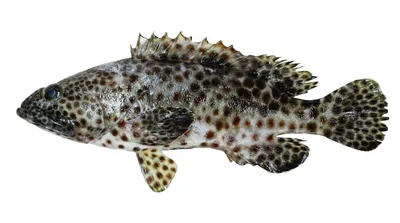
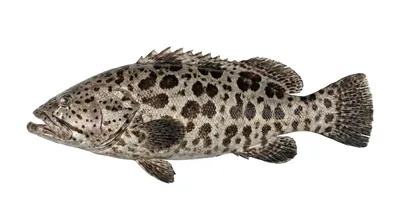
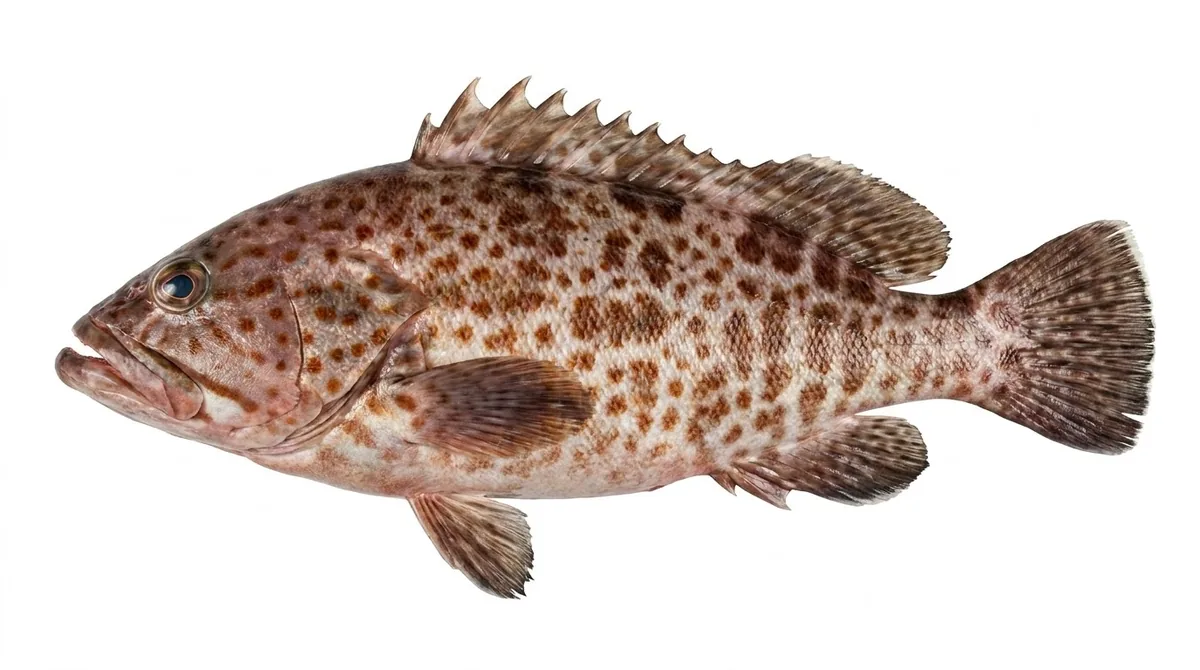
Spotted cabrilla
Epinephelus analogus
- Saltwater
- Least Concern
- Max length
- 104 cm
- Class
- Teleostei
- Order
- Perciformes
- Family
- Epinephelidae
- Genus
- Epinephelus
- Pacific, Eastern Central
- Pacific, Southeast
About the spotted cabrilla
Epinephelus analogus, the spotted grouper, spotted cabrilla or rock bass, is a species of marine ray-finned fish, a grouper from the subfamily Epinephelinae which is part of the family Serranidae, which also includes the anthias and sea basses. It is found in the eastern Pacific Ocean where it is associated with reefs.
Habitat
Epinephelus analogus occurs in both rocky reefs and in shallow estuaries at depths down as far as 107 metres (4,200 in). It is also found in patch reefs. The juveniles occur tidal pools, estuaries and lagoons. It is a predatory species which feeds largely on crustaceans and fishes found on rocky and sandy substrates. During the winter they move towards the shore where the swarms of the pelagic red crab (Pleuroncodes planipes) provide abundant food.
Distribution
Epinephelus analogus is found in the Eastern Pacific Ocean. Its range extends from southern California in the United States to northern Peru. It is also found around the islands of Revillagigedos in Mexico, the Galápagos of Ecuador, Malpelo Island in Colombia and Cocos Island of Costa Rica.
Description from Wikipedia, available under CC BY-SA.
Where the spotted cabrilla lives
Distribution data from GBIF (DOI: 10.15468/dl.8rzs8d).
Also known as
- Spotted grouper
- Mérou cabrilla
- Pazifischer Fleckenbarsch
- Fläckig grouper
- Cabrilla pinta
- Пятнистый групер
- هامور أبقع
- هامور ابقع
- Петнист групер
- هامور خالخالی
- 斑條石斑魚