Fishing Calendar App
Atipa
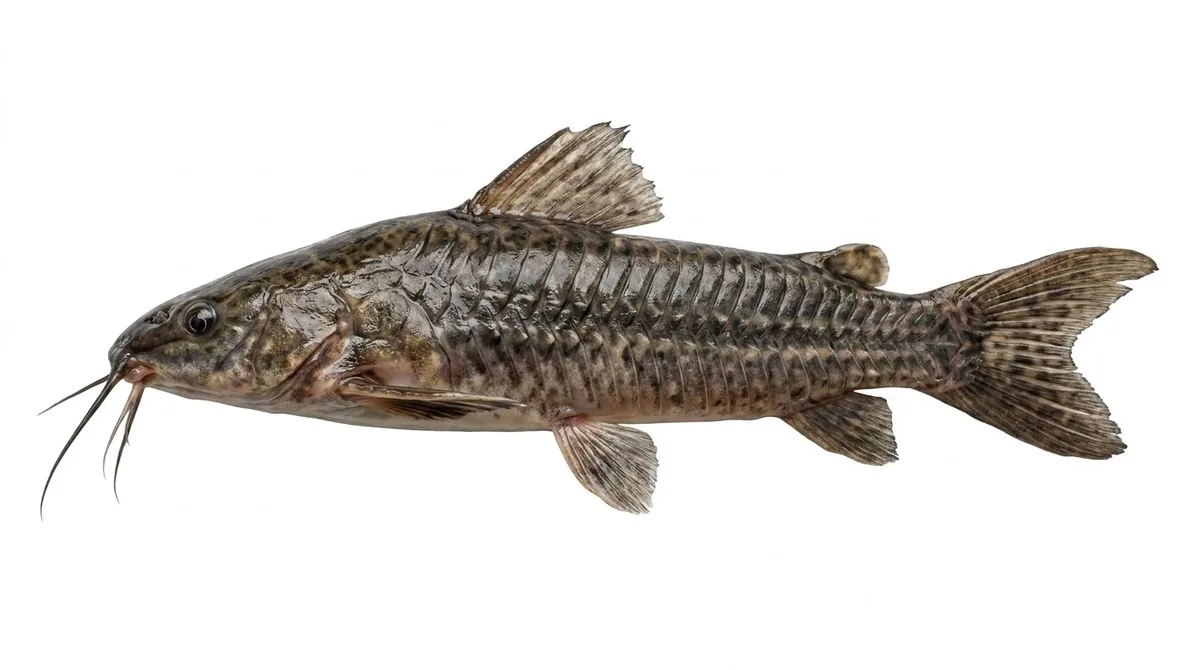
Hoplosternum littorale
- Freshwater
- Least Concern
- Max length
- 24 cm
- Class
- Teleostei
- Order
- Siluriformes
- Family
- Callichthyidae
- Genus
- Hoplosternum
- Europe - Inland waters
- North America - Inland waters
- South America - Inland waters
About the atipa
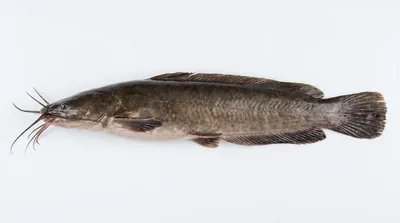
Hoplosternum littorale is a species of freshwater ray-finned fish belonging to the subfamily Callichthyinae of the family Callichthyidae, the armoured catfishes. It is known as Tamatá in Brazil, atipa in French Guiana, hassa in Guyana, kwi kwi (or kwie kwie) in Suriname, cascadu or cascadura in Trinidad and Tobago, and busco or currito in Venezuela.
Habitat
Most activity of non-breeding H. littorale such as feeding and locomotor activity are mainly nocturnal. It has a maximum reported age of 4 years. The diet of H. littorale consists mainly of benthic invertebrates and detritus.
H. littorale natively inhabits tropical standing waters or swamps. It is not found in rainforest creeks and clearwater rivers draining Precambrian Guyana and Brazilian Shields, where water is extremely poor in dissolved minerals. This species is restricted to swamps of tropical and subtropical South America and the floodplains of Amazonian whitewater rivers originating in the Andes. Such environments are characterized by low levels of dissolved oxygen and markedly seasonal conditions caused primarily by fluctuations in rainfall.
H. littorale can breathe both with gills and through its intestines. However, intestinal respiration is not exhibited upon hatching, and the development of the respiratory intestine occurs throughout the juvenile period (up to 32 days old). Newly hatched larvae do not have the ability to breathe air through their intestines; however, it is possible that they absorb oxygen through their skin at this point, before the armor plates have developed. Soon after, between about 12–23 days of age, young have the capacity to breathe air, but their respiratory intestine has not finished developing. The respiratory intestine is well-developed between days 24 and 32.
H. littorale has two types of hemoglobin, anodic and cathodic; anodic hemoglobin has a relatively low oxygen affinity and has marked Bohr effects, while cathodic hemoglobin lack significant pH effects. In H. littorale, cathodic hemoglobin has a pronounced reversed Bohr effect in which oxygen affinity increases with decreased pH. Cathodic hemoglobin has the purpose of safeguarding oxygen transport to tissues under hypoxic and acidotic conditions.
H. littorale diet varies by age. Immature fish feed primarily on small aquatic crustaceans, especially Cladocera, Ostracoda, Copepoda, and Eubranchipoda. Chironomid larvae are important items in the diets of both juveniles and adults. The adult diet is dominated by mixed detritus, terrestrial insects, microcrustaceans, and aquatic beetles during the dry season, and mixed detritus and chironomid larvae during the wet season.
Distribution
H. littorale has the widest distribution of any callichthyid. It is present in all of South America east of the Andes and north of Buenos Aires, including the Orinoco, Trinidad, coastal rivers of the Guianas, Amazon River drainage, Paraguay, lower Paraná River, and coastal systems in southern Brazil. It ranges from Venezuela and Guyanas to Argentina.
One single lot is known from the upper Paraná River and the São Francisco River drainage; it has been suggested that these occurrences may represent introduced populations. This species has also been introduced into the Indian River Lagoon of Florida.
Description from Wikipedia, available under CC BY-SA.
Where the atipa lives
Distribution data from GBIF (DOI: 10.15468/dl.8rzs8d).
Also known as
- Schwarzer Schwielenwels
- Tamoatá
- Rantahaarniskamonni
- Tambuata
- ปลากดเกราะ
- 濱岸護胸鯰
Where to catch atipa
- Achensee Austria Lake · Tyrol
- Attersee Austria Lake · live river data
- Danube River at Vienna Austria River · Vienna
- Inn River at Innsbruck Austria River · live river data
- Neusiedler See Austria Lake · live river data
- Traunsee Austria Lake · live river data