Fishing Calendar App
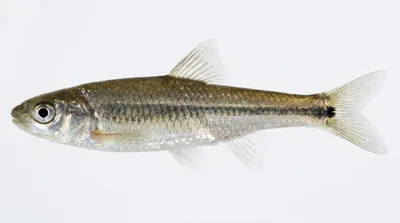
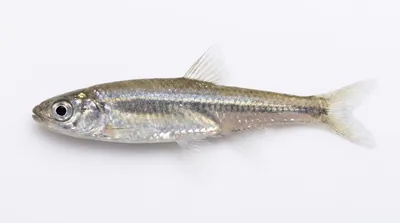
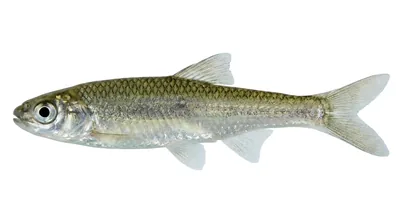
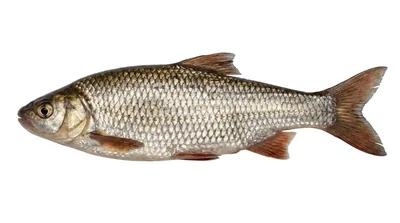
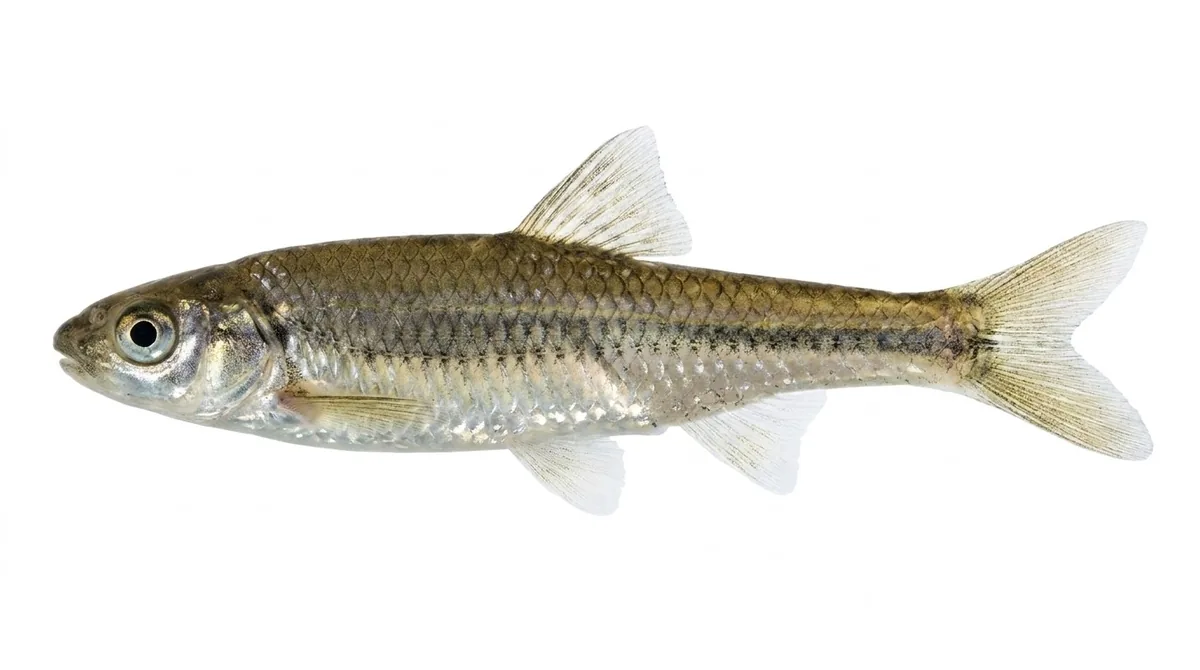
Sand shiner
Notropis stramineus
- Freshwater
- Least Concern
- Max length
- 8 cm
- Class
- Teleostei
- Order
- Cypriniformes
- Family
- Cyprinidae
- Genus
- Notropis
- North America - Inland waters
- Asia - Inland waters
About the sand shiner
The sand shiner (Miniellus stramineus) is a species of freshwater ray-finned fish belonging to the family Leuciscidae, the shiners, daces and minnows. Sand shiners live in open clear water streams with sandy bottoms where they feed in schools on aquatic and terrestrial insects, bottom ooze and diatoms.
Habitat
The sand shiner requires clear water with a sandy, gravel-rubble bottom in order to survive. It is irregularly distributed amongst streams of diverse sizes and inhabits a wide variety of habitats within the medium to large streams and rivers but is rarely found in upland areas. Sand Shiners tend to seek areas deeper than 20 cm which have little to no aquatic vegetation and a slow-moving current. Habitats with acidic or alkaline conditions are avoided, however, in the Southwest, pH values of around 8.0 are common in streams which Sand Shiners occupy. Habitat locations change slightly throughout the seasons. During spawning season in August, sand shiners form large schools in shallow water which has a slight current and a sandy bottom. In the fall, concentrations of sand shiners are found in deep pools. In late summer and fall, the sand shiners tend to move into shallow water over a rubble bottom during dusk.
Distribution
The sand shiner is extremely widespread, known from central part of the United States and southern Canada. The range stretches from Saint Lawrence-Great Lakes, Hudson Bay and Mississippi River basins which are part of the St. Lawrence River in Quebec to Saskatchewan in Canada. The range also stretches south to Tennessee and Texas; west to Montana, Wyoming, Colorado and New Mexico; Trinity River to Rio Grande in Texas and New Mexico, and Mexico.
Behaviour
Sand shiners are omnivorous fish, feeding on aquatic and terrestrial insects, bottom ooze and diatoms and are often observed in large schools which frequently feeding in shallow waters. Overall, this species is an opportunistic feeder primarily taking bottom particulate matter, as well as plant material and terrestrial and aquatic insects. More explicitly, their summer diet consists of bottom ooze (68% of volume), aquatic nymphs and larvae, Ephemeroptera nymphs, Tricoptera larvae, adult terrestrial insects, adult and emerging Ephemeroptera, dipterans, corixids, and a small amount of plant matter. During late summer, sand shiners show more surface-oriented feeding behaviors, feeding on adult aquatic and terrestrial insects. These feeding habits are similar to the closely related Cape Fear shiner and swallowtail shiner.
Description from Wikipedia, available under CC BY-SA.
Where the sand shiner lives
Distribution data from GBIF (DOI: 10.15468/dl.8rzs8d).
Also known as
- Méné paille
- Carpita arenera
- 沙美洲鱥
Where to catch sand shiner
- Green River (Flaming Gorge) United States River · live river data
- Arkansas River at Salida United States River · live river data
- Cape Fear River United States River · North Carolina
- Kenai River United States River · Alaska
- Kentucky Lake United States Reservoir · Kentucky-Tennessee
- Lake Champlain United States Lake · live river data