Fishing Calendar App
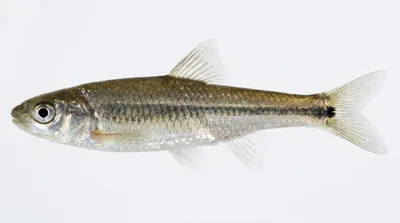
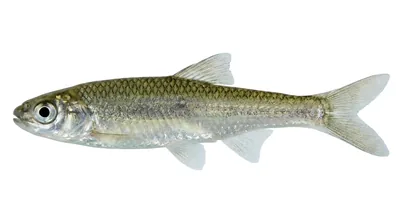
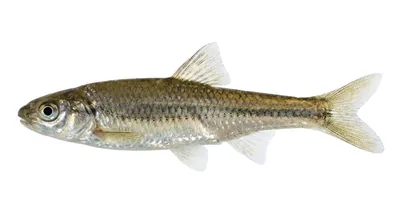
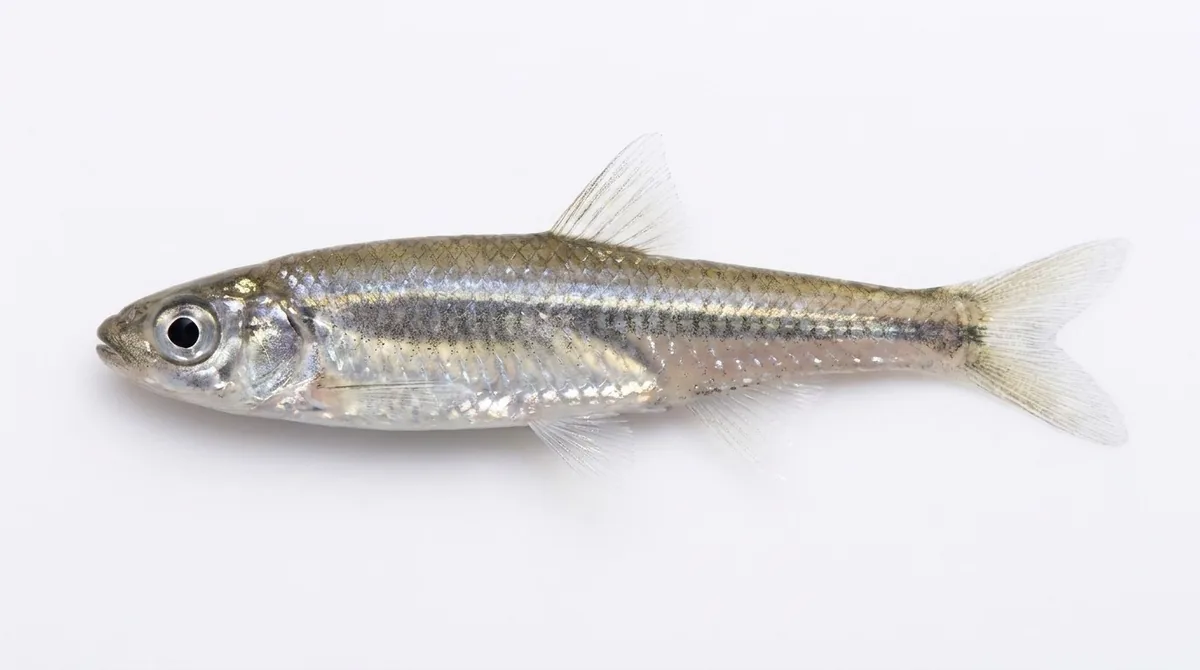
Emerald shiner
Notropis atherinoides
- Freshwater
- Least Concern
- Max length
- 13 cm
- Class
- Teleostei
- Order
- Cypriniformes
- Family
- Cyprinidae
- Genus
- Notropis
- North America - Inland waters
- Asia - Inland waters
About the emerald shiner
The emerald shiner (Notropis atherinoides) is a species of freshwater ray-finned fish belonging to the family Leuciscidae, the shiners, daces and minnows. The identifying characteristic of the emerald shiner is the silvery emerald color on its sides. It is found across North America from Canada to the Gulf of Mexico, commonly in large, deep lakes and rivers, though sometimes in smaller bodies of water as well. It feeds on small organisms such as zooplankton and insects, congregating in large groups near the surface of the water. It is a quite common fish and is often used as a bait fish.
Habitat
Living in freshwater, emerald shiners are benthopelagic. They live in large open rivers, lakes, and reservoirs. In medium-sized habitats the temperature preference for the shiner is 25 °C (77 °F), and they are tolerant of low oxygen levels. It is a midwater or near-surface species that usually lives in large or moderately sized schools. Some shiners are tolerant of turbidity in streams, but others avoid turbid streams. They are most commonly seen in clear water over sand or gravel.
Distribution
Emerald shiners are native to North America; they are widely distributed throughout Canada, and south to Virginia and Texas. They range to the gulf coast from Texas to Alabama, and are especially prevalent in the Mississippi Basin. Emerald shiners are most likely the most abundant fish in the Mississippi.
Behaviour
Shiners are planktivores, feeding on a variety of zooplankton, protozoans and diatoms. They move with a planktonic food source up toward the surface at dusk, and move back down at dawn. Both aquatic and terrestrial insects obtained at the surface of the water are a small portion of their diet. Algae and plants are also eaten, during spring especially.
Description from Wikipedia, available under CC BY-SA.
Where the emerald shiner lives
Distribution data from GBIF (DOI: 10.15468/dl.8rzs8d).
Also known as
- Méné émeraude
- 翡翠美洲鱥
Where to catch emerald shiner
- Arkansas River at Salida United States River · live river data
- Cape Fear River United States River · North Carolina
- Green River (Flaming Gorge) United States River · live river data
- Kenai River United States River · Alaska
- Kentucky Lake United States Reservoir · Kentucky-Tennessee
- Lake Champlain United States Lake · live river data