Fishing Calendar App
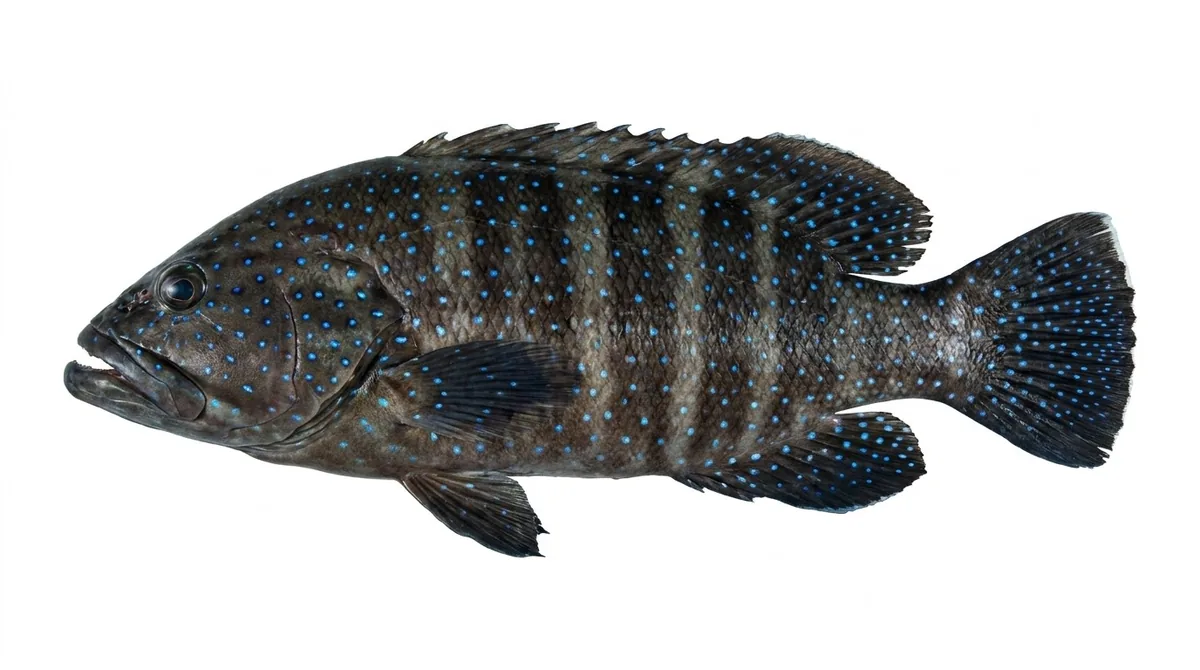
Peacock grouper
Cephalopholis argus
- Saltwater
- Least Concern
- Max length
- 60 cm
- Class
- Teleostei
- Order
- Perciformes
- Family
- Epinephelidae
- Genus
- Cephalopholis
- Indian Ocean, Eastern
- Indian Ocean, Western
- Pacific, Eastern Central
- Pacific, Northwest
- Pacific, Western Central
About the peacock grouper
Cephalopholis argus, the peacock hind, roi, bluespotted grouper, and celestial grouper, is a species of marine ray-finned fish, a member of the subfamily Epinephelinae, the groupers, and part of the family Serranidae, which also includes the anthias and sea basses. They come from the Indo-Pacific and are variously a commercial gamefish, an invasive species, and occasionally an aquarium resident. Its species name comes from its resemblance to the "hundred staring eyes" of the monster Argus who had a hundred eyes and was the shepherd of the goddess Hera in Greek mythology.
Distribution
The species is extremely widely distributed, occurring in warm waters from the Red Sea to South Africa and east to French Polynesia and the Pitcairn group. It is also present in northern Australia, Lord Howe Island, and Japan, and has been introduced to the Hawaiian Islands. It makes use of a variety of habitats but prefers the exposed fronts of reefs, at depths of up to 40 m.
Behaviour
The species typically sit on a coral head, retreating when startled.
Red Sea males defend harems of 2–6 females in territories ranging up to .5 acres (0.20 ha). Each female defends part of the territory from the other females. The male visits each female daily, raising his dorsal fin to signal his approach. The females emerges from hiding, erecting her own dorsal fin and changing to a lighter color. They swim together, rubbing flanks before he departs until the next day.
Territorial disputes may involve "color fights" in which two males positioning themselves at right angles to each other. They then darken their color and repeatedly switch their bars from dark to light. The loser becomes pale and retreats. If the color fight ends in a draw, the two males may attack each other.
Description from Wikipedia, available under CC BY-SA.
Where the peacock grouper lives
Distribution data from GBIF (DOI: 10.15468/dl.8rzs8d).
Also known as
- Peacock hind
- Mérou céleste
- Pfauen-Zackenbarsch
- Påfågelgrouper
- Geurapèe brinchék itam
- Pou-klipkabeljou
- Riikinkukkomeriahven
- Kawakawaloa
- Kerapu merak
- Павлинья гаррупа
- アオノメハタ
- Cá mú chấm nâu
- 斑點九棘鱸