Fishing Calendar App
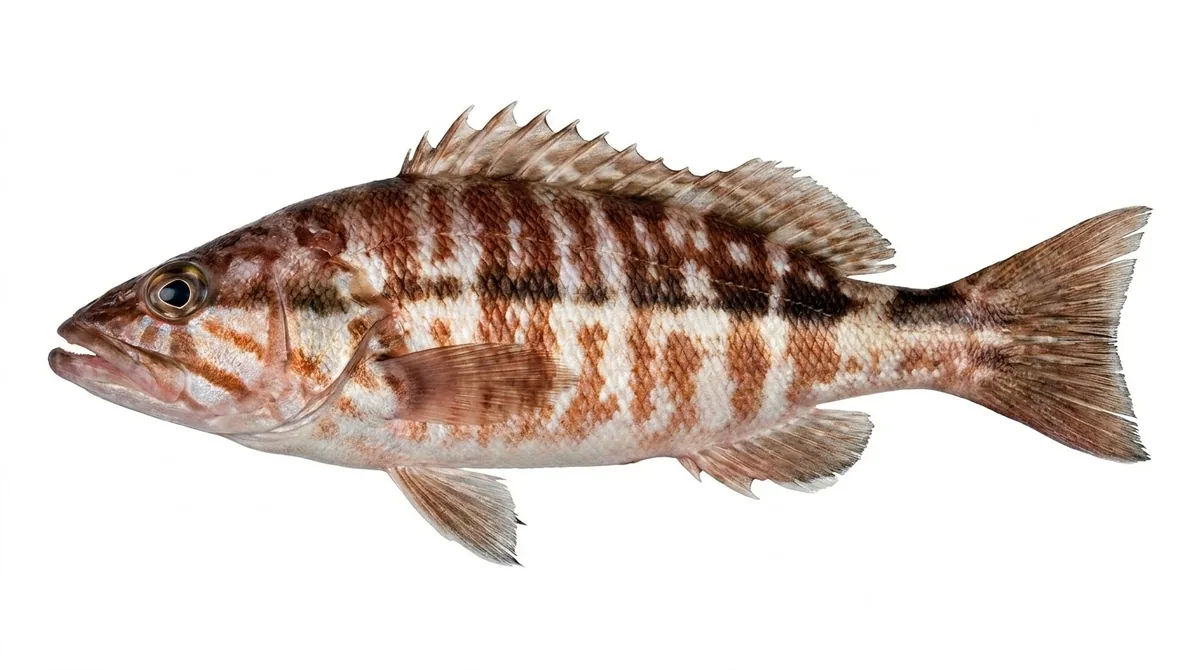
Comber
Serranus cabrilla
- Saltwater
- Least Concern
- Max length
- 40 cm
- Class
- Teleostei
- Order
- Perciformes
- Family
- Serranidae
- Genus
- Serranus
- Atlantic, Eastern Central
- Atlantic, Northeast
- Atlantic, Southeast
- Indian Ocean, Western
- Mediterranean and Black Sea
About the comber
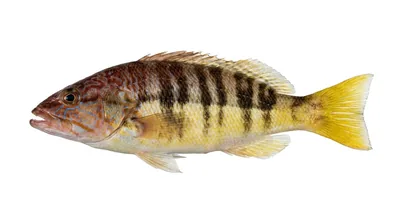
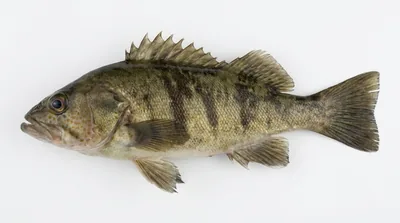
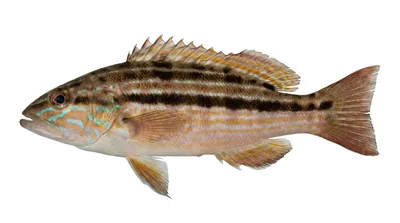
The comber (; Serranus cabrilla) is a species of marine ray-finned fish from the family Serranidae, the sea basses. It is widely distributed in the eastern North and South Atlantic Oceans and into the southwestern Indian Ocean. It is caught for food and fishmeal in some parts of its range.
Habitat
The comber occurs over the continental shelf and upper continental slope among rocks, Posidonia beds, and where there are substrates of sand and mud. It can be found to depths of 450 metres (1,480 ft). It is a predatory species which feeds mainly on crustaceans. Off the Canary Islands the diet varied with size, the smaller fish consuming more crabs while the larger fish ate carideans. Elsewhere their diet has been recorded as very varied and includes small and immature fish, annelids, squid and they have also been recorded scavenging on dead marine animals.
The comber is a solitary and territorial species. They spawn between May and July, and are hermaphrodites, mature fish having both ovaries and testes. They are capable of being either male or female, and there are known to have been instances of self-fertilisation where fish have been unable to locate a partner for spawning. Sexual maturity is attained when the fish reaches a length of 152 millimetres (6.0 in).
Distribution
The comber has an extensive distribution in the eastern Atlantic where it is found in the warmer waters in the south and southwest of England and off western Wales, south along the European coast, to the Straits of Gibraltar and into the Mediterranean and Black Seas. It also occur along the west coast of Africa from Morocco southwards to Angola. Combers are found around the islands of Macaronesia and São Tomé and Príncipe in the Gulf of Guinea. It also occurs off the coasts of South Africa where it is found from the Cape of Good Hope to KwaZulu-Natal. Records from the Red Sea were thought to be a result of Anti-Lessepsian migration from the Mediterranean via the Suez Canal. However, genetic analysis demonstrated that the Red Sea population must have existed before the opening of the Suez Canal.
Description from Wikipedia, available under CC BY-SA.
Where the comber lives
Distribution data from GBIF (DOI: 10.15468/dl.8rzs8d).
Also known as
- Sciarrano
- Kanjec
- Cabrilla
- Serran commun
- Saran
- Sarran
- Serran cabrille
- Serran chèvre
- Serran chevrette
- Serran écriture
- Sägebarsch
- Större medelhavsabborre
- Abborkilling
- Kammer
- Roue
- Serrà
- Kraba arrunt
- Pastellisaha-ahven
- Zaagbaars
- Pèrchie
- Kanjac
- Каменный окунь-ханос
- Окунь каменный ханос
- سيرانوس كابريلا
- Χάνος
- Ханос
- 九帶鮨
Where to catch comber
- Dubrovnik Coast Croatia Coast · Dubrovnik-Neretva
- Istria Coast Croatia Coast · Istria
- Kornati Archipelago Croatia Archipelago · Šibenik-Knin
- Kvarner Gulf Croatia Gulf · Kvarner
- Neretva Delta Croatia Delta · live river data
- Pag Channel Croatia Channel · Zadar