Fishing Calendar App
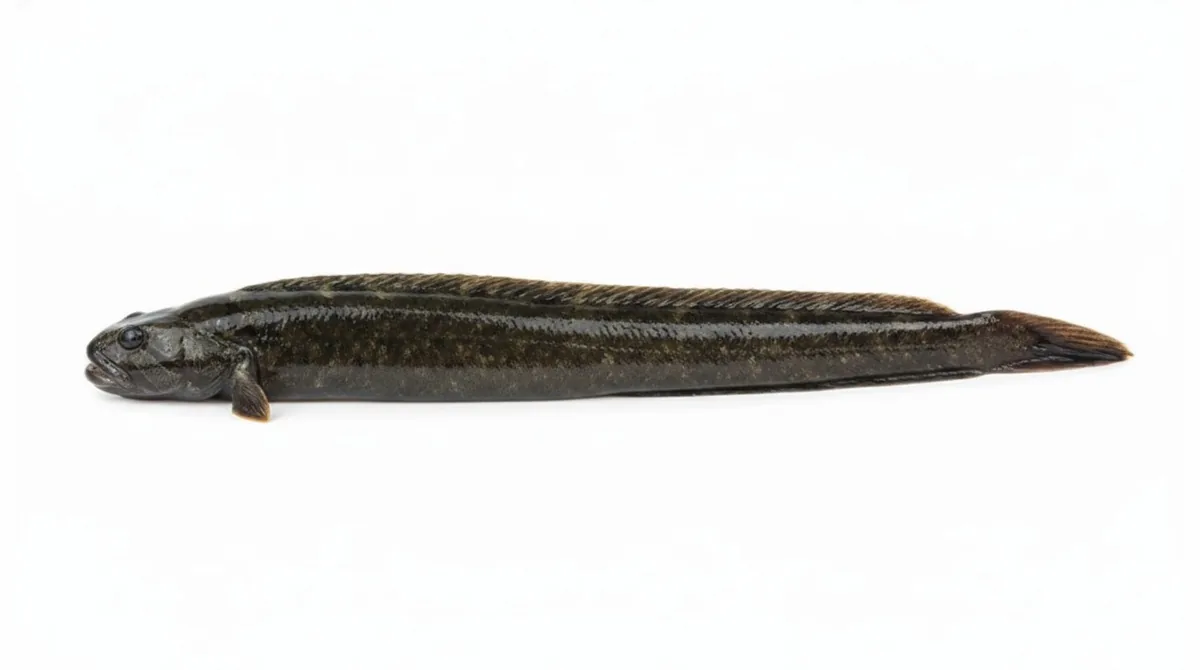
Monkeyface prickleback
Cebidichthys violaceus
- Saltwater
- Max length
- 76 cm
- Class
- Teleostei
- Order
- Perciformes
- Family
- Cebidichthyidae
- Genus
- Cebidichthys
- Pacific, Eastern Central
- Pacific, Northeast
About the monkeyface prickleback
The monkeyface prickleback (Cebidichthys violaceus), also commonly known as the monkeyface eel, is a species of prickleback native to the Pacific coast of North America. Although its shape resembles an eel due to its slender and leg-less body, the monkeyface prickleback does not belong to the order Anguilliformes, which includes true eels, instead, it is classified under either the Perciformes, along with nearly half of all bony fish, or the Scorpaeniformes, according to different authorities. Observations in nature and in the laboratory indicate that C. violaceus is a cryptic, bottom dweller and a weak, short-distance swimmer.
Habitat
The Monkeyface Prickleback inhabits the intertidal zone, the most active and nutrient-rich part of the water column.
The habitat is constantly shifting and changing with the tides, swell, and season. When the tides roll in, they carry food and oxygenated water. When the tides recede, the water leaves stagnant, tidal pools that have very limited resources. Monkeyface Prickleback has adapted to survive in holes with little to no water with special modified gills that work both ways; breathing inside of water and outside of water. As long as the Monkeyface Prickleback stays in a moistened area, it can survive breathing outside of water for around 35 hours. These fish also secrete an extremely slick mucus through their tough, scaleless skin. The Mucus not only protects them from predators, though from sharp rocks, and drying out. Their slender bodies also make maneuvering or even slithering to water puddles easier compared to their neighbors, the Brown rockfish (Sebastes auriculatus). The Monkeyface Prickleback is perfectly adapted to survive the treacherous intertidal zone through specialized adaptations like modified gills, mucus, through skin, and a slender body.
Distribution
The monkeyface prickleback has a distribution range from southern Oregon to the northern reaches of the Mexican state of Baja California, this species is a coastal fish that inhabits rocky, intertidal areas close to shore. They are most abundant along the coast of central California. Their vertical distribution ranges from the upper intertidal zone to a depth of 24 meters. However, smaller individuals are commonly found closer to the higher intertidal zones due to reduced predation and competition, where they utilize rocks for protection during low tide. C. violaceus moves from the high intertidal to the shallow subtidal as it grows. It is considered to be a residential species, as it moves short distances from crevices or under rocks to foraging sites. This means it tends to stay in one area and does not move far from its hiding spots. This species appears to occupy a small home range of several meters and is mostly active during periods of a higher tide when it forages.
Behaviour
While young monkeyface prickleback feed on zooplankton and crustaceans, adults are primarily herbivorous, consuming red and green algae. As early juveniles, their prey includes copepods, amphipods, isopods, mysids, and polychaetas. Adults have few predators other than humans, but young fish are vulnerable to piscivorous birds and other fish, such as grass rockfish. Predation primarily affects the earlier life stages of this species; large juveniles and adult fish are most likely to evade or outgrow these predators.
Description from Wikipedia, available under CC BY-SA.
Where the monkeyface prickleback lives
Distribution data from GBIF (DOI: 10.15468/dl.8rzs8d).
Also known as
- Monkeyface eel
- Abrojo cara de mono
- 원숭이얼굴장갱이
- سمكة وجه القرد شائكة الظهر
- سمكه وجة القرد شائكة الظهر
- سیخچهپشت میمونی
- 猿䲁科
Where to catch monkeyface prickleback
- Bristol Bay United States Bay · Alaska
- Columbia River at Astoria United States River · Oregon-Washington
- Monterey Bay United States Bay · California
- Puget Sound at Seattle United States Sound · Washington
- San Diego Bay United States Bay · California
- San Francisco Bay United States Bay · California