Fishing Calendar App
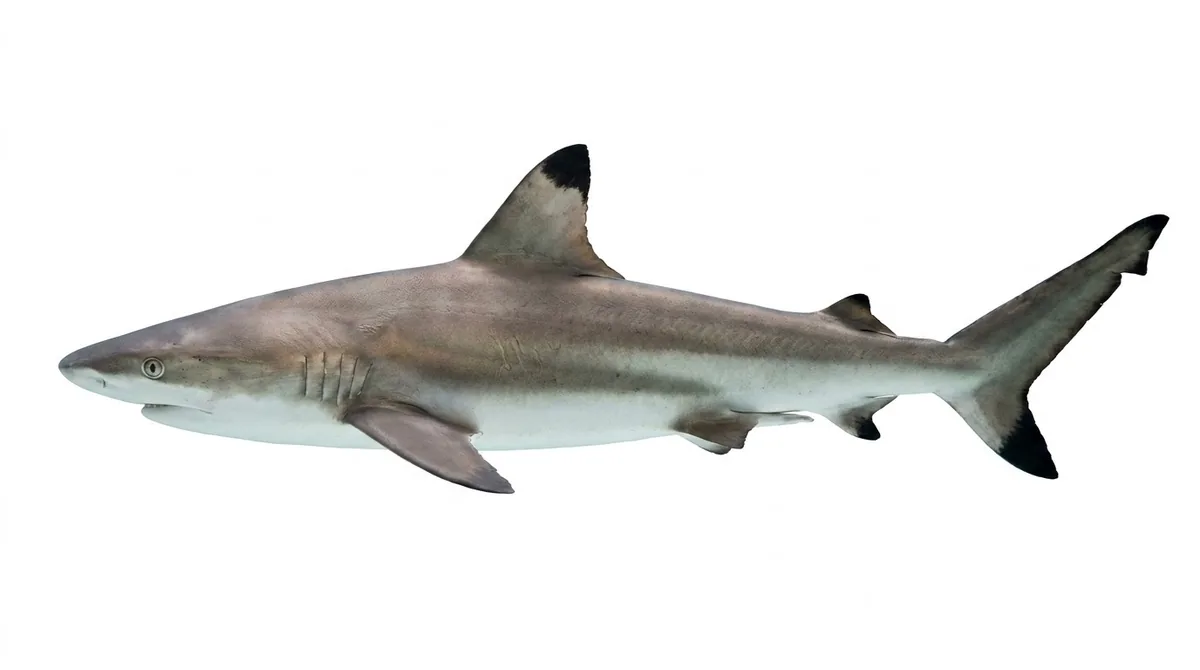
Blacktip shark
Carcharhinus limbatus
- Saltwater
- Vulnerable
- Max length
- 280 cm
- Class
- Elasmobranchii
- Order
- Carcharhiniformes
- Family
- Carcharhinidae
- Genus
- Carcharhinus
- Atlantic, Northeast
- Atlantic, Northwest
- Atlantic, Southwest
- Atlantic, Western Central
- Indian Ocean, Eastern
- Indian Ocean, Western
- Pacific, Eastern Central
- Pacific, Southeast
- Pacific, Western Central
About the blacktip shark
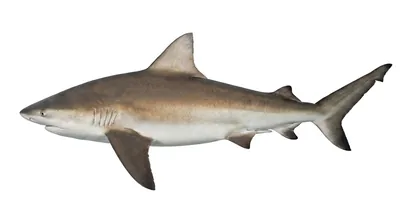
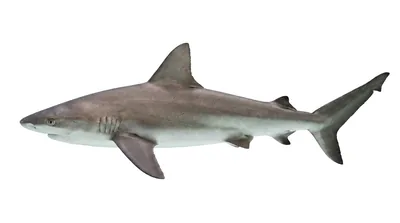
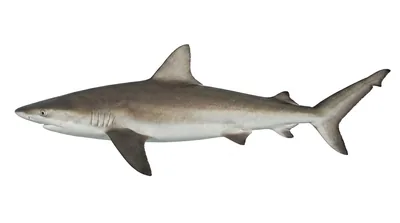
The blacktip shark (Carcharhinus limbatus) is a species of requiem shark in the family Carcharhinidae. It is common to coastal tropical and subtropical waters around the world, including brackish habitats. Genetic analyses have revealed substantial variation within this species, with populations from the western Atlantic Ocean isolated and distinct from those in the rest of its range. The blacktip shark has a stout, fusiform body with a pointed snout, long gill slits, and no ridge between the dorsal fins. Most individuals have black tips or edges on the pectoral, dorsal, pelvic, and caudal fins. It usually attains a length of 1.5 m (4.9 ft).
Swift, energetic piscivores, blacktip sharks are known to make spinning leaps out of the water while attacking schools of small fish. Their demeanor has been described as "timid" compared to other large requiem sharks. Both juveniles and adults form groups of varying size. Like other members of its family, the blacktip shark is viviparous; females bear one to 10 pups every other year. Young blacktip sharks spend the first months of their lives in shallow nurseries, and grown females return to the nurseries where they were born to give birth themselves. In the absence of males, females are also capable of asexual reproduction.
Normally wary of humans, blacktip sharks can become aggressive in the presence of food and have been responsible for a number of attacks on people. This species is of importance to both commercial and recreational fisheries across many parts of its range, with its meat, skin, fins, and liver oil used. It has been assessed as vulnerable by the International Union for Conservation of Nature on the basis of its low reproductive rate and high value to fishers.
Distribution
The blacktip shark has a worldwide distribution in tropical and subtropical waters. In the Atlantic, it is found from Massachusetts to Brazil, including the Gulf of Mexico and the Caribbean Sea, and from the Mediterranean Sea, Madeira, and the Canary Islands to the Democratic Republic of the Congo. It occurs all around the periphery of the Indian Ocean, from South Africa and Madagascar to the Arabian Peninsula and the Indian subcontinent, to Southeast Asia. In the western Pacific, it is found from the Ryukyu Islands of Japan to northern Australia, including southern China, the Philippines, and Indonesia. In the eastern Pacific, it occurs from Southern California to Peru. It has also been reported at a number of Pacific islands, including New Caledonia, Tahiti, the Marquesas, Hawaii, Revillagigedo, and the Galápagos.
Most blacktip sharks are found in water less than 30 m (98 ft) deep over continental and insular shelves, though they may dive to 64 m (210 ft). Favored habitats are muddy bays, island lagoons, and the drop-offs near coral reefs; they are also tolerant of low salinity and enter estuaries and mangrove swamps. Although an individual may be found some distance offshore, blacktip sharks do not inhabit oceanic waters. Seasonal migration has been documented for the population off the East Coast of the United States, moving north to North Carolina in the summer and south to Florida in the winter.
Behaviour
Like the spinner shark, the blacktip shark is known to leap out of the water and spin three or four times about its axis before returning. Some of these jumps are the end product of feeding runs, in which the shark corkscrews vertically through schools of small fish, and its momentum launches it into the air. Observations in the Bahamas suggest that blacktip sharks may also jump out of the water to dislodge attached sharksuckers, which irritate the shark's skin and compromise its hydrodynamic shape. The speed attained by the shark during these jumps has been estimated to average 6.3 m/s (21 ft/s).
Blacktip sharks have a timid disposition and consistently lose out to Galapagos sharks (C. galapagensis) and silvertip sharks (C. albimarginatus) of equal size when competing for food. If threatened or challenged, they may perform an agonistic display; the shark swims towards the threat and then turns away, while rolling from side to side, lowering its pectoral fins, tilting its head and tail upwards, and making sideways biting motions. The entire sequence lasts around 25 seconds. This behavior is similar to the actions of a shark attempting to remove a sharksucker; one of these behaviors possibly is derived from the other.
Description from Wikipedia, available under CC BY-SA.
Where the blacktip shark lives
Distribution data from GBIF (DOI: 10.15468/dl.8rzs8d).
Also known as
- Jaquetón manchado
- Tiburón macuira
- Tiburón volador
- Kleiner Schwarzspitzenhai
- Żarłacz czarnopłetwy
- Större svartfenad revhaj
- Tubarão-galha-preta
- Tubarão-de-pontas-negras
- Swarttiphaai
- Tauró de puntes negres
- Žralok černocípý
- Mustapilkkahai
- Feketevégű cápa
- Hiu sirip hitam
- Zwartpunthaai
- Žralok čiernocípy
- Hiu sirip hideung
- Siyah uçlu köpek balığı
- Чернопёрая акула
- 흑단상어
- カマストガリザメ
- قرش أسود الطرف
- قرش اسود الطرف
- ব্লাকটিপ হাঙর
- ތުންހިމަ މިޔަރު
- کوسه بالهسیاه کوچک
- כריש שחור-שוליים
- പെട്ടി സ്രാവ്
- ਬਲੈਕਟੀਪ ਸ਼ਾਰਕ
- کالی چنج شارک
- கட்டைச்சுறா
- Акула чорнопера
- 黑邊鰭真鯊
Where to catch blacktip shark
- Limfjord Denmark Fjord · North Jutland
- Skagen Coast Denmark Coast · North Jutland
- Helsinki Archipelago Finland Archipelago · Uusimaa
- Rügen (Baltic Coast) Germany Coast · Mecklenburg-Vorpommern
- Sylt (Wadden Sea) Germany Coast · Schleswig-Holstein
- Dingle Bay Ireland Bay · Munster