Fishing Calendar App
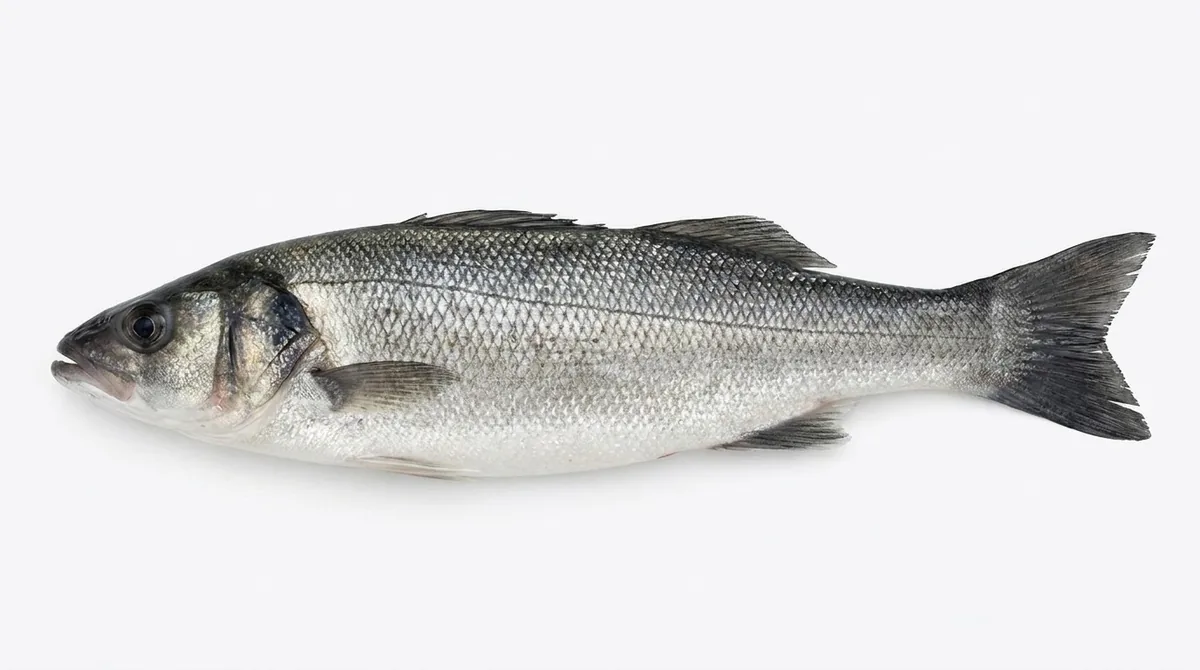
European seabass
Dicentrarchus labrax
- Freshwater & Saltwater
- Near Threatened
- Max length
- 100 cm
- Class
- Teleostei
- Order
- Eupercaria incertae sedis
- Family
- Moronidae
- Genus
- Dicentrarchus
- Atlantic, Eastern Central
- Atlantic, Northeast
- Europe - Inland waters
- Mediterranean and Black Sea
About the european seabass
European seabass (Dicentrarchus labrax), also known as branzino, European bass, sea bass, common bass, white bass, capemouth, white salmon, white mullet, sea dace or loup de mer, is a primarily ocean-going fish native to the waters off Europe's western and southern and Africa's northern coasts, though it can also be found in shallow coastal waters and river mouths during the summer months and late autumn. It is one of only six species in its family, Moronidae, collectively called the temperate basses.
It is fished and raised commercially and is considered the most important fish currently cultured in the Mediterranean. In Ireland and the United Kingdom, the popular restaurant fish sold and consumed as sea bass is exclusively the European bass. In North America, it is widely known by one of its Italian names, branzino.
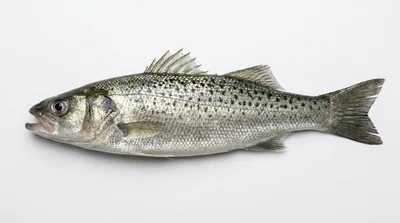
European seabass is a slow-growing species that takes several years to reach adulthood. An adult European seabass usually weighs around 2.5 kg (5 lb 8 oz). European seabass can reach measurements of up to 1 m (3 ft 3 in) in length and 12 kg (26 lb) in weight, though the most common size is only about half of that at 0.5 m (1 ft 8 in). Individuals are silvery grey and sometimes a dark-bluish color on the back.
Juveniles form schools and feed on invertebrates, while adults are less social and prefer to consume other fish. They are generally found in the littoral zone near the banks of rivers, lagoons, and estuaries during the summer and migrate offshore during the winter. European sea bass feed on prawns, crabs and small fish. It is a sought-after game fish and is listed as Near Threatened by the International Union for Conservation of Nature due to a decreasing population.
Distribution
European seabass habitats include estuaries, lagoons, coastal waters, and rivers. It is found in a large part of the eastern Atlantic Ocean, from southern Norway to Senegal. It can also be found in the entire Mediterranean Sea and in the southern Black Sea but is absent from the Baltic Sea. It has entered the Red Sea through the Suez Canal as an anti-Lessepsian migrant. It is a seasonally migratory species, moving further winter spawning grounds during at least one month before moving towards their summer feeding areas.
Behaviour
The European seabass hunts as much during the day as it does at night, feeding on small fish (both pelagic, such as sardines, sprats, and sand smelts, and demersal, such as sand eels), polychaetes, cephalopods (such as squid), and crustaceans. The big fish weighing more than 4 kg (9 lb) are mostly night hunters. They spawn from February to June, mostly in inshore waters. As fry they are pelagic, but as they develop, they move into estuaries, where they stay for a year or two.
Description from Wikipedia, available under CC BY-SA.
Where the european seabass lives
Distribution data from GBIF (DOI: 10.15468/dl.8rzs8d).
Also known as
- Bass
- Sea bass
- Capemouth
- Common bass
- European bass
- Sea dace
- White mullet
- White salmon
- Bar commun
- Bar
- Bar européen
- Loup
- Perche de mer
- Europäischer Wolfsbarsch
- Seebarsch
- Wolfsbarsch
- Havsabborre
- Branzino
- Pesce lupo
- Spigola
- Brancin
- Lubina
- Róbalo
- Labraks
- Robalo
- Robalo-legítimo
- Havabbor
- Hav-åbor
- Lavrak
- Draeneg
- Llobarro
- Mořčák evropský
- Draenogyn Môr
- Havbars
- Labrako
- Huntahven
- Lupia
- Meribassi
- Doingean mara
- Robaliza
- Farkassügér
- Barsho
- Evrópskur hafbarri
- Kilondo
- Paprastasis vilkešeris
- Siakap Eropah
- Europese zeebaars
- Meriahven
- Biban de mare european
- Spìne
- Okúň branzino
- Levrek
- Baìcolo
- Lubin
- Обыкновенный лаврак
- Лаврак европейский
- Морской волк
- ニシウミスズキ
- شبص أوروبي
- أبلاغ
- شبص اوروبى
- Морски вълк
- Λαβράκι
- ماهی خاردار اروپایی
- לברק חלק
- ლავრაკი
- 유럽농어
- 欧洲鲈
- Лаврак
- 歐洲鱸
Where to catch european seabass
- Achensee Austria Lake · Tyrol
- Attersee Austria Lake · live river data
- Danube River at Vienna Austria River · Vienna
- Inn River at Innsbruck Austria River · live river data
- Neusiedler See Austria Lake · live river data
- Traunsee Austria Lake · live river data