Fishing Calendar App
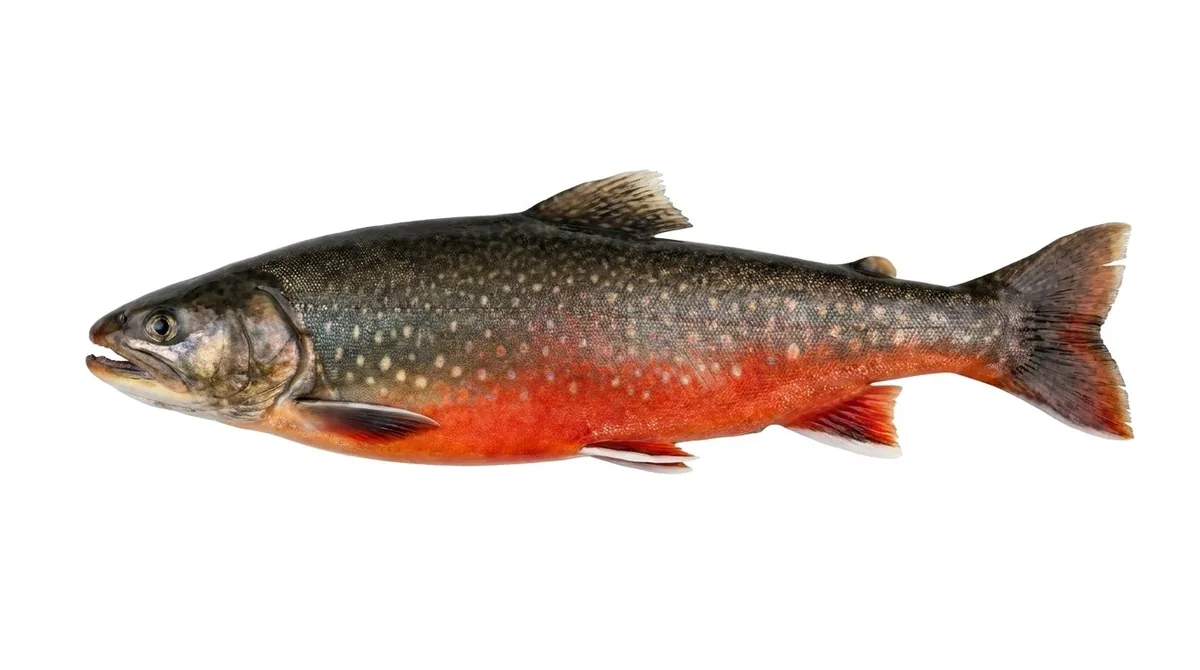
Arctic char
Salvelinus alpinus
- Freshwater & Saltwater
- Least Concern
- Max length
- 88 cm
- Class
- Teleostei
- Order
- Salmoniformes
- Family
- Salmonidae
- Genus
- Salvelinus
- Arctic Sea
- Asia - Inland waters
- Atlantic, Northeast
- Atlantic, Northwest
- Europe - Inland waters
- North America - Inland waters
About the arctic char
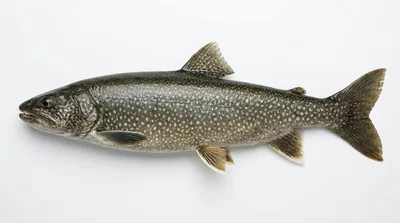
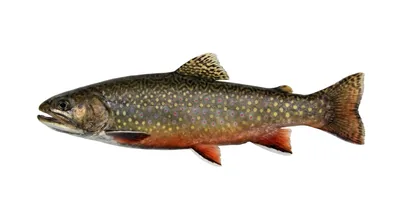
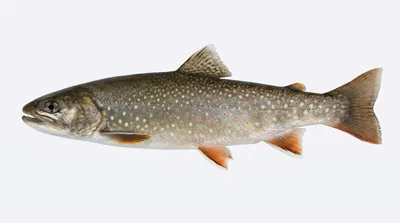
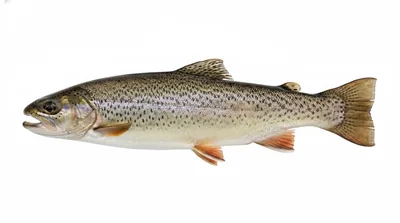
The Arctic char or Arctic charr (Salvelinus alpinus) is a cold-water fish in the family Salmonidae, native to alpine lakes, as well as Arctic and subarctic coastal waters in the Holarctic.
Distribution
It spawns in freshwater and its populations can be lacustrine, riverine, or anadromous, where they return from the ocean to their fresh water birth rivers to spawn. No other freshwater fish is found as far north; it is, for instance, the only fish species in Lake Hazen, which extends up to 81°56′N 68°55′W on Ellesmere Island in the Canadian Arctic. It is one of the rarest fish species in Great Britain and Ireland, found mainly in deep, cold, glacial lakes, and is at risk there from acidification. In other parts of its range, such as the Nordic countries, it is much more common, and is fished extensively. In Siberia, it is known as golets (Russian: голец) and it has been introduced in lakes where it sometimes threatens less hardy endemic species, such as the small-mouth char and the long-finned char in Elgygytgyn Lake.
Arctic char is also found in Lake Pingualuit in the Ungava Peninsula, Quebec, a lake situated in an impact crater formed roughly 1.4 million years ago. Since the last glaciation, changing water levels are believed to have connected the lake with glacial runoff and surrounding streams and rivers, allowing char to swim upstream into the lake. Arctic char is the only fish found in the lake, and signs of fish cannibalism have been found.
Arctic char exhibits a mostly circumpolar distribution. There is no other species of freshwater fish found at a higher latitude. Arctic char is native to Arctic and subarctic coasts and lakes of high elevations. In general, it has been observed in the Canadian Arctic, Greenland, Iceland, Scandinavia, Siberia, and Alaska.
Anadromous Arctic chars migrate to the sea annually in mid-June to mid-July. After about two months, they return to fresh water to reproduce and overwinter.
Behaviour
The diet of Arctic char varies with season and location. Arctic chars are generally opportunists. There have been more than 30 species found in the stomachs of Arctic chars.
During late spring and summer, Arctic char feeds on insects found on the water's surface, salmon eggs, snails and other smaller crustaceans found on the lake bottom, and smaller fish up to a third of its size. During the autumn and winter months, it feeds on zooplankton and freshwater shrimps that are suspended in the lake, and also occasionally on smaller fish.
The marine diet of Arctic char consists mostly of a copepod species (Calanis finmarchicus) and krill (Thysanoëssa). Lake-dwelling Arctic chars feed mostly on insects and zoobenthos. Some giant Arctic chars have been recorded as cannibals of their young as well as dwarf Arctic chars.
Description from Wikipedia, available under CC BY-SA.
Where the arctic char lives
Distribution data from GBIF (DOI: 10.15468/dl.8rzs8d).
Also known as
- Arctic charr
- Charr
- Hudson Bay salmon
- Sea trout
- Torgoch
- Salmo alpino
- Jezerska zlatovčica
- Salvelino
- Trucha alpina
- Omble chevalier
- Wandersaibling
- Rotforelle
- Seesaibling
- Arktischer Saibling
- Saibling
- Golec zwyczajny
- Golec
- Fjällröding
- Röding
- Salvelino-ártico
- Røye
- Truita alpina
- Siven severní
- Arktika paalia
- Amuarrain artiko
- Nieriä
- Lafasah Arktik
- Iqalukpik
- Trekzalm
- Bleikja
- Rávdu
- Арктический голец
- لفاشة قطبية
- شار قطبى شمالى
- آزادماهی قطبی
- צ'אר ארקטי
- ᐃᖃᓗᑉᐱᒃ
- არქტიკული გოჭალა
- Даватчан
- Езерска златница
- Сыбаакка
- Језерска златовчица
- Палія арктична
- 北極紅點鮭
Where to catch arctic char
- Achensee Austria Lake · Tyrol
- Attersee Austria Lake · live river data
- Danube River at Vienna Austria River · Vienna
- Inn River at Innsbruck Austria River · live river data
- Neusiedler See Austria Lake · live river data
- Traunsee Austria Lake · live river data