Fishing Calendar App
Crucian carp
Carassius carassius
- Freshwater
- Least Concern
- Max length
- 55 cm
- Class
- Teleostei
- Order
- Cypriniformes
- Family
- Cyprinidae
- Genus
- Carassius
- North America - Inland waters
- Asia - Inland waters
- Europe - Inland waters
- Oceania - Inland waters
About the crucian carp
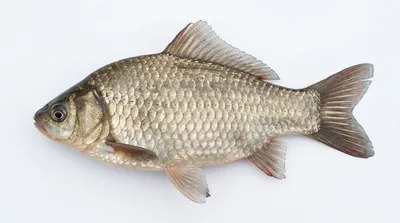
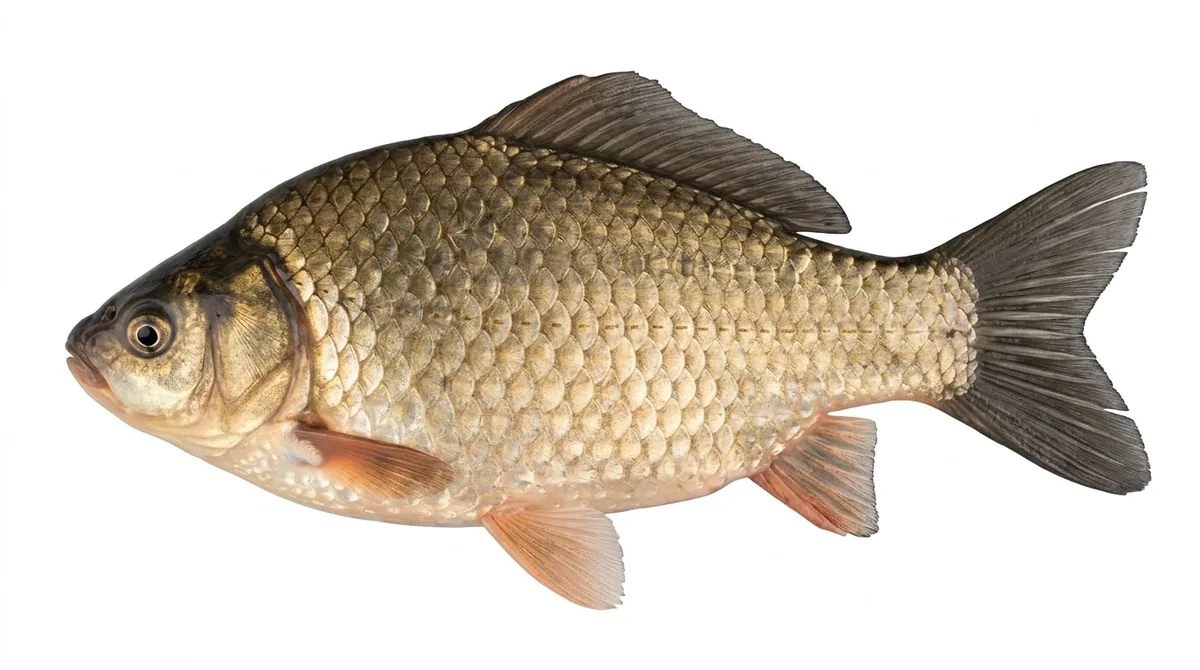
The crucian carp (Carassius carassius) is a medium-sized member of the carp family Cyprinidae. It occurs widely in northern European regions. Its name derives from the Low German karusse or karutze, possibly from Medieval Latin coracinus (a kind of river fish).
Distribution
The crucian carp is a widely distributed European species, its range spanning from England to Russia; it is found as far north as the Arctic Circle in the Scandinavian countries, and as far south as central France and the region of the Black Sea. Its habitat includes lakes, ponds, and slow-moving rivers. It has been established that the fish is native to England and not introduced.
The crucian carp is a medium-sized cyprinid, typically 15 centimetres (5.9 in) in body length, and rarely exceeds in weight over 2 kilograms (4.4 lb), but a maximum total length of 64 centimetres (25 in) has been reported for a male, and the heaviest published weighed 3 kilograms (6.6 lb).
They are broadly described as having a body of "golden-green shining color", but a more precise source states that young fish are golden-bronze but darken with maturity, until they gain a dark green back, deep bronze upper flanks, and gold on the lower flanks and belly, and reddish or orange fins, although other colour variations exist. One distinguishing characteristic is a convexly rounded fin, as opposed to goldfish (or C. gibelio) hybrids which have concave fins.
The crucian carp is also the type species for the genus, which has led to confusion in the taxonomy of species native to East Asia.
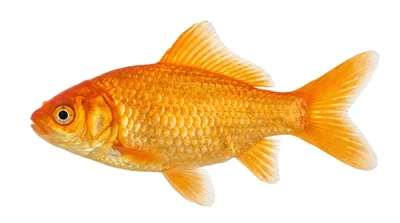
There are reports of hybridisation between the crucian and domestic or feral goldfish, which has been verified by production of viable hybrids in laboratory conditions. Although the hybrids thus produced were sterile or nearly so, genetic contamination of the native population has been raised as a concern; even if the hybrids cannot continue to propagate, the F1 hybrids exhibit hybrid vigour or heterosis, being much more adept at finding food and evading predators than either of their parents, which has been proposed to constitute a possible threat to the native crucian carp population.
Description from Wikipedia, available under CC BY-SA.
Where the crucian carp lives
Distribution data from GBIF (DOI: 10.15468/dl.8rzs8d).
Also known as
- Bronze carp
- Carassin
- Karausche
- Bauernkarpfen
- Burretschel
- Gareisle
- Guratsch
- Kotbuckel
- Moorkarpfen
- Schneiderkarpfen
- Ruda
- Carassio
- Navadni koreselj
- Carpín
- Karaś pospolity
- Karaś
- Karuss
- Qızılı daban balığı
- Carpí
- Karas obecný
- Karusse
- Karaso
- Koger
- Zamo txiki
- Ruutana
- Kogõr
- Karas
- Széles kárász
- Karasino
- Grænkarpi
- Koppege Kaarp
- Paprastasis karosas
- Karūsa
- Kroeskarper
- Karassu
- Caracudă
- Karaš
- Karas obyčajný
- Karach
- Havuz balığı
- Chit-á
- 붕어
- Золотой карась
- Карась золотой
- ヨーロッパブナ
- دوع أحمر
- الشبوط
- قیزیلی دابان بالیغی
- Карась звычайны
- Златиста каракуда
- Ахаль карас
- کاراس
- Мөңке балық
- گٕنٛگ گاڈ
- Златен караш
- Алтлаг хэлтэг
- Шӧртньӹ карас
- Карась
- Караш
- Алтын табан балык
- Карась звичайний
- 黑鲫
Where to catch crucian carp
- Inn River at Innsbruck Austria River · live river data
- Neusiedler See Austria Lake · live river data
- Wolfgangsee Austria Lake · live river data
- Zeller See Austria Lake · live river data
- Cetina River Croatia River · live river data
- Krka River Croatia River · live river data